Market
Pike Place Market at opening
Arrive by eight, before the crush. Watch the flower stalls being built, the fishmongers icing salmon, and the low-numbered arcades still half-empty and workable.
Salt Air, Green Hills & Glass
A city built on seven hills between a saltwater sound and a freshwater lake, where fishing boats still lock through to the sea, glass artists blow colour into grey light, and the ferry deck is the best seat in town.
Arrive by eight, before the crush. Watch the flower stalls being built, the fishmongers icing salmon, and the low-numbered arcades still half-empty and workable.
Free, open daily 7am to 9pm, and quietly astonishing: boats step between salt and fresh water while, in summer, salmon climb a twenty-one-step ladder past underwater glass.
Seattle's largest park: a 2.8-mile loop through bluff meadow and forest, then a steep spur down to West Point Lighthouse and driftwood beach.
At Boeing Field, the largest private air and space museum anywhere. Step aboard the first jet Air Force One and a retired Concorde on the outdoor pavilion.
Capitol Hill's Olmsted park: a Victorian glasshouse of orchids, a brick water tower you can climb for free, and Isamu Noguchi's black doughnut framing the Needle.
A Sundays-only flea market of vinyl, tools and vintage under the Aurora Bridge — the same bridge whose concrete troll clutches a real Volkswagen Beetle.
Skip the queue at Pike Place's original store and drink where Seattle actually drinks: Victrola on Capitol Hill, Espresso Vivace, Fonté, or Ballard Coffee Works.
The 1962 World's Fair icon, renovated with floor-to-ceiling glass, open-air tilted benches and a rotating glass floor one level below. Book a timed slot.
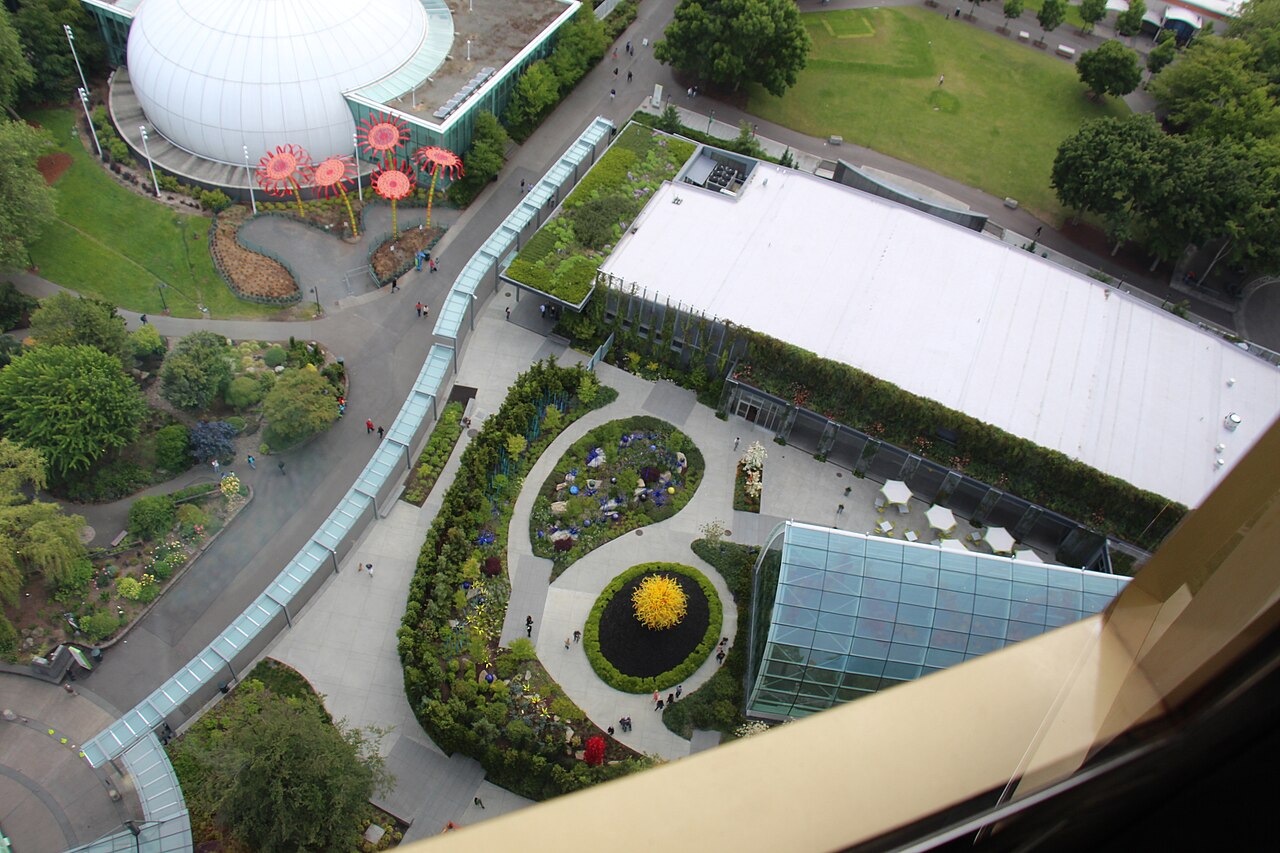
Dale Chihuly's home-town showcase at the Needle's foot: eight galleries, a hundred-foot glasshouse sculpture, and a garden where glass grows among real planting.
Frank Gehry's crumpled metal shell holds Nirvana and Hendrix archives, a sci-fi hall of fame, and sound labs where you can actually pick up the instruments.
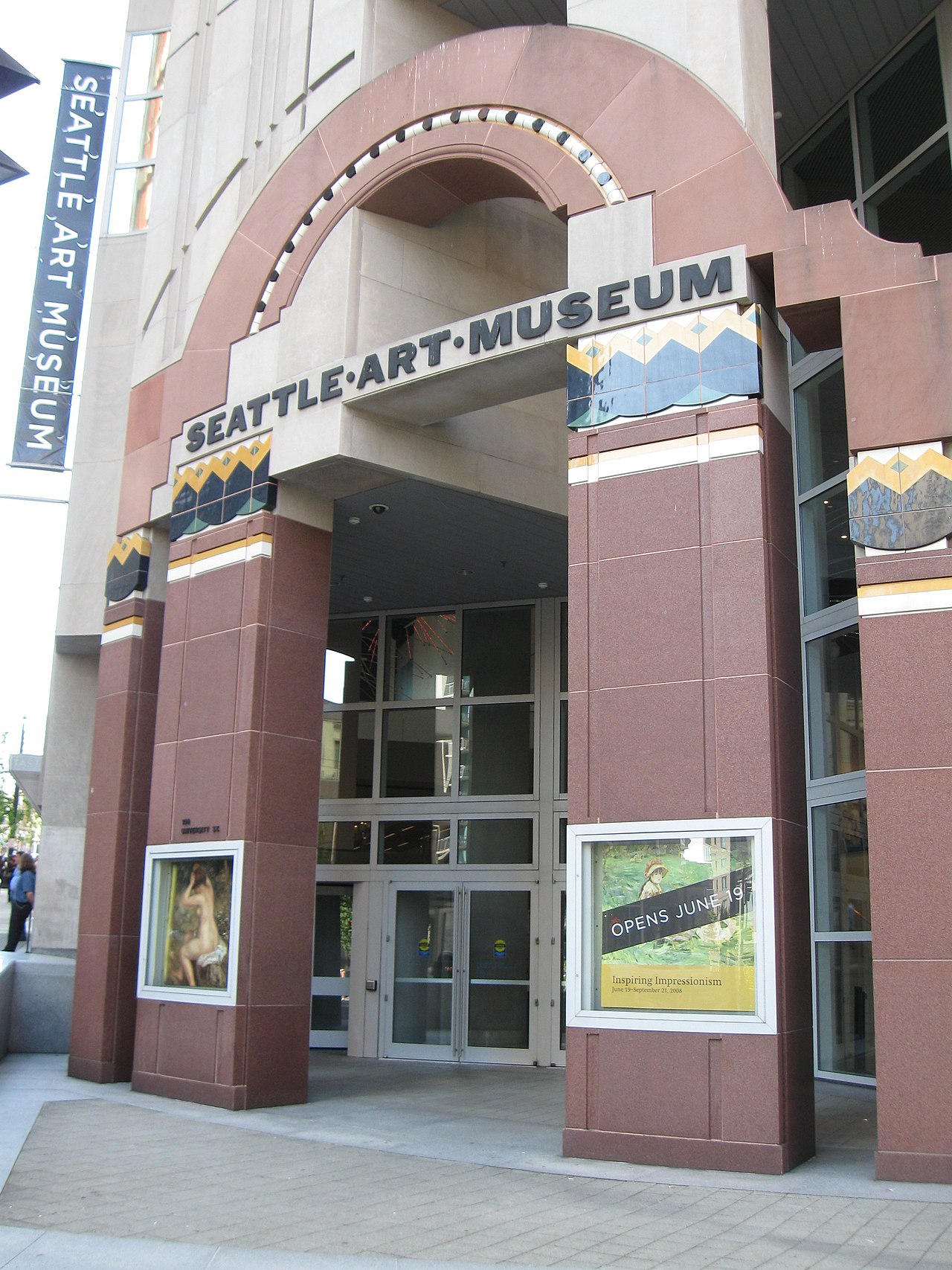
Behind Borofsky's hammering silhouette, a strong Northwest Coast Native collection, Australian Aboriginal painting and Porcelain Room. Free on the first Thursday each month.
Seattle burned in 1889 and rebuilt one storey higher, sealing the old sidewalks below. A guided tour drops you into that buried block of storefronts.
The rebuilt waterfront's new stair-and-park bridge spills from Pike Place down to the piers; walk it, then ride the 175-foot wheel out over Elliott Bay.
Rent a kayak or paddleboard off the north shore and cross open water between float-plane landings, floating homes and the wooden hulls of the maritime museum.
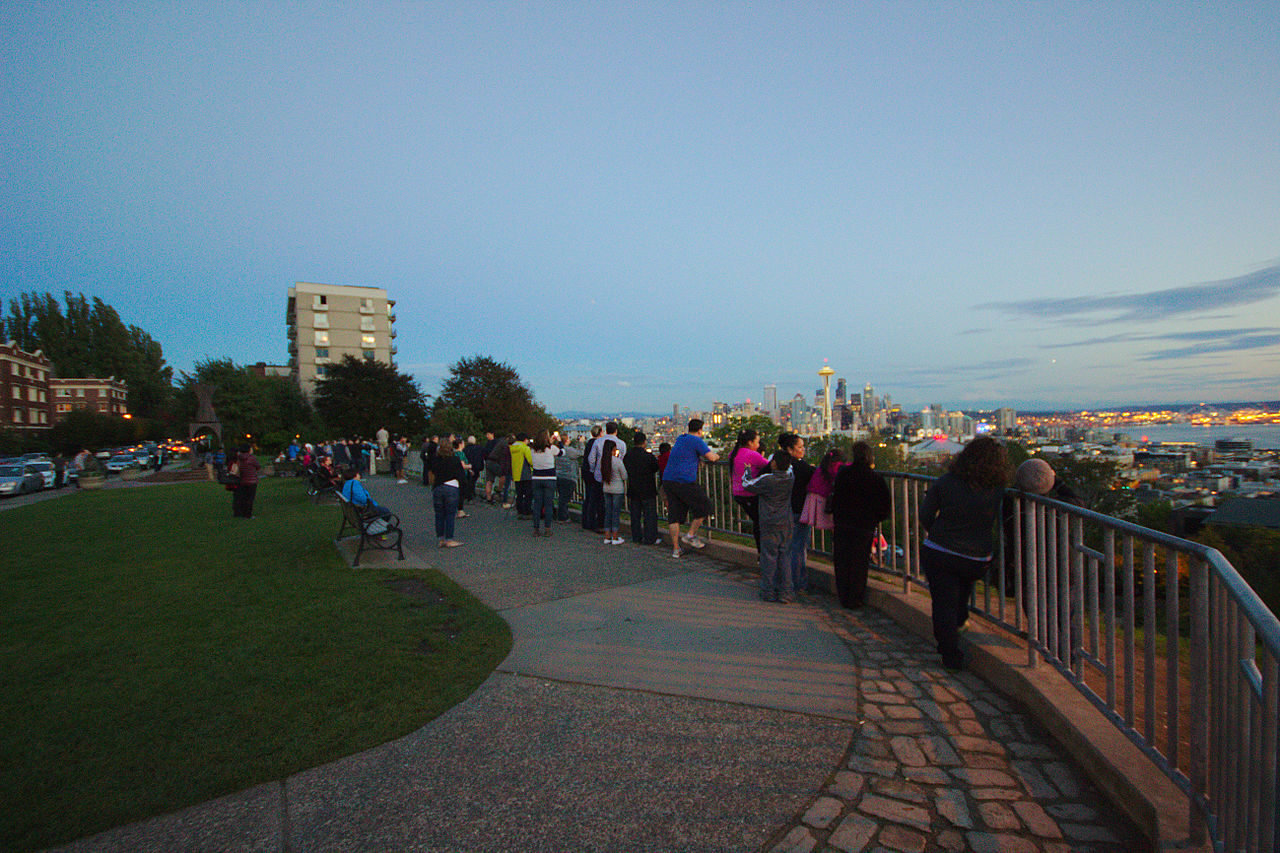
A pocket park on Queen Anne's south slope and the postcard everyone knows: Needle, downtown towers, Elliott Bay, and Rainier floating behind on clear evenings.
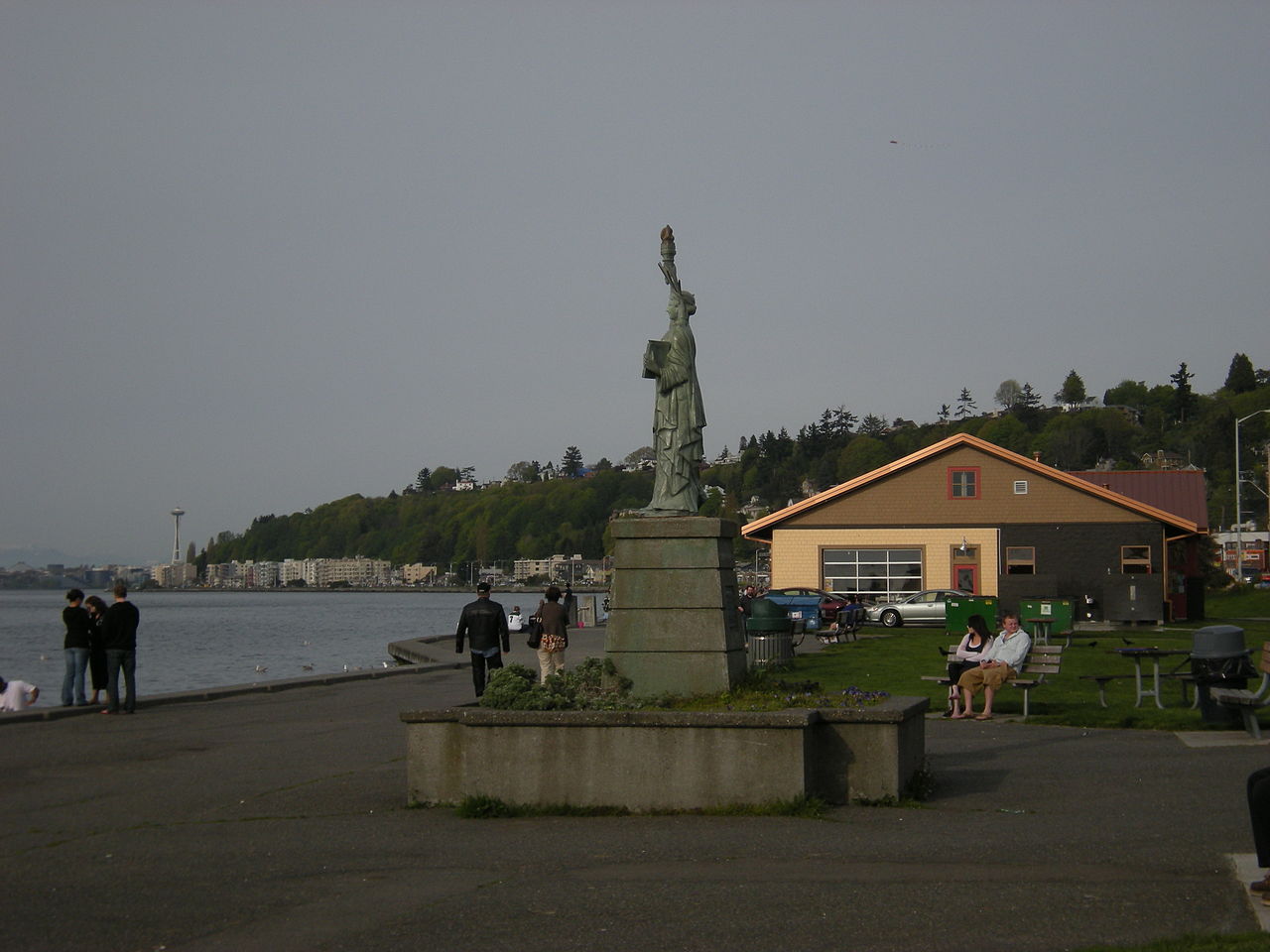
Two miles of sand facing the skyline across the bay. Reserve a public fire pit in summer, or just eat fish and chips on the seawall and watch tankers pass.
The 1914 tower was once the tallest west of the Mississippi. Its 35th-floor bar has an open-air deck and the original Chinese carved-wood Wishing Chair; tickets drop after 4pm.
A landmarked brick street of oyster bars, taprooms and Conor Byrne, Ballard's oldest bar, where Irish sessions and local songwriters play most nights.
Downtown's acoustically excellent concert hall, a block from the market. The season runs September to June; check for the cheaper unreserved-seat programmes.
Retractable roof, garlic fries and a skyline over the outfield. Home games run April to late September; the ballpark is a ten-minute walk from Pioneer Square.
The city's densest nightlife corridor: Canon's encyclopaedic spirits list, dive-bar holdouts, queer institutions on Pine, and late kitchens that outlast downtown's.
The 1924 Italian Renaissance grande dame, four blocks from Pike Place. Palm-court afternoon tea, marble everywhere, and rooms recently reworked.
The only hotel inside the market itself, wrapped round a courtyard, with a rooftop deck straight over Elliott Bay. Ask for a bay-view room.
Built on Pier 67 for the 1962 fair and famous for the Beatles' fishing stunt. Lodge-style rooms on stilts over the water, fireplaces included.
Floor-to-ceiling Elliott Bay views a block from Pike Place Market, with a heated terrace pool and fire pit above the Sound and ART's Pacific Northwest kitchen downstairs.
Rates change — check the live price.
Photography shows the dishes and cuisine — representative, not from the restaurants themselves.
Seattle's special-occasion room since 1950, a mid-century glass box over Lake Union. Set multi-course menu, jackets common, book weeks out.
Shiro Kashiba trained in Tokyo and opened Seattle's first sushi bar. Sit at his counter for omakase; walk-in tables take the à la carte list.
A small, loud, tiled oyster bar in the Kolstrand Building. No reservations for most seats — put your name down and drink next door while you wait.
Melissa Miranda's neighbourhood restaurant, part supper club and part community kitchen. Family-style plates, and a weekend brunch worth the hill climb.
Kristi Brown calls it Seattle soul food: black-eyed pea hummus, catfish, oxtail. Deeply rooted in the historically Black Central District.
The Caribbean roast-pork sandwich Seattle argues about, run by the founding family. Order ahead, eat it on Shilshole Bay — it will drip regardless.
July to September average under an inch of rain a month — the cliché is wrong for peak season. November to March is the grey, drizzly stretch.
Walk-on passengers to Bainbridge pay only westbound, $11.35 in 2026; the return is free. Cars pay both ways and queue, so leave yours behind.
Space Needle and Chihuly sell timed entry, and a combined ticket saves roughly a quarter. Both sit in Seattle Center, five minutes apart.
The Ballard Locks fish ladder runs mid-June to September: sockeye first, chinook in August, coho in September. Outside that window the viewing glass is quiet.
Link light rail runs airport to downtown, Capitol Hill and the U District. Parking is expensive and the hills are steeper than they look.