
Photography
Mormon Row Barns at Sunrise
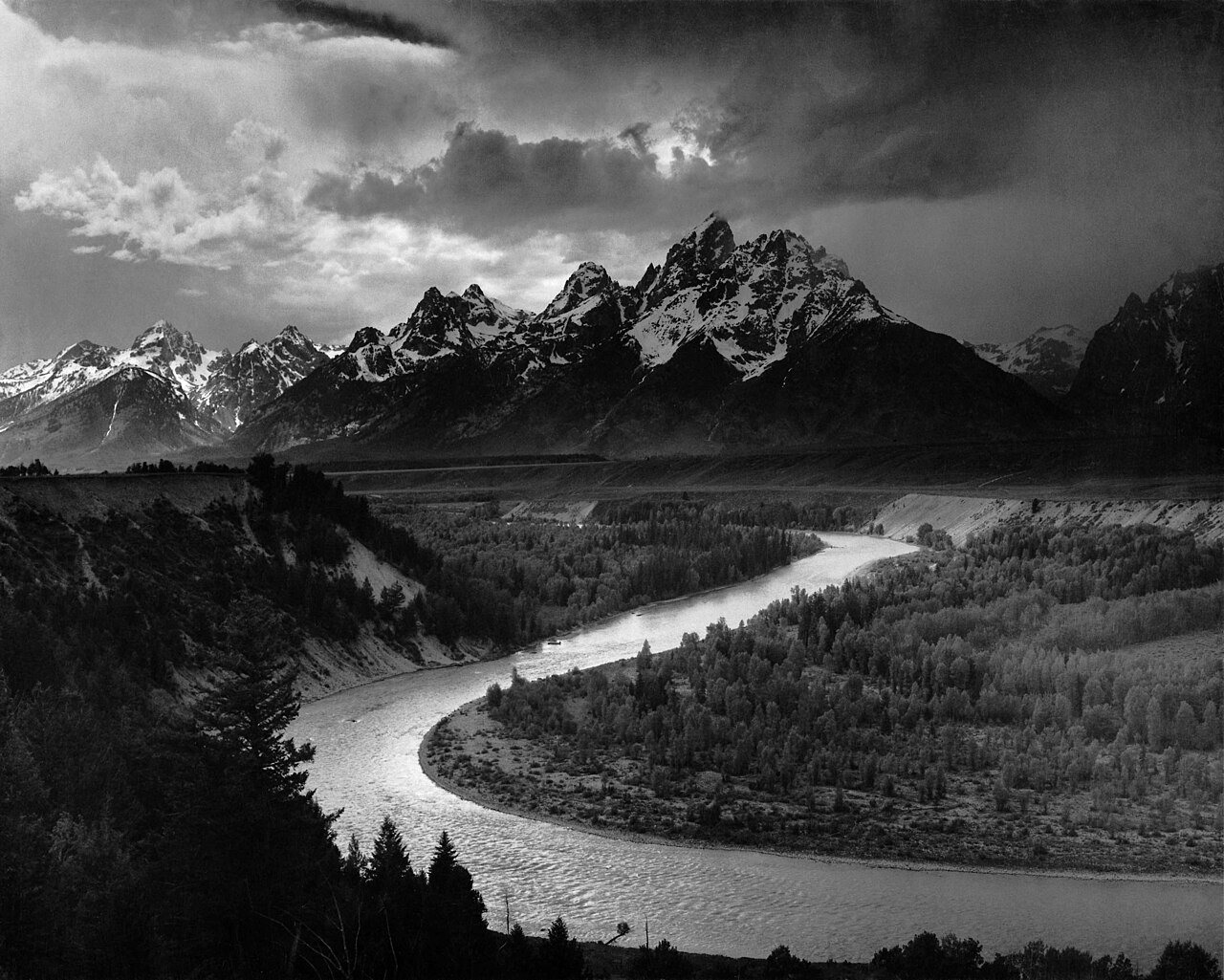
Arrive before the light does: the weathered Moulton Barn stands against the Tetons' east face, and photographers line Antelope Flats Road for the moment alpenglow hits the peaks behind it.
Geysers, Wolves & the Teton Skyline
Two adjoining parks in one loop: a volcanic wonderland of geysers, rainbow hot springs and bison-thick valleys beside a granite range that rises sheer from the valley floor. Wolves work Lamar Valley at dawn, bison cross Hayden Valley, and Jenny Lake mirrors the Cathedral Group in still morning light.
Arrive before the light does: the weathered Moulton Barn stands against the Tetons' east face, and photographers line Antelope Flats Road for the moment alpenglow hits the peaks behind it.
A ten-minute shuttle crossing swaps 3.8 miles of lakeshore trail for a direct start into Cascade Canyon; climb past Hidden Falls to Inspiration Point, or keep going toward the Cathedral Group.
Old Faithful erupts on a rough 60-to-110-minute cycle posted at the visitor center; walk the boardwalk loop past Morning Glory Pool while you wait for the next predicted window.
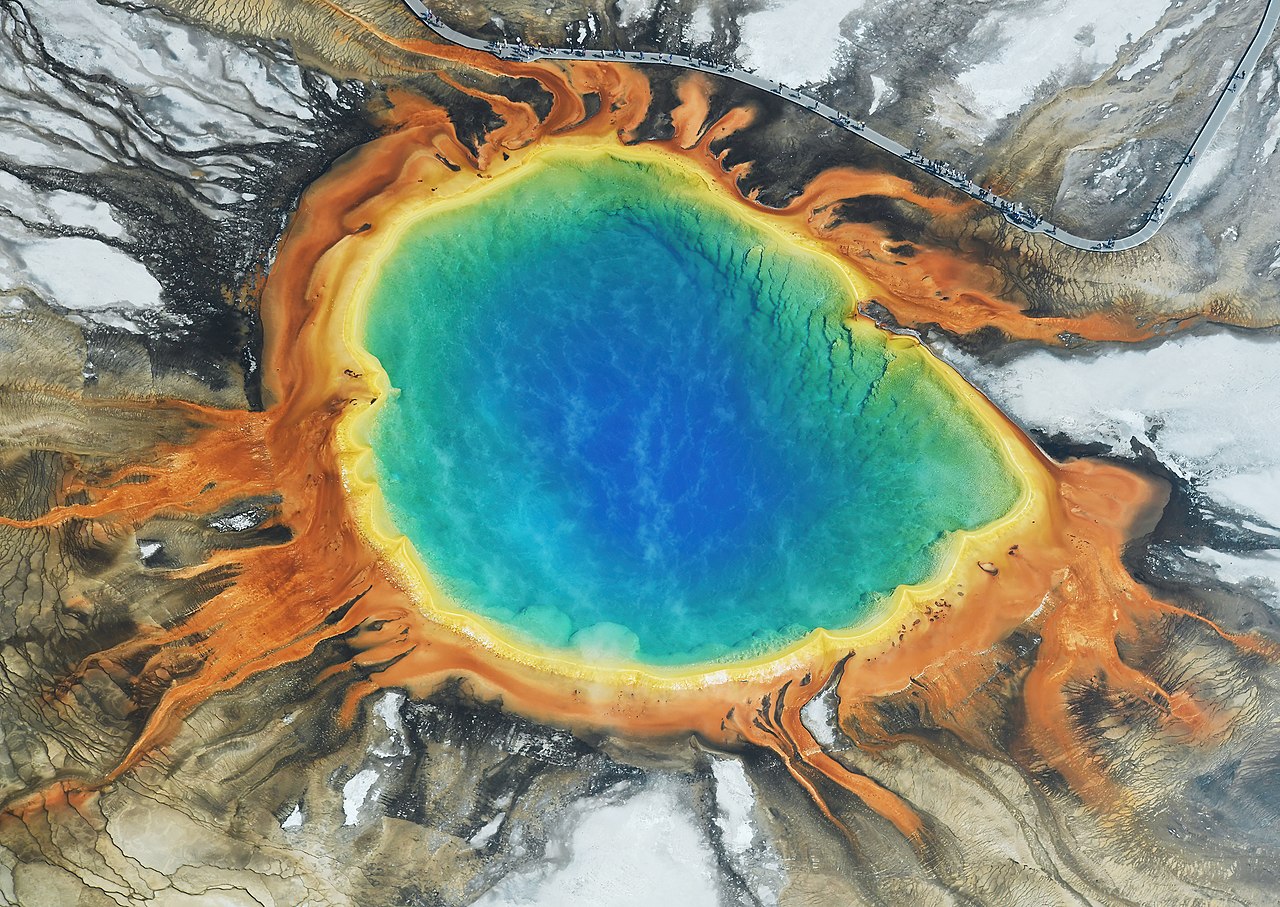
A gentle 1.2-mile round trip from the Fairy Falls trailhead climbs 105 feet to a platform looking straight down onto the rainbow spring; the trail is closed from March into late May.
One of the world's largest bison herds grazes this wide river valley, and early light brings out coyotes and the occasional grizzly; expect a genuine 'bison jam' where the herd owns the road.
Called the Serengeti of North America, this northeast valley is the park's best wolf ground; scan with binoculars from dawn pullouts, though a sighting of the reintroduced packs is never guaranteed.
Theodore Roosevelt laid the cornerstone of this 1903 basalt arch at the only park entrance open year-round; walk under its 'For the Benefit and Enjoyment of the People' inscription before the last drive out.
Ten minutes to 10,450 feet for a 360-degree view of the Teton range and the valley floor. Waffles at Corbet's Cabin are the summit tradition.
A guide rows ten flatwater miles from Deadman's Bar to Moose, the Tetons filling the view the whole way; bald eagles, moose and beaver are common, whitewater is not — this stretch is calm.
Hot springs steam right at the shoreline of North America's largest high-elevation lake, including the cone-shaped Fishing Cone rising from the water itself. Smallest of the park's basins, but the most scenic.
The park's hottest and most changeable thermal area, home to Steamboat Geyser, the world's tallest active geyser — though its eruptions are unpredictable and can go years apart. The basin itself never disappoints.
The 308-foot Lower Falls drop into a canyon painted yellow, pink and orange by hydrothermally altered rock; Artist Point frames the classic view, and a steep spur trail leads to the brink itself.
Boardwalks climb through the Lower and Upper Terraces past the 37-foot travertine cone called Liberty Cap, an alien white landscape that reshapes itself as mineral-laden water finds new paths downhill.
A hillside gallery above the National Elk Refuge holds five centuries of wildlife art, from Rungius to Bierstadt, with floor-to-ceiling windows aimed at the very animals depicted on the walls.
Jackson's long-running Town Square favorite has served New American cooking from local farms and ranches since 1993, with a 300-bottle wine list and a Beard nomination behind its unpretentious log-cabin room.
Since 1937 this Town Square institution has sat drinkers on saddle-topped barstools under a lodgepole-pine ceiling; free swing lessons run Thursday evenings before the house band takes over the dance floor.
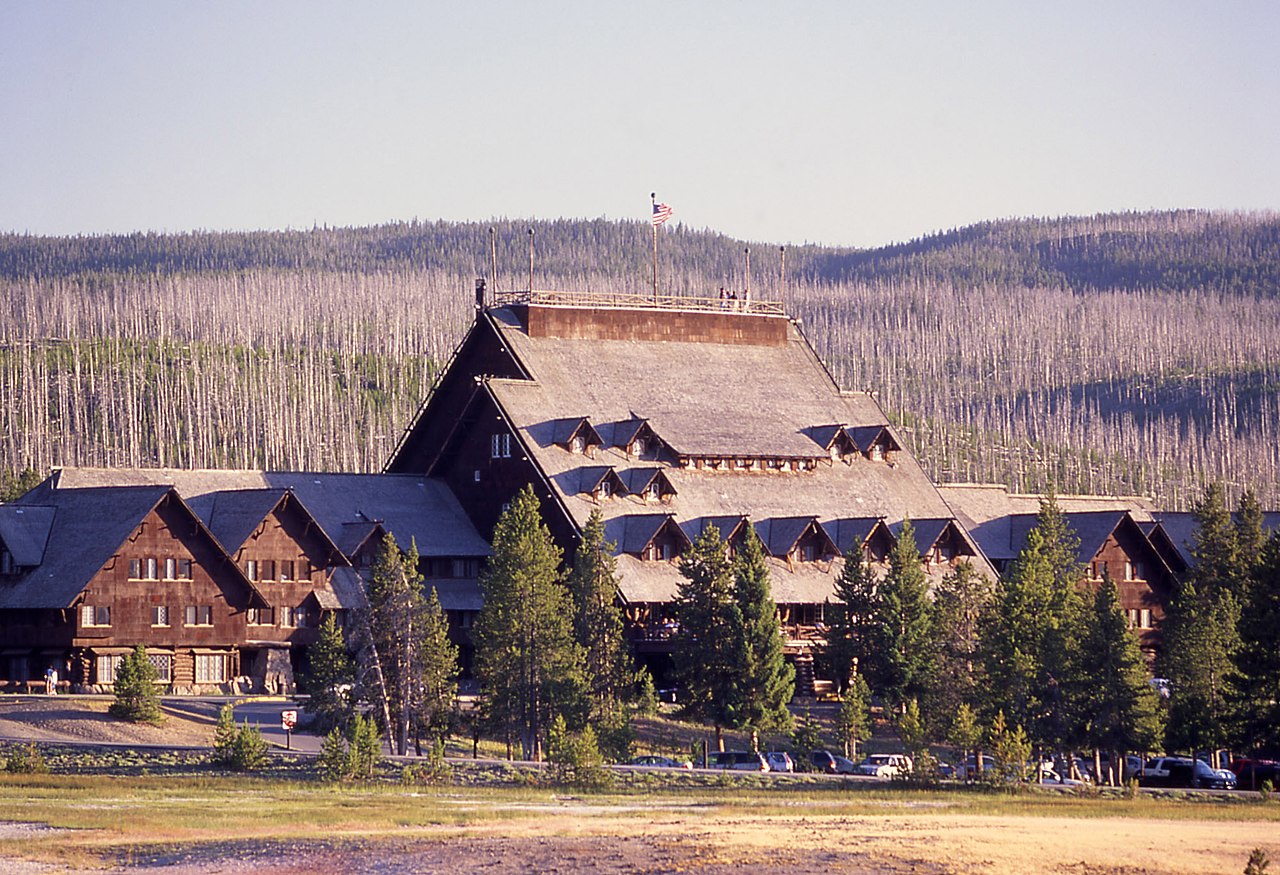
Eat beneath the Inn's 1904 log-and-lodgepole lobby, one of the largest log structures in the world, with the geyser itself sometimes visible erupting through the windows. Dinner reservations matter; book ahead.
Free 45-minute illustrated talks run nightly through summer at the 300-seat Canyon amphitheater, rangers covering everything from wolf reintroduction to the supervolcano underfoot. No tickets, no charge beyond the park fee.
A short walk from the North Rim Drive lands on a promontory looking straight up the canyon toward the Lower Falls, the yellow rock deepening in color as the light goes low.
The Ridgeline Hotel's Old West dining room serves elk chili, bison burgers and steaks a mile from the park's only year-round entrance — the obvious landing spot after a long last day inside.
Thirty minutes up the Paradise Valley, two geothermal pools near 98 and 103 degrees have drawn soakers since 1900; day passes run until 11pm, a quiet way to close out the trip.
The valley's storied small luxury lodge, a short walk from Town Square, with just forty individually decorated rooms, a full spa and the AAA Four-Diamond Wild Sage Restaurant on-site.
A 1904 National Historic Landmark built from raw lodgepole logs, with a soaring log lobby and rooms looking straight at the geyser. Open 1 May to 12 October 2026; book roughly a year out.
The park's largest lodging complex, rebuilt in 2016 with LEED-certified cabins minutes from the Grand Canyon of the Yellowstone rim. Open mid-May to late October; book well ahead for peak summer.
A riverside hotel a mile from Roosevelt Arch and the only entrance open all winter, with mountain- or river-view rooms and the Yellowstone Mine restaurant downstairs. The town's most comfortable option by far.
Rates change — check the live price.
Photography shows the dishes and cuisine — representative, not from the restaurants themselves.
Open since 1993 and still the locals' choice for a special night out, with a 300-bottle wine list and a James Beard nomination for hospitality behind the log-cabin dining room.
Stone-hearth breads and pastries from a husband-and-wife team, plus all-day breakfast and locally roasted coffee; a 2020 James Beard semifinalist and the obvious pre-trailhead stop.
The dining room beneath the Inn's 1904 log lobby seats hundreds under exposed lodgepole trusses; dinner reservations are needed, and it operates only within the Inn's May-to-October season.
A food-hall reboot of the old Canyon cafeteria, with wok stations, a rotisserie counter and the the M66 Lounge for cocktails and small plates after a day at the canyon rim.
An Old-West themed dining room a mile from Roosevelt Arch, serving elk chili, bison burgers and steaks daily — the obvious dinner after driving out through the park's only winter-open gate.
A century-old resort dining room famous for tableside-carved beef Wellington and a serious wine list; soak in the mineral pools afterward before the drive back down the valley.
Yellowstone and Grand Teton each charge $35 per vehicle for seven days with no combined discount — visiting both costs $70 unless you buy the $80 annual America the Beautiful pass instead.
Old Faithful Inn, Canyon Lodge and the park's other hotels open reservations roughly 13 months ahead and sell out fast for summer; book the moment your dates are fixed.
Yellowstone's interior roads shut by early November and reopen only from mid-April onward, and Grand Teton's high spots stay snow-bound into June; this itinerary assumes a June-to-September visit.
Coverage inside Yellowstone is rare to nonexistent away from a few developed areas; download offline maps and share your route with someone before you lose signal at the gate.
The popular hot-spring soak near Mammoth was wrecked by the 2022 flood and remains closed indefinitely with no rebuild planned — Chico Hot Springs, outside the park, is the real alternative.