Museum
Palace of Knossos guided tour
The Bronze Age labyrinth of King Minos — frescoed corridors, lustral basins and the throne room of a civilisation that predates classical Greece by a thousand years.
Κρήτη Παντοτινή
The largest and most varied of the Greek islands holds Minoan palaces three millennia deep, gorges built for days of walking, lagoons the colour of watercolour, and a taverna culture so warm it makes everywhere else feel transactional.
The Bronze Age labyrinth of King Minos — frescoed corridors, lustral basins and the throne room of a civilisation that predates classical Greece by a thousand years.
Sixteen kilometres through Europe's longest gorge, starting above the clouds at Omalós and finishing at the Libyan Sea — a genuine full-day adventure requiring the first bus from Chania.
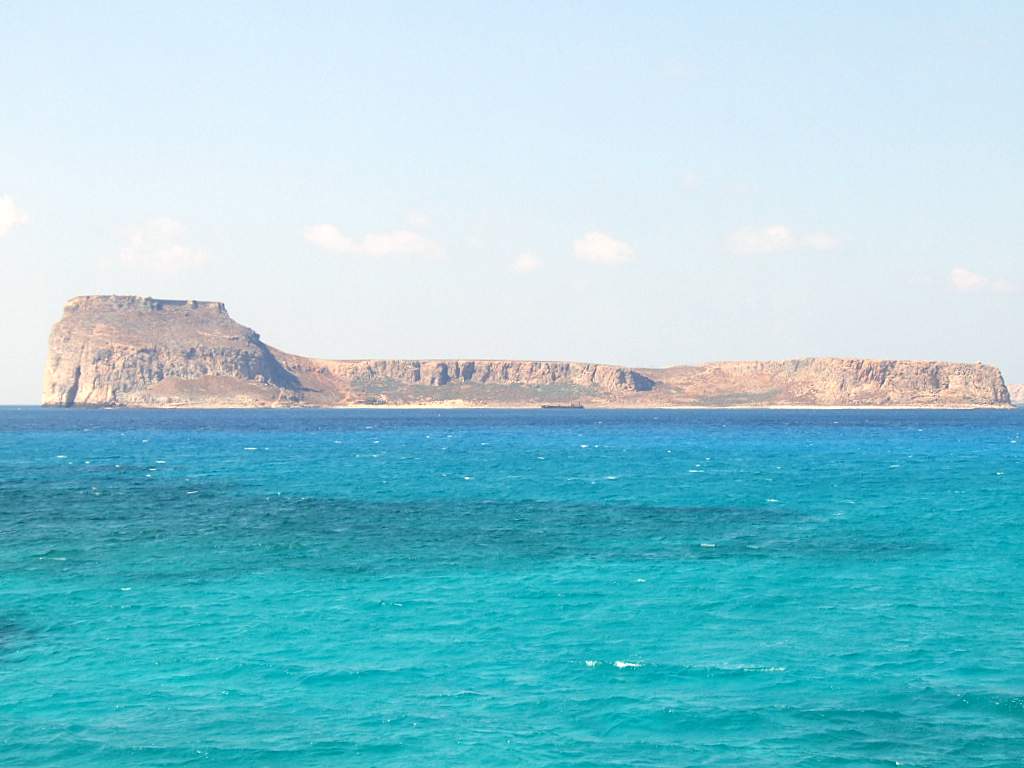
A ferry from Kissamos rounds Cape Tigani to drop anchor off the shallow turquoise lagoon where three seas converge. The pink sand and colour gradient are entirely otherworldly.
Before the alleys fill with heat, Chania's Venetian and Ottoman quarter is at its most photogenic — the lighthouse, the arsenal vaults and the covered market all before ten.
A family estate above Chania walks you through trees older than any country you've visited, then presses fresh oil for you to taste against wild Cretan herbs and bread.
The shallow lagoon on the island's southwest tip is tinted rose by crushed coral. Arrive by 09:00 to wade in quietly before the day-tripper coaches pull up.
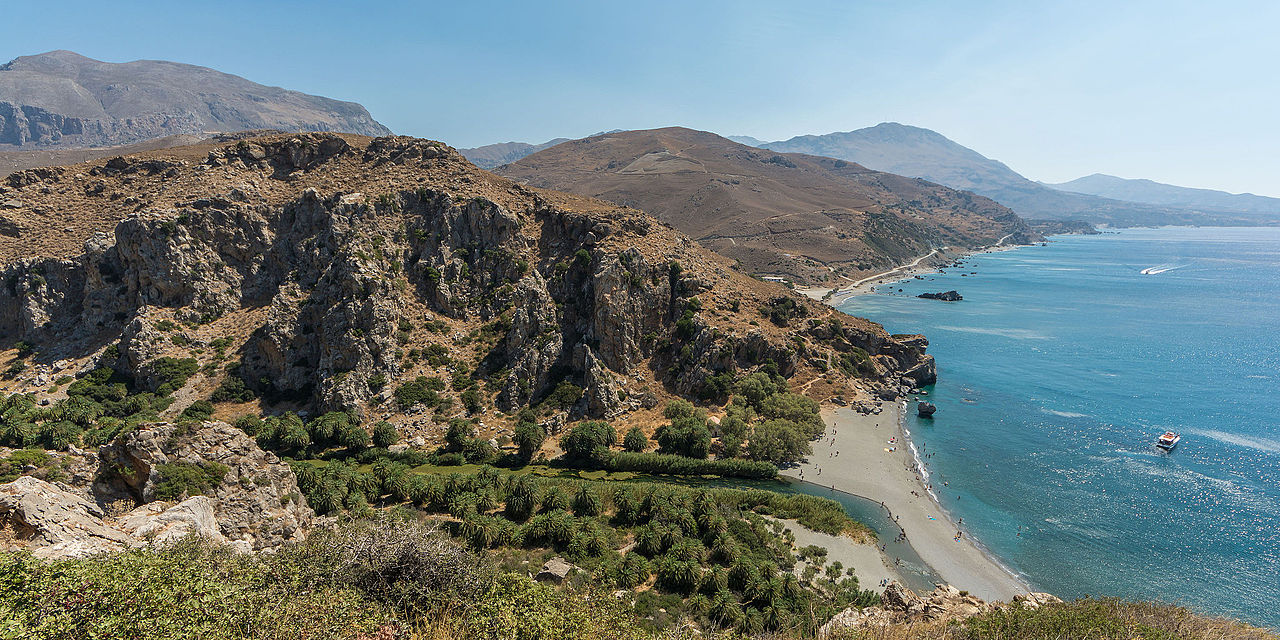
A trail drops through Europe's largest palm forest along a spring-fed river before reaching a hidden beach where the water meets the sea. Early starts avoid both the midday heat and the tour buses.
A table on the curved quayside for fresh calamari and local white wine while the Egyptian lighthouse turns gold across the water.
A smaller, less touristed version of Chania, with a Venetian harbour, minarets sprouting from church towers, and the massive Fortezza perched above the whole scene.
A short boat from Elounda reaches the Venetian island fortress — the last active leper colony in Europe until 1957, now atmospherically abandoned and deeply moving.
The world's finest collection of Minoan artefacts — the Phaistos Disc, the bull-leaping fresco, and the gold jewellery of a Bronze Age civilisation at its height.
The Heraklion family estate reviving rare Cretan grape varieties — Dafni and Plyto — with a terrace tasting overlooking the valley and its ancient vines.
Europe's largest natural palm grove opens onto a beach at Crete's easternmost tip. Mid-afternoon the tour buses have gone and the grove turns golden and quiet.
Carved into the sandstone cliffs above a crescent beach, these caves once served as Roman tombs and later a hippie commune in the 1960s. A short climb up leads to views over the Libyan Sea.
The quayside bars facing the Egyptian lighthouse are at their most cinematic when the tower turns orange and the evening fishing boats come home.
A long table of dakos, staka, snails in rosemary, Cretan sausage and a carafe of local wine in a back-alley eatery that has been here longer than any review.
The Cretan lyra — a pear-shaped bowed instrument — fills a low-ceilinged bar with the island's ancient sound. Locals dance between the tables by the second set.
The narrow streets behind the harbour light up softly after dark; small kafeneions set chairs on the stones and the whole neighbourhood comes out for the volta.
Cretan hospitality distilled into a single ritual, a small glass of raki poured alongside local honey and cheese at the end of a taverna meal, always on the house, never to be refused.
High above the coast and largely free of light pollution, the plateau's old windmill fields make an easy, dramatic spot to watch the stars come out over the mountains.
Agios Nikolaos's small, bottomless-seeming lake is at its most photogenic after dark, its harbourside cafes reflected in water so still it barely seems to move.
Iconic bungalows and cliffside villas gaze straight across to Spinalonga island, with a sublime thalasso spa and a private beach that makes time genuinely stop.
Hillside villas tumble down a private cove with direct-ladder access into crystal waters from private decks, anchored by a world-class spa and exceptional Cretan cuisine.
Cretan craftsmanship meets contemporary design at this sleek seafront retreat, where every room opens onto a private terrace commanding luminous western Cretan seascapes.
Whitewashed stone bungalows fringe a blue-flag beach, with exceptional Cretan gastronomy, an adults' garden pool, and a spa of absolute tranquillity.
Rates change — check the live price.
Photography shows the dishes and cuisine — representative, not from the restaurants themselves.
Revivalist Cretan cooking in a restored historic building — every ingredient sourced from small island producers, every dish a quiet rediscovery.
The freshest catch in Chania, grilled on a terrace above the sea. Order the sea urchin when it is in season.
A Rethymno institution built on grandma Chryssoula's recipes — a bain-marie counter of 35-40 traditional Cretan dishes from sofrito to rooster with pasta, dinner for two around €20-30 with house wine at €5/litre.
Pair the rare-variety whites with Cretan charcuterie and house olives at this working estate tasting room.
A 70-year-old institution for warm bougatsa — custard-filled phyllo dusted with icing sugar — eaten at the counter beside the bakers.
A courtyard bar built into the walls of a ruined Venetian-era synagogue — cool, candlelit and perfect for a raki before dinner.
Crete is too large for buses alone — a rental car unlocks Balos, Vai, Elafonissi and the wine country of the central plateau in ways no tour bus can.
The gorge entrance opens at 07:00 and closes at 15:00; the first bus from Chania departs at 06:15 — take it to finish before the afternoon heat hits the canyon floor.
The palace is calmest before 09:30 and after 16:00; a guided tour adds crucial Bronze Age context the site labels alone cannot provide.
Shoulders and knees covered for Orthodox churches and monasteries throughout the island; a cotton wrap in your bag solves it every time.
Many family restaurants, especially in inland villages, stop serving by 22:30 and may close in August for their own holiday — always check on arrival.