Art Deco Walking Tour
The Miami Design Preservation League's guided walk, leaving the Art Deco Welcome Center at 1001 Ocean Drive daily. A mile and a half of Deco, Mediterranean Revival and MiMo, and the 1980s fight that saved them.
Deco Pastels, Cuban Coffee & Sawgrass
A subtropical city built by arrivals — Cuban, Haitian, Colombian, Bahamian — where 1930s pastel hotels face a green Atlantic, murals cover old warehouses, and the sawgrass Everglades begin an hour inland.
The Miami Design Preservation League's guided walk, leaving the Art Deco Welcome Center at 1001 Ocean Drive daily. A mile and a half of Deco, Mediterranean Revival and MiMo, and the 1980s fight that saved them.
The Atlantic faces east, so South Beach gets the sunrise. Come before nine for cool sand, empty lifeguard towers and water that rarely drops below twenty-two degrees.
James Deering's 1916 bayfront villa, stuffed with European rooms and fronted by formal gardens. Closed Tuesdays, and a storm-hardening restoration has the Maze and Theater Gardens shut and scaffolding on two facades.
Order a colada at a sidewalk window, take the tiny plastic cups and share them standing up. Domino Park's players start their games mid-morning a block away.
Only three operators are authorised to run airboats inside the national park — Coopertown, Everglades Safari Park and Gator Park, all on the Tamiami Trail. Everything else is tribal or private land. Go early, before the heat.
The southern tip of Key Biscayne: an 1825 brick lighthouse, calm shallow water and pines. It was a departure point on a Bahamas-bound freedom route for escaping slaves.
Eighty-three acres of palms, cycads and a rainforest glade in Coral Gables, laid out in 1938. Buy online to save five dollars, and go early before the humidity settles over the lowland plots.
The ticketed courtyard that started it all in 2009, now a curated outdoor museum with rotating commissions. Entry is by timed slot, so book online — weekends fill.
Beyond the paid courtyard, the surrounding warehouse blocks are covered in free, constantly repainted work. NW 2nd Avenue and 23rd to 28th Streets is the densest stretch.
Herzog & de Meuron's stilted, hanging-garden pavilion on Biscayne Bay, strong on Caribbean and Latin American art. The bayfront terrace alone justifies the walk over.
A former furniture quarter turned luxury retail set-piece, with Buckminster Fuller's Fly's Eye Dome sitting in a reflecting pool in Palm Court and the free Institute of Contemporary Art at its edge — ICA opens Wednesday to Sunday only.
One of the largest private contemporary collections open to the public, in converted Allapattah warehouses. Large single-artist rooms rather than a survey hang. Closed Tuesdays; free guided tour at 4pm.
A conical Gulf Stream aquarium you view from above and below, plus a 250-seat planetarium — one show is included in the ticket. Good for a downpour, which South Florida supplies most summer afternoons.
Coconut Grove has been Miami's sailing harbour since before the city was chartered. The Biscayne National Park Institute runs guided trips out of Dinner Key Marina, Thursday to Sunday, past Stiltsville's surviving houses on the flats.
A 1935 Calle Ocho bar reopened in 2014, with a pineapple-shaped stage in the back garden and live Cuban son and salsa most nights of the week.
The Deco hotels switch on their restored neon after dark — Colony, Breakwater, Cardozo. Walk the ocean side of the street to see the whole line lit.
A man-made atoll pool flushed by Biscayne Bay tides, with mangroves behind and the downtown skyline catching the last light across the water. Parking is the only charge — more at weekends.
Miami's banking district stacks its bars high. Sugar, on the fortieth floor of EAST Miami at Brickell City Centre, keeps a planted terrace with Biscayne Bay on one side and the towers on the other. Over-21 after six.
Havana's 1888 brewery revived on an acre of Wynwood — palms, blue Adirondack chairs, Cuban-Caribbean small plates and a live-music stage. Open late, and calmer than the district's clubs.
The downtown bayfront arena, loud and well-attended. The NBA regular season runs late October to mid-April, so this only works outside the summer months.
A Caribbean-market-styled arts centre on NE 59th Terrace. The gallery is free, and on the third Friday the courtyard becomes Sounds of Little Haiti — konpa bands, food stalls, family-heavy, also free.
A 1930s Deco tower joined to a black-granite Asian-modern block, with three graduated-temperature pools in a courtyard of teak and bamboo.
Baz Luhrmann-styled maximalism on Collins Avenue — red-and-gold corridors, murals, a gilded mammoth skeleton, and a theatre with cabaret nights.
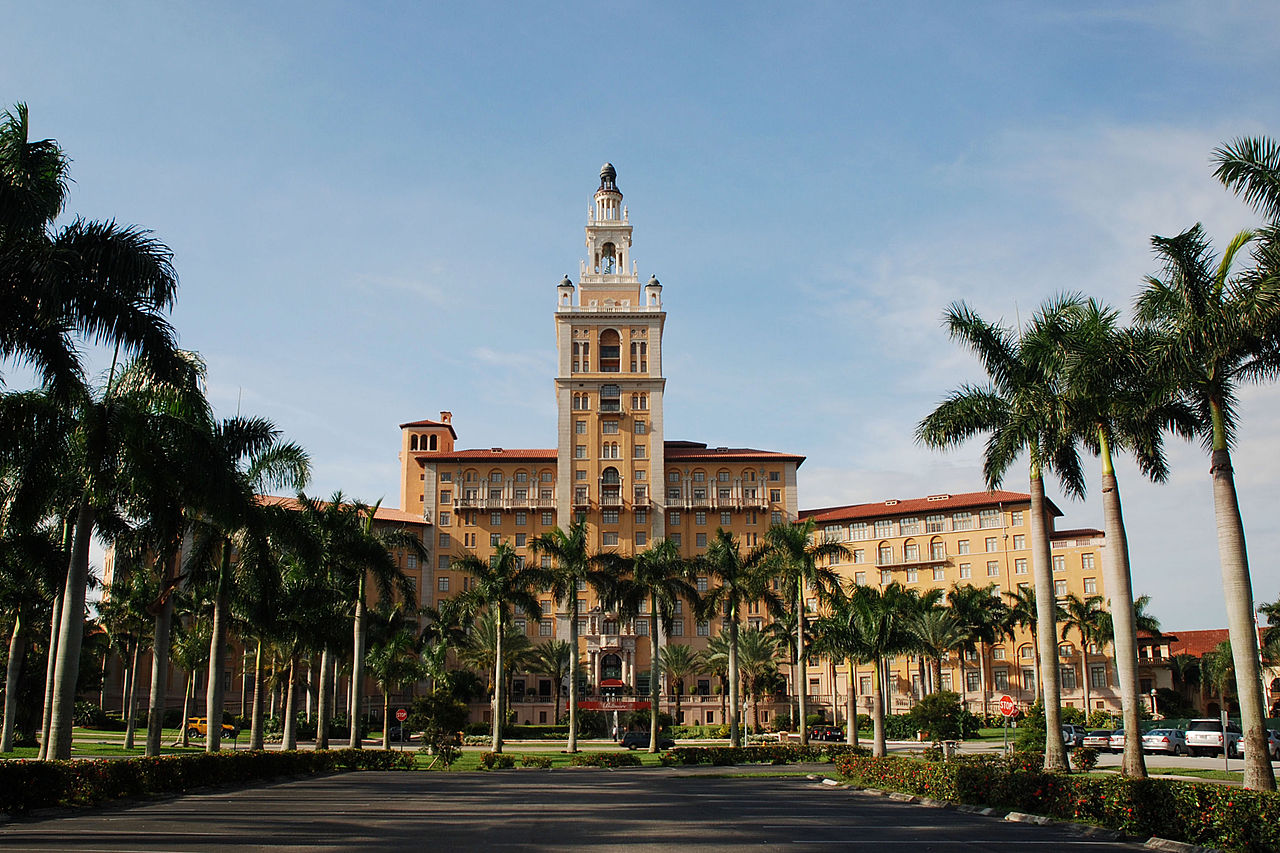
A 1926 landmark with a Giralda-inspired tower, a vast historic pool and a golf course, ten miles inland from the beach and half the price.
Nine oceanfront acres wrapped around the 1930 Surf Club, where Sinatra-era cabanas meet Richard Meier's glass wings. The quietest, most polished stretch of sand in greater Miami.
Rates change — check the live price.
Photography shows the dishes and cuisine — representative, not from the restaurants themselves.
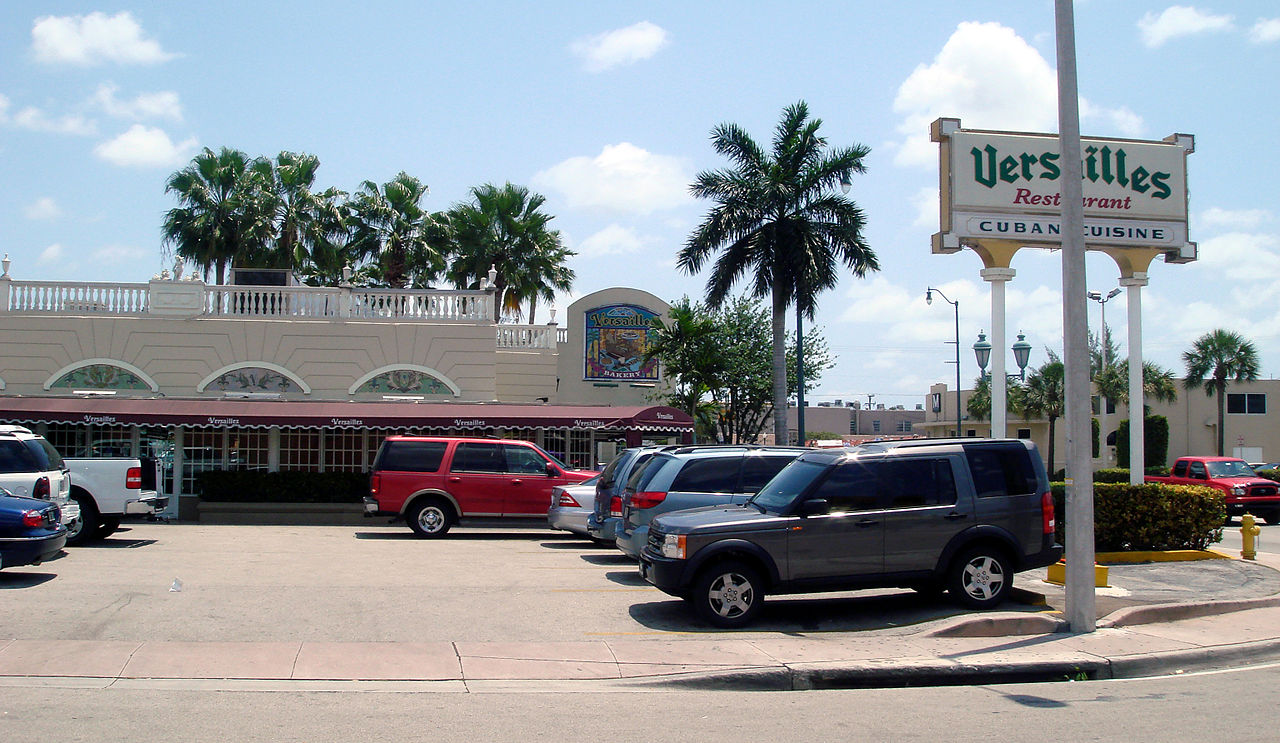
Open since 1971 and still the city's Cuban town square. Ropa vieja, palomilla steak, and a takeaway coffee window where Miami's exile politics get argued.
A 1913 institution serving chilled claws with mustard sauce. Florida's stone crab season runs 15 October to 1 May. A limited number of tables are bookable ahead; everyone else puts a name down and waits.
A converted 1940s house with a gravel garden of blue-and-white tables, serving Greek and Turkish meze a short walk from the Design District.
Wood-fired Asian cooking in a warehouse dining room — charred cauliflower, smoked short rib — and the rare Wynwood room that survived the neighbourhood's churn.
Chef Michael Beltran's Cuban-American cooking in a small Grove room, Michelin-starred and reservation-only. Book several weeks ahead for a weekend table.
Juan Chipoco's loud, art-hung ceviche room on NE 3rd Avenue, pouring pisco sours to a mixed downtown crowd. Order the tasting of ceviches and go early — it fills.
The Atlantic season runs 1 June to 30 November and peaks August through October. Rates drop for a reason; buy refundable rates and travel insurance.
The walled courtyard charges admission and is busiest at weekends. The surrounding streets are free — do both, and buy the ticket online in advance.
The Metromover loops Downtown and Brickell free of charge. Parking in South Beach and Wynwood is expensive; rent a car only for the Everglades day.
Miami Beach hotels stack resort fees, valet and around thirteen percent bed tax on the headline rate. Restaurants often add an automatic service charge.
Summer afternoons bring hard, brief thunderstorms. Carry reef-safe sunscreen and repellent — the Everglades and mangrove parks are heavy with mosquitoes.