Culture
George Town UNESCO heritage walk
A slow loop through Lebuh Armenian and Lebuh Pantai past clan jetties, kongsi houses, and five-foot ways still swept each dawn by shophouse residents.
Shophouses, Smoke & Street Art
In George Town's UNESCO core, saffron-shuttered shophouses lean over five-foot ways scented with charcoal smoke and star anise, Ernest Zacharevic murals turn brick walls into playgrounds, and the hawker capital of Malaysia serves char kway teow beside temple bells drifting down from misty Penang Hill.
A slow loop through Lebuh Armenian and Lebuh Pantai past clan jetties, kongsi houses, and five-foot ways still swept each dawn by shophouse residents.
Feng shui courtyards, indigo-washed walls, and Scottish ironwork fill this restored 1904 mansion built by a Hakka merchant prince, now a boutique hotel and museum.
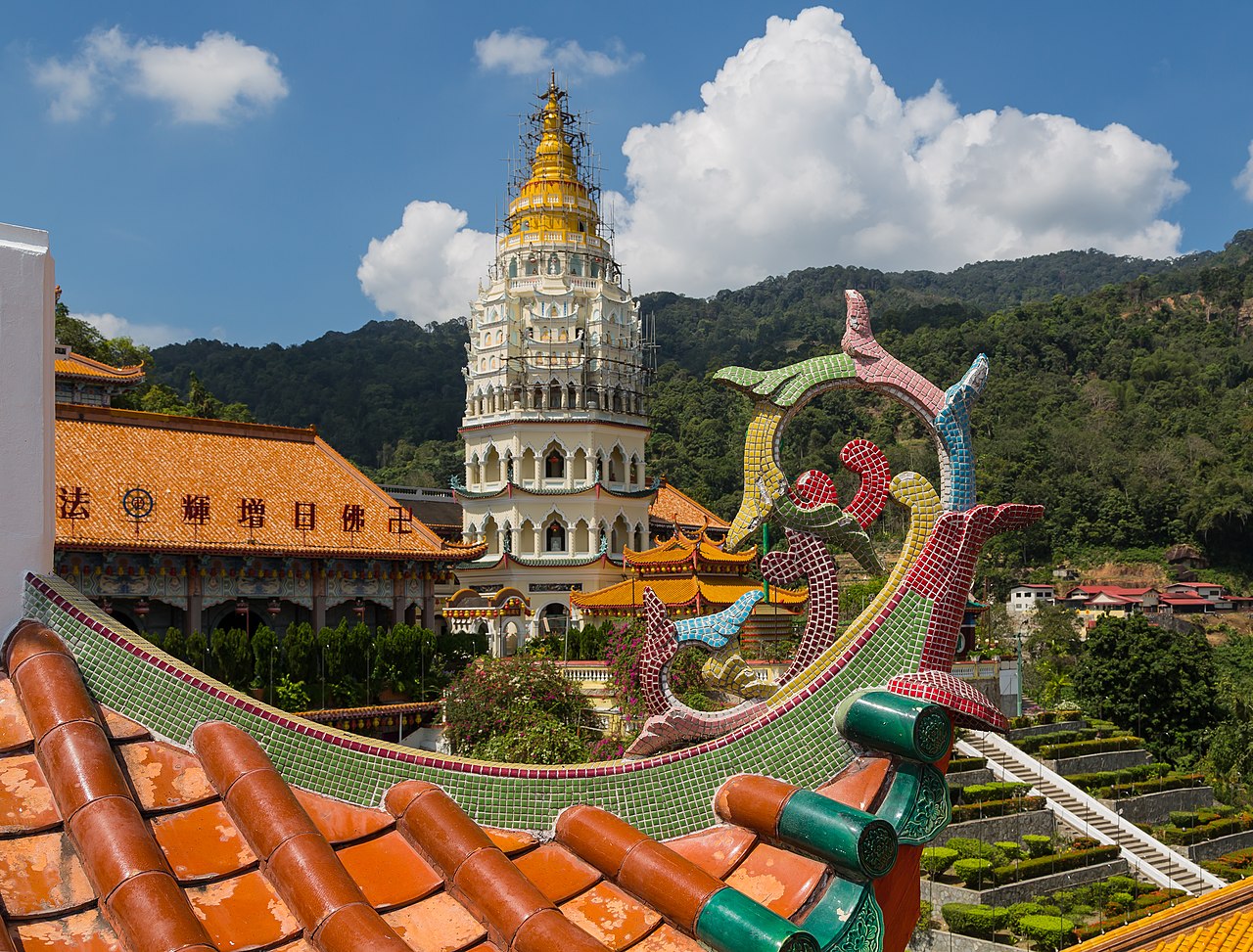
Southeast Asia's largest Buddhist temple complex climbs the hillside in tiers of pagodas and koi ponds, quietest and coolest before the tour buses arrive at nine.
A steep seven-minute rail ride climbs 800 metres to cool rainforest air, colonial bungalows, and a viewing deck looking clear across the Strait of Malacca.
A former rubber plantation now grows 500 species of tropical spice and medicinal plant along shaded jungle trails above Teluk Bahang bay.
A boardwalk-then-jungle-trail crosses Malaysia's smallest national park to a white-sand cove patrolled by long-tailed macaques and the odd monitor lizard.
Wooden houses on stilts still shelter the Chew clan's fishing families over the water, their front porches strung with lanterns and drying salted fish.
Marigold garlands, brass lamps, and banana-leaf breakfast stalls fill Lebuh Queen and Lebuh Chulia, Penang's Tamil quarter since the 1800s.
A Baba-Nyonya merchant's 1890s mansion crammed with mother-of-pearl furniture, beaded slippers, and hand-painted tiles shows Straits Chinese wealth at its most theatrical.
Britain's first foothold on the island, this star-shaped coastal fort still mounts cannon facing the harbour where Francis Light landed in 1786.
Ernest Zacharevic's 'Children on a Bicycle' and dozens of other murals and wrought-iron caricatures turn a two-block radius into an open-air gallery.
A three-kilometre curve of resort sand facing the Andaman offers jet-skiing, parasailing, and sun loungers within reach of every beachfront hotel.
A treetop canopy walk and the Langur Way suspension bridge trace the ridge of 130-million-year-old rainforest, with a lookout claiming views to Kedah.
A 33-metre gilded reclining Buddha fills this Thai Buddhist temple's main hall, its dragon-flanked entrance facing a Burmese temple directly across the lane.
Rooms built entirely inverted, furniture bolted to the ceiling, make for a genuinely disorienting hour of photo sets that actually work in person.
Jungle zip lines, a tubing river, and the Tree Top Walk climb the hillside above Teluk Bahang for the island's best adrenaline afternoon.
Dozens of stalls along the seafront serve assam laksa, oyster omelette, and rojak side by side, best eaten at a shared table facing the strait.
Backpacker-lane energy meets serious street food after dark, with satay smoke and cendol carts lining a strip that never quite sleeps.
Locals rate this residential lane's char kway teow and Hokkien mee above the tourist-facing options closer to the heritage core.
A beachfront strip of stalls sells batik sarongs, counterfeit watches, and grilled satay to a nightly crowd of resort guests.
Families fly kites and hawkers wheel out ice-cream carts on the old colonial parade ground as the sun drops behind the harbour cranes.
A colonial-era bungalow terrace on the hilltop serves Western comfort food with a panorama of George Town's lights spreading out below.
The temple's tiered pagoda and hillside Kuan Yin statue are floodlit after dark, visible from much of George Town as a golden beacon.
Restored shophouses along this heritage lane now hide speakeasy-style bars pouring spice-infused cocktails behind unmarked wooden doors.
The 'E&O' has hosted Kipling and Chaplin since 1885, its Victory Annexe suites opening onto a private seafront lawn and infinity pool.
Seven restored 19th-century townhouses joined into a single boutique hotel, filled with Peranakan antiques and shaded courtyard gardens.
Minangkabau-roofed wings sit inside 16 hectares of beachfront gardens, with the resort's CHI spa built around private tropical pavilions.
A former bank and mansion pairs original terrazzo floors and a domed atrium with a rooftop bar overlooking the heritage skyline.
Rates change — check the live price.
Photography shows the dishes and cuisine — representative, not from the restaurants themselves.
Refined Nyonya tasting menus served in a candlelit heritage courtyard — book the itik tim duck soup and otak-otak well ahead.
A Michelin-recommended home-style Nyonya kitchen serving recipes passed down through generations; the assam prawns are the standout order.
Queues form nightly for pork belly with salted fish and the char kway teow — arrive by 6:30 or expect a wait.
A 24-hour institution down a back alley where you point at curries ladled over rice — go for the fried squid and mutton curry.
Wok-fried over real charcoal heat, this stall's char kway teow is widely rated the island's best — cash only, cockles optional.
Three shophouses joined into one dessert-and-dinner complex, famous for towering cakes and a live-music courtyard bar after dark.
The best stalls sell out by early afternoon or evening — aim for 12:00 for lunch stalls and 18:30 for dinner-focused hawker centres.
Shoulders and knees should be covered at Kek Lok Si and Wat Chayamangkalaram; light scarves work well in the heat and humidity.
The Blue Mansion and Pinang Peranakan Mansion run limited guided slots daily, and afternoon tours sell out on weekends.
Metered taxis are scarce; Grab is cheap and reliable between George Town, the airport, and Batu Ferringhi.
Most hawker stalls and night markets are cash-only and rarely carry change for large notes, so keep a stack of small denominations handy.