Nature
Gardens by the Bay at opening
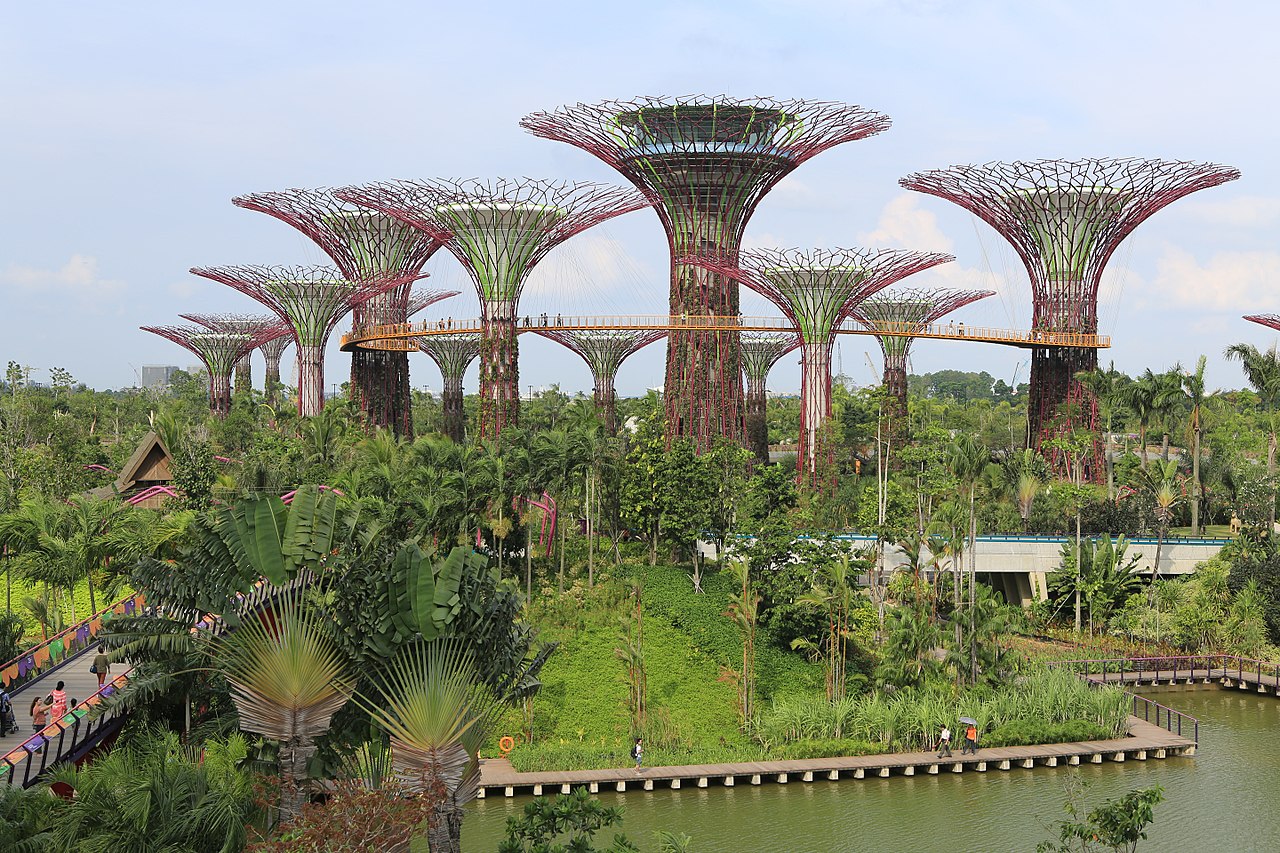
Beat the crowds to the Cloud Forest and Flower Dome conservatories, then walk the Supertree Grove as mist still hangs over the bay — the vertigo walkway between the trees is unforgettable.
Garden in a City
A city-state of extraordinary efficiency and unlikely beauty, where a hawker stall run by the same family for fifty years sits three floors below a Michelin-starred kitchen — and both queues are worth joining.
Beat the crowds to the Cloud Forest and Flower Dome conservatories, then walk the Supertree Grove as mist still hangs over the bay — the vertigo walkway between the trees is unforgettable.
The National Orchid Garden holds 1,000 species in a UNESCO World Heritage landscape — morning light through the rain trees over Swan Lake is the city at its gentlest.
The museum inside three restored Chinatown shophouses reconstructs the world of early Hokkien and Cantonese immigrants with moving precision — exit into Smith Street for char kway teow.
Tekka Centre's wet market at full morning intensity: jasmine-garland sellers, fish-mongers, and banana-leaf rice stalls competing with the scent of camphor from Sri Veeramakaliamman temple next door.
Ten galleries in a colonial Empress Place building trace 4,000 years of Asian history — the Tang shipwreck room and the textiles collection are world-class.
A bumboat from Changi Point reaches an island still largely untouched since the 1960s — rent a clunky bike and ride through Chek Jawa wetlands where otters fish in the mangroves.
Singapore's oldest public housing estate wakes up slowly, with Art Deco stairwells, independent bookshops and a bakery queue that forms before the pastries have cooled. It is the unhurried, low-rise Singapore that postcards tend to skip.
Tian Tian Hainanese chicken rice is the headliner, but the popiah, rojak, and curry puffs at neighbouring stalls deserve equal devotion — budget S$15 for a proper hawker feast.
The 4-kilometre gondola ride from Mount Faber to Sentosa gives the best harbour panorama in the city before you hit the beach, Universal Studios, or just a cold Tiger by the sea.
The city's most beautiful building houses a chronological narrative of Singapore from Sang Nila Utama to Lee Kuan Yew — the glass dome atrium alone is worth the entry price.
Persian rugs, batik fabric, and perfume oils spill from Bussorah Street shophouses in the shadow of the Sultan Mosque's gold onion dome.
A kilometre of interconnected malls anchored by ION Orchard's atrium, where every global luxury brand and every hawker app-delivery kiosk coexist with Singaporean serenity.
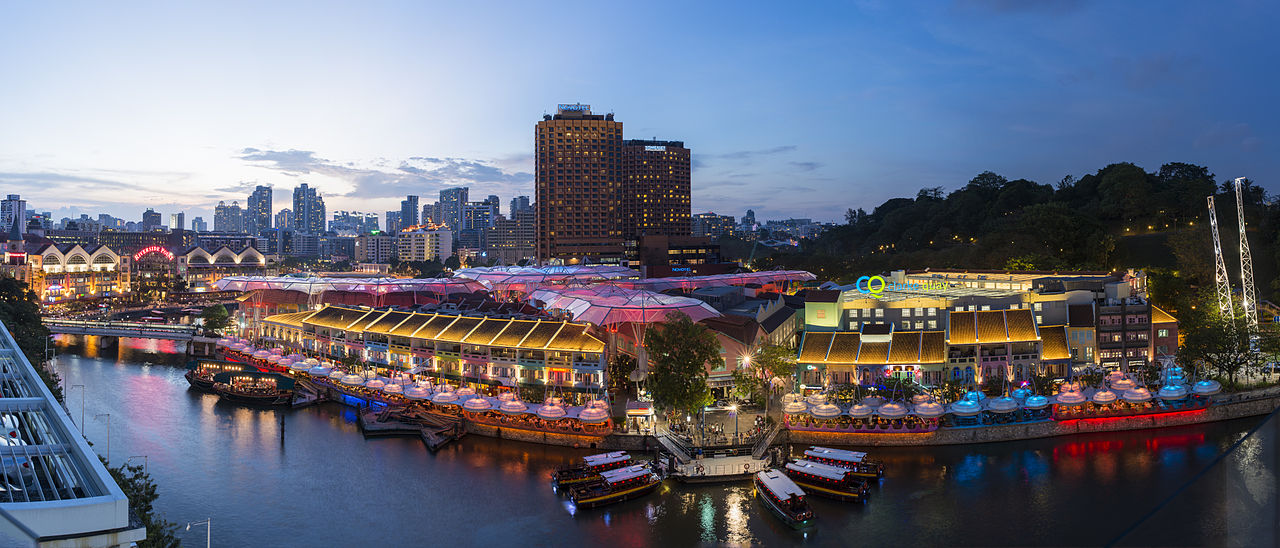
A 40-minute covered bumboat cruise from Clarke Quay past Cavenagh Bridge and colonial Boat Quay before the afternoon bar crowd arrives — an efficient way to see the shophouse belt.
In a studio tucked behind the gold-domed mosque, a batik artist walks visitors through the wax-resist dyeing technique that has moved between Southeast Asian ports for centuries. Guests leave with their own hand-stamped cloth.
Free laser-and-water fountain choreography at the Marina Bay Sands promenade, running Friday and Saturday at 20:00 and 21:00 — the viewing terrace fills fast.
The colonial Long Bar invented the pink gin Sling in 1915 and still serves it with peanut shells on the floor — one drink is enough, and the tikka ceiling fans are free to admire.
The outdoor satay stalls on Boon Tat Street close to traffic every evening as skewers of chicken, mutton, and prawn hit the charcoal and peanut sauce flows freely.
282 metres above the CBD, the world's highest open-air rooftop bar offers an unobstructed 360° panorama of the city, the strait, and the dark mass of Batam beyond.
Each evening the Supertree Grove at Gardens by the Bay comes alive with a choreographed display of light and sound rippling across the towering structures. Find a patch of lawn below and let the tropical night do the rest.
Slip into the world's first nocturnal wildlife park, where trams and walking trails reveal leopards, tapirs and flying foxes going about their after-dark business. It is Singapore at its most primeval, twenty minutes from the skyline.
Once the shophouses shutter for the day, Chinatown's back lanes fill with the smoke of charcoal satay and the clatter of wok hei. Wander from stall to stall with no itinerary beyond appetite.
The 1887 colonial landmark that invented the Singapore Sling — meticulously restored suites, butler-drawn baths and a Writer's Bar steeped in Kipling-era literary atmosphere.
Two restored British colonial barracks anchored by art deco mansions on Sentosa's hilltop; personalised butler service and an Auriga spa set within lush tropical gardens.
The former General Post Office converted into Singapore's most architecturally celebrated hotel, with Palladian columns facing Marina Bay and a rooftop infinity lap pool.
Three towers crowned by the world's largest rooftop infinity pool at 200 metres; the SkyPark delivers an unrivalled 360-degree panorama of the entire city-state at sunrise.
Rates change — check the live price.
Photography shows the dishes and cuisine — representative, not from the restaurants themselves.
Three Michelin stars in a luminous gallery space — Chef Julien Royer's French-technique menu is grounded in Asian ingredients and impeccably timed.
Singapore's most-argued-over hawker stall. The poached chicken is silky, the chilli is fire, and the queue by 11:30 will tell you everything you need to know.
The canonical chilli crab experience: whole Sri Lankan mud crabs in a sweet-savoury gravy mopped up with mantou buns. Order the black pepper version for a second opinion.
The world's first Michelin-starred Peranakan restaurant brings buah keluak, ngoh hiang, and pineapple tart to their full expression.
Short noodles cut so you eat with a spoon alone, in a coconut-rich gravy with cockles and tofu puffs — the Katong original remains the benchmark.
Cocktails on the 57th floor with the Singapore skyline panorama — arrive for sunset and stay for the DJ set if the evening is clear.
Singapore's metro is clean, air-conditioned, and covers 95% of tourist sights — top up an EZ-Link card at any station and ignore the taxi apps for most journeys.
Government-run hawker centres (Maxwell, Lau Pa Sat, Tiong Bahru) are cheaper and more authentic than air-conditioned food courts in malls — seek them out.
Gum is genuinely illegal to import or sell — do not attempt to bring it in, even as a joke, as customs officers take it seriously.
Malls, museums, and the MRT are aggressively cold — carry a light cardigan even if it is 33°C outside, and you will be comfortable all day.
Singapore's top tables sell out faster than any comparable city in the world — for tasting-menu restaurants, book as far in advance as the system allows.