Nature
Pohutu Geyser eruption watch at Te Puia
The Southern Hemisphere's largest active geyser erupts up to twenty times daily to heights of thirty metres, best seen from Te Puia's terraced viewing area.
Geothermal Heartland
Sulphur steam drifts across lakeside streets in a city built atop a live volcanic field, where geysers erupt on schedule, glowworms light limestone caves in electric blue, and Māori hāngi feasts still cook in the earth itself.
The Southern Hemisphere's largest active geyser erupts up to twenty times daily to heights of thirty metres, best seen from Te Puia's terraced viewing area.
A boardwalk trail loops past the neon-orange Champagne Pool, bubbling mud pools, and sulphur crater lakes in a spectrum of unnatural colour.
A silent boat glides beneath a limestone ceiling glittering with thousands of native glowworms, their bioluminescent threads mimicking a starfield.
Suspension bridges strung between century-old Californian redwoods lift walkers twenty metres into the canopy of Whakarewarewa Forest.
The permanent set built for the Lord of the Rings and Hobbit trilogies sits on working Waikato farmland, complete with the Green Dragon Inn for a pint.
A high-speed jet boat spins through the narrow Waikato gorge before idling beneath the thundering turquoise cascade of Huka Falls.
Residents of this thermal village, inhabited for generations, lead tours past steam-cooked hāngi pits and geothermal bathing pools still in daily use.
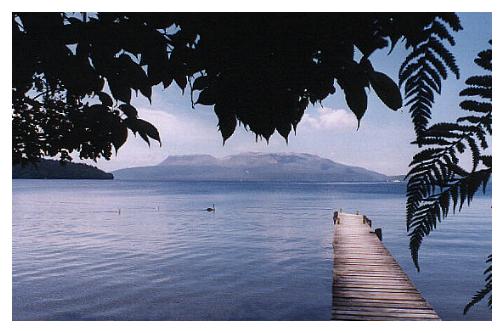
Mineral-rich acidic and alkaline hot pools sit right on Lake Rotorua's edge, steam rising off the water as the sun clears the far shore.
Wetsuited and inner-tubing through underground rapids, the tour ends drifting silently beneath a glowworm-lit cave ceiling before the exit waterfall.
A gondola climbs Mount Ngongotahā for views over Lake Rotorua, then it's multiple runs down winding luge tracks back to the base station.
One of New Zealand's original mountain bike destinations, with over 130 kilometres of trail winding between towering redwood and pine.
Strapped or splashing inside a giant inflatable sphere, riders tumble down a purpose-built hillside track at the sport's Rotorua birthplace.
A raised boardwalk crosses a barren, steaming volcanic field of hissing craters and vents formed after nearby geothermal power development.
The world's youngest geothermal system, born from the 1886 Tarawera eruption, descends past the vivid Frying Pan Lake to a boat cruise on Lake Rotomahana.
A cruise across the still waters beneath Mount Tarawera visits the buried village of Te Wairoa, destroyed in the volcano's 1886 eruption.
Six ziplines and swing bridges thread through one of the last stands of native podocarp forest near Rotorua, with guides pointing out kiwi conservation work.
A recreated pre-European village hosts a full evening of waka arrival, haka, and a hāngi feast unearthed from an underground earth oven.
Warriors arrive by illuminated war canoe on the Wai-o-whiro Stream before a hāngi dinner and haka performance beside the flowing water.
Adults-only lakefront pools stay open into the evening, the mineral water glowing under lights as steam drifts across the dark lake surface.
Away from town lights, this volcanic crater lake gives a clear view of the southern night sky, with the Milky Way often visible overhead.
A guided evening kayak paddle crosses a quiet Rotorua lake to a forest-lined bank where native glowworms cluster in the dark undergrowth.
A lakefront reserve of steaming vents and mineral-stained shoreline sits a short walk from downtown, eerily lit at dusk with wading birds nearby.
A restored paddle steamer circles Lake Rotorua at dinner service, passing Mokoia Island as the geothermal steam clouds catch the sunset colour.
The falls' turquoise volume is at its most dramatic in low evening light, viewed from the footbridge with a takeaway picnic from a Taupō deli.
A cedar and stone lodge set within 2,500 private acres of native forest, with guided game hunting, trout fishing, and a Relais & Châteaux kitchen.
Perched on a private peninsula above Lake Tarawera with Mount Tarawera as backdrop, each suite has a private deck over the water and volcano view.
New Zealand's most storied lodge sits on manicured riverside grounds beside the Waikato, hosting royalty and heads of state since the 1920s.
A sleek lakefront tower with geothermal-heated pools and floor-to-ceiling views over Lake Rotorua, a five-minute walk from the government gardens.
Rates change — check the live price.
Photography shows the dishes and cuisine — representative, not from the restaurants themselves.
Rotorua's most acclaimed fine-dining room, pairing a short seasonal tasting menu with an extensive New Zealand wine list — book ahead on weekends.
Pullman Rotorua's sleek in-house steakhouse — a lamb rack cooked exactly right and a Scotch fillet that holds its own against the whisky list.
A multiple-time Café of the Year winner — generous brunch plates and a genuinely excellent acai bowl before a day of thermal-park walking.
Floor-to-ceiling windows look straight over Lake Taupō and Mount Tauhara — the eggs benedict and flat white are the reason locals queue on weekends.
A garden café metres from the falls' lookout track, serving big cooked breakfasts to hikers and jet-boat riders alike.
A revolving-view buffet atop Mount Ngongotahā, reached by gondola, pairing a hāngi-style carvery with a full lake panorama at sunset.
Rotorua sits on an active geothermal field and the mild rotten-egg scent is normal near the lakefront — it fades quickly once you're used to it.
Both sell out daily in peak season; reserve entry times online at least a few weeks before travel, especially for summer and school holidays.
Central North Island weather shifts fast — bring a warm layer and light rain jacket even in summer, especially for evening thermal park visits.
Mineral water in geothermal spas can discolour light-coloured swimwear — bring a darker suit you don't mind staining slightly.
The drive is under an hour on good roads, making Huka Falls, Craters of the Moon, and Lake Taupō an easy add-on from a Rotorua base.