Market
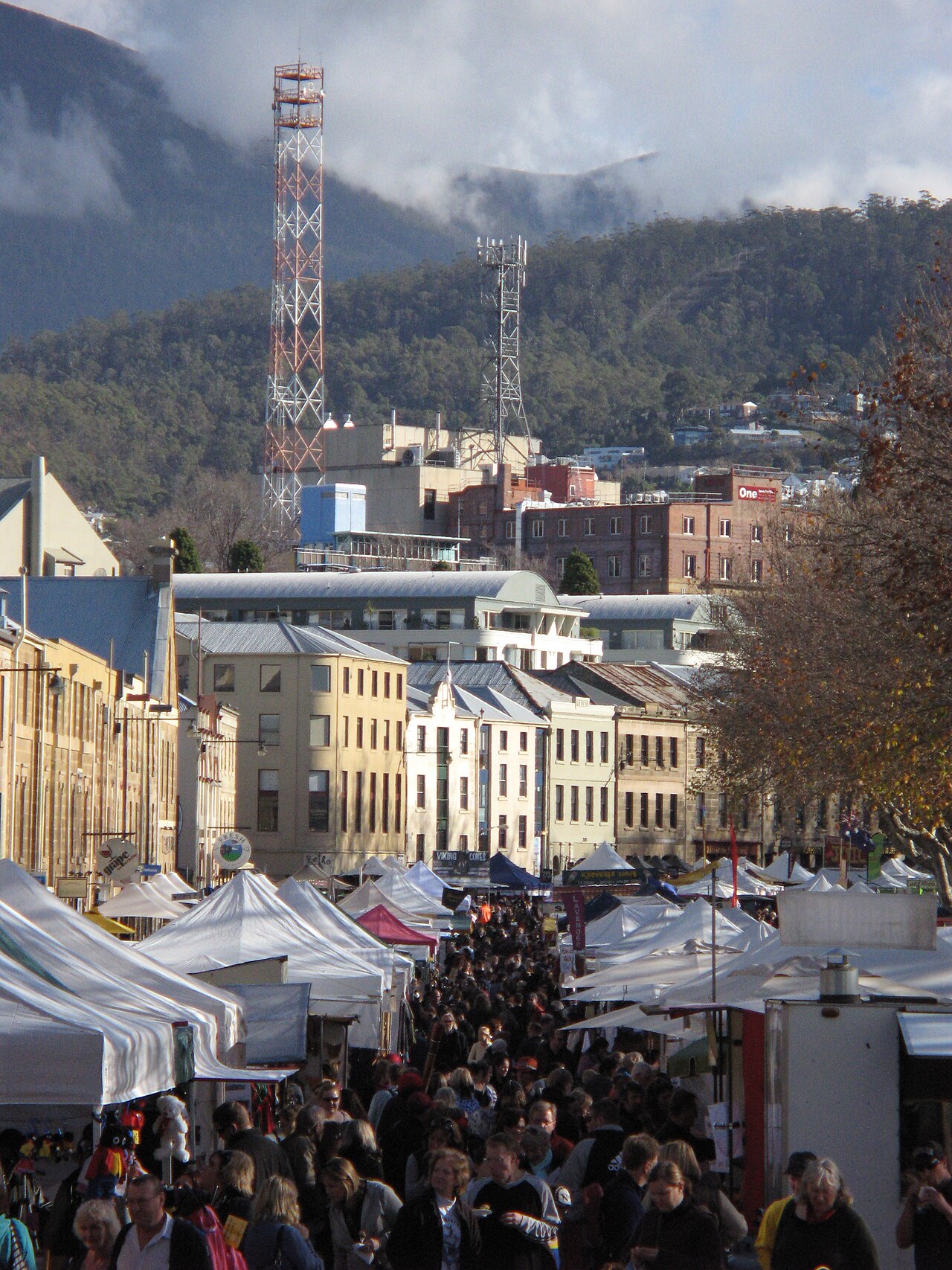
Salamanca Market Saturday stalls
Three hundred stalls of Tasmanian produce, timber crafts, and buskers fill the sandstone warehouse forecourt every Saturday, a weekly ritual since 1972.
Wilderness Edge
An island of dolerite peaks, pink-granite bays, and a subversive underground museum carved into river cliffs, where oysters come straight off Bruny Island's shore, wombats graze beside alpine trails, and the air smells of eucalyptus and cold, clean ocean.
Three hundred stalls of Tasmanian produce, timber crafts, and buskers fill the sandstone warehouse forecourt every Saturday, a weekly ritual since 1972.
David Walsh's subterranean museum, reached by the pink MR-1 ferry up the Derwent, stages confronting contemporary art inside carved sandstone tunnels.
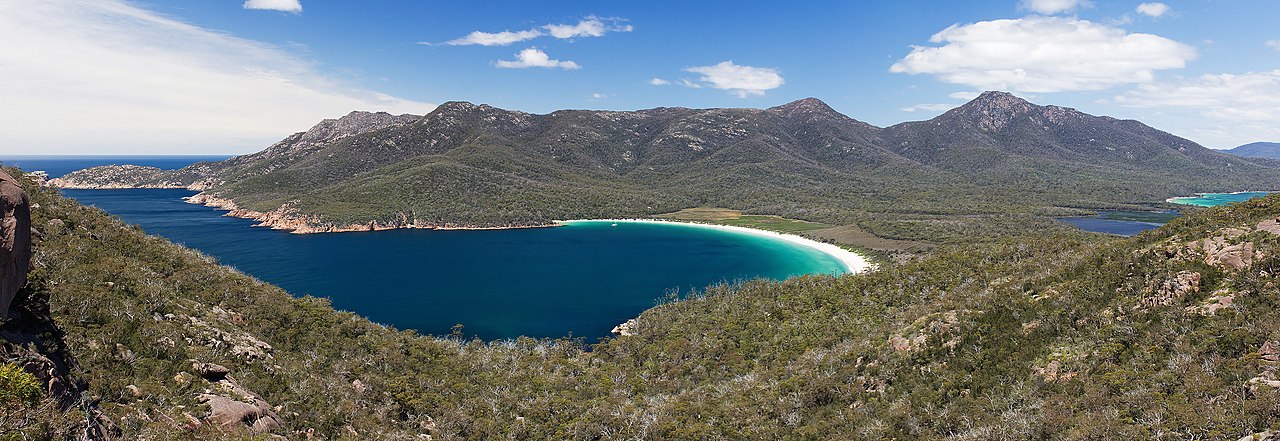
A steep granite staircase climbs to the saddle for the postcard view of the perfect white crescent beach curling around impossibly turquoise water.
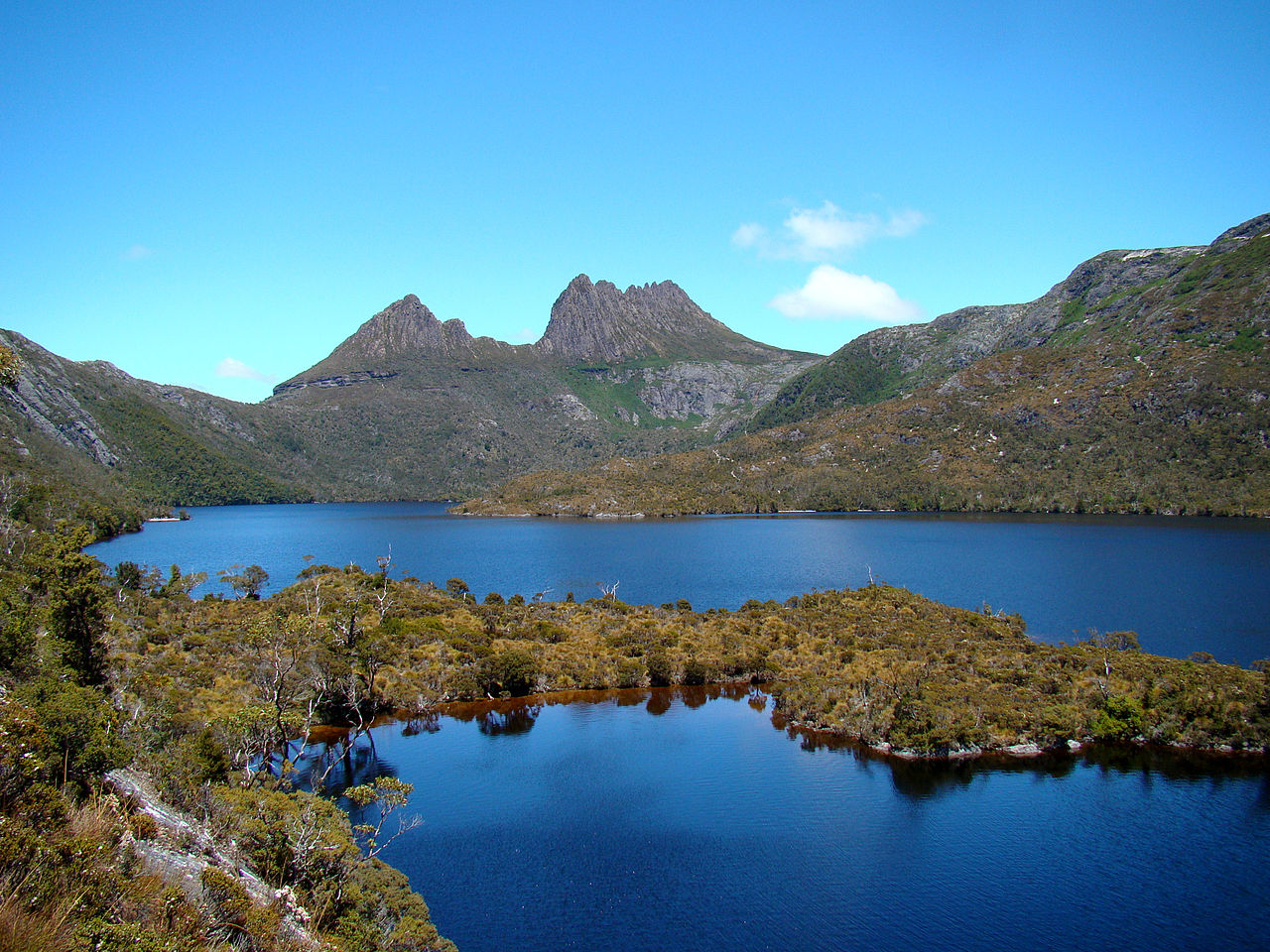
This boardwalk circuit around the glacial lake mirrors Cradle Mountain's jagged dolerite crown, with wombats often grazing unbothered beside the track.
A twenty-minute drive from the CBD reaches the 1,271-metre summit, where dawn light spreads across Hobart, the Derwent estuary, and the D'Entrecasteaux Channel.
Georgian cottages and colonial mariners' houses line these quiet streets above the harbour, largely unchanged since Hobart's 1830s whaling heyday.
A morning circuit of the island's dairy and oyster farms includes a tasting flight of raw Pacific oysters shucked straight off the shore.
Australia's oldest stone bridge, built by convicts in 1825, anchors a village of colonial cottages twenty-five minutes from Hobart's CBD.
A rigid inflatable boat runs beneath the towering dolerite sea cliffs of the island's south, weaving through blowholes to spot fur seals and albatross.
Ruined sandstone penitentiaries and a harbourside cemetery tell the story of Australia's most notorious 19th-century convict settlement across 30 waterfront hectares.
Paddle beneath the pink-granite Hazards range from Coles Bay, gliding past oyster leases and white sand coves inaccessible by road.
A guided dusk walk reveals wombats, pademelons, and if you're fortunate a wild Tasmanian devil foraging along the buttongrass moorland.
A steel walkway suspends visitors 50 metres above the confluence of the Huon and Picton rivers, deep in old-growth eucalypt forest.
This rescue sanctuary north of Hobart lets visitors hand-feed kangaroos and watch keepers hand-rear orphaned Tasmanian devil joeys behind the scenes.
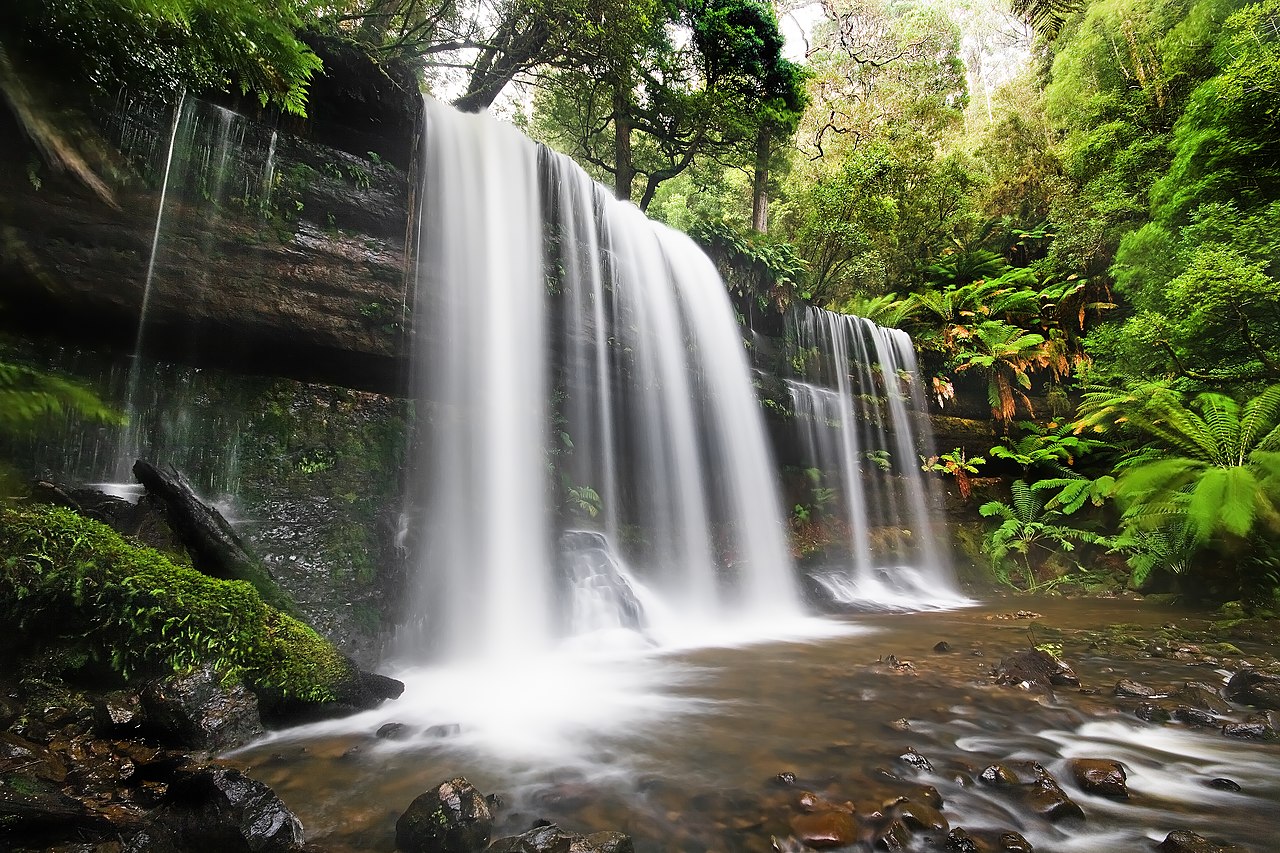
A gentle rainforest path through towering swamp gums leads to a tiered waterfall inside Mount Field, one of Tasmania's two oldest national parks, both established in 1916.
Cool-climate cellar doors thirty minutes from Hobart pour pinot noir and sparkling from vineyards planted along the Coal River's sheltered slopes.
The summit's exposed viewing platform catches the last light over the Derwent estuary as Hobart's harbour lights begin to flicker on below.
This intimate CBD dining room builds nightly changing menus around whatever Tasmanian growers, foragers, and fishers deliver to the kitchen door that day.
MONA's midwinter festival fills the Hobart waterfront with fire sculptures, nude solstice swims, and a blood-red neon cross above the Derwent.
Australia's second-oldest lighthouse stands on wind-scoured cliffs at the island's southern tip, its beam sweeping the Southern Ocean as the sky turns amber.
Fishing punts moored at Constitution Dock sell fresh scallops and flake, a short stroll from bars pouring Tasmania's celebrated small-batch single malts.
Minimal light pollution over the national park reveals the Milky Way in dense detail, with the aurora australis occasionally visible on clear southern horizons.
This heritage pub on Brisbane Street beside City Park pours Tasmanian craft beer while its refurbished band room hosts local and touring live acts several nights a week — check the calendar before you go.
Lantern-lit guides lead groups through the ruined penitentiary after dark, recounting convict-era hauntings among buildings that once held 12,000 prisoners.
A dramatic ray-shaped lodge overlooking the Hazards and Great Oyster Bay, with all-inclusive dining and guided experiences woven through the surrounding wilderness.
A restored 1830s colonial hospital building fused with a contemporary tower, its rooftop bar looking straight down Hobart's harbour toward kunanyi.
Every room is themed around a real Tasmanian story, from convicts to explorers, set directly on the working harbour beside the fishing fleet.
Timber cabins with wood fires sit inside the national park itself, wombats grazing the lawns at dusk beneath the jagged dolerite skyline.
Rates change — check the live price.
Photography shows the dishes and cuisine — representative, not from the restaurants themselves.
A tiny, produce-obsessed dining room where the nightly menu is dictated entirely by what local foragers and fishers bring to the door.
Housed in a converted 1920s bus depot, Franklin's wood-fired kitchen turns out Tasmanian seafood and game with a stellar natural wine list.
Perched above the museum's vineyard on the Derwent, the menu leans on estate-grown produce and pairs naturally with MONA's own wine label.
Buy a dozen fresh Pacific oysters straight from the farm's roadside shed and eat them shucked, on ice, looking over the oyster leases.
Inside the Mures building on Victoria Dock — natural oysters, crudo and scallops backed by an all-Tasmanian wine list, with floor-to-ceiling harbour views.
This neighbourhood bakery-café has fed Battery Point locals its sourdough and savoury tarts every morning for over three decades.
Distances between regions are large and public transport is sparse; a rental car is essential for reaching Freycinet, Cradle Mountain, and the south.
Tasmania's marquee experiences fill fast in summer; secure lodge rooms and the pink MR-1 ferry tickets as soon as dates are set.
Mountain and coastal weather shifts abruptly regardless of season; carry a waterproof shell and warm layer on every day trip.
The Kettering to Bruny Island ferry is first-come, first-served with no slot reservations; pre-purchase an open-dated ticket to skip the booth, and avoid the 8-10am and 4-5pm queue peaks.
The MR-1 catamaran from Hobart's Brooke Street Pier is part of the experience, arriving beneath the museum's cliff-face entrance from the water.