Tasting
Old Quarter pho breakfast walk
Chase the city's best broth through four bowls at four different hole-in-the-wall kitchens, led by a local who has eaten nothing else for breakfast in thirty years.
Thủ Đô Ngàn Năm
A city of thirty-six guild streets and a thousand years of memory, where the smoke of incense at a lake-side pagoda mingles with motorbike exhaust and the aroma of simmering bone broth — and somehow it all makes perfect sense.
Chase the city's best broth through four bowls at four different hole-in-the-wall kitchens, led by a local who has eaten nothing else for breakfast in thirty years.
The marble colossus that defines Ba Dinh Square, flanked by a single lotus-shaped pagoda rising from its own reflection pool — arrive before 10:00 when the queue is short.
Founded in 1070, with Vietnam's first national university added in 1076 — five courtyards of scholars' stelae, flowering frangipani, and an unlikely tranquility in the heart of the capital.
One of Hanoi's oldest and largest markets at full bustle — vendors stacking silk bolts, live shellfish, and bundles of lemongrass while the city readies itself for another day.
Rent a bicycle and circle the emerald lake as the tai-chi practitioners finish their routines and the coffee carts set up for the morning rush — the day's most peaceful hour.
A short drive southeast over the Red River brings you to a village of ceramic kilns that have been firing since the fourteenth century — throw your own bowl, browse the market, lunch local.
Beneath the old French-built iron bridge, traders unload produce from the Red River delta as commuter traffic streams past overhead. It is Hanoi's daily supply chain in plain view, best seen before the heat sets in.
Outdoor reconstructed stilt houses alongside indoor galleries covering Vietnam's 54 recognised ethnic groups — one of Southeast Asia's best ethnographic museums, and perpetually uncrowded.
The remnant of a French colonial prison that later held American pilots — a sobering, well-curated history of colonial repression and wartime memory.
Pedal the breezy promenade around Hanoi's largest lake, stopping at Vietnam's oldest Buddhist pagoda on a small island causeway, its red-brick spire rising over the water.
Lacquerware paintings, Cham sculpture, and propaganda-era silk scrolls filling a French colonial villa — understated, absorbing, and almost never crowded.
Each of the 36 old streets once sold a single trade — linger on Hang Gai for silk, Hang Bac for silverwork, and Hang Ma for paper goods and lanterns.
A leisurely pedalled loop past ochre colonial mansions, the Opera House, and broad boulevards lined with flame trees — a completely different Hanoi from the Old Quarter.
A local artisan demonstrates the slow, many-layered process behind Vietnamese lacquer painting before handing visitors a brush of their own. The afternoon moves at the pace of the resin drying between coats.
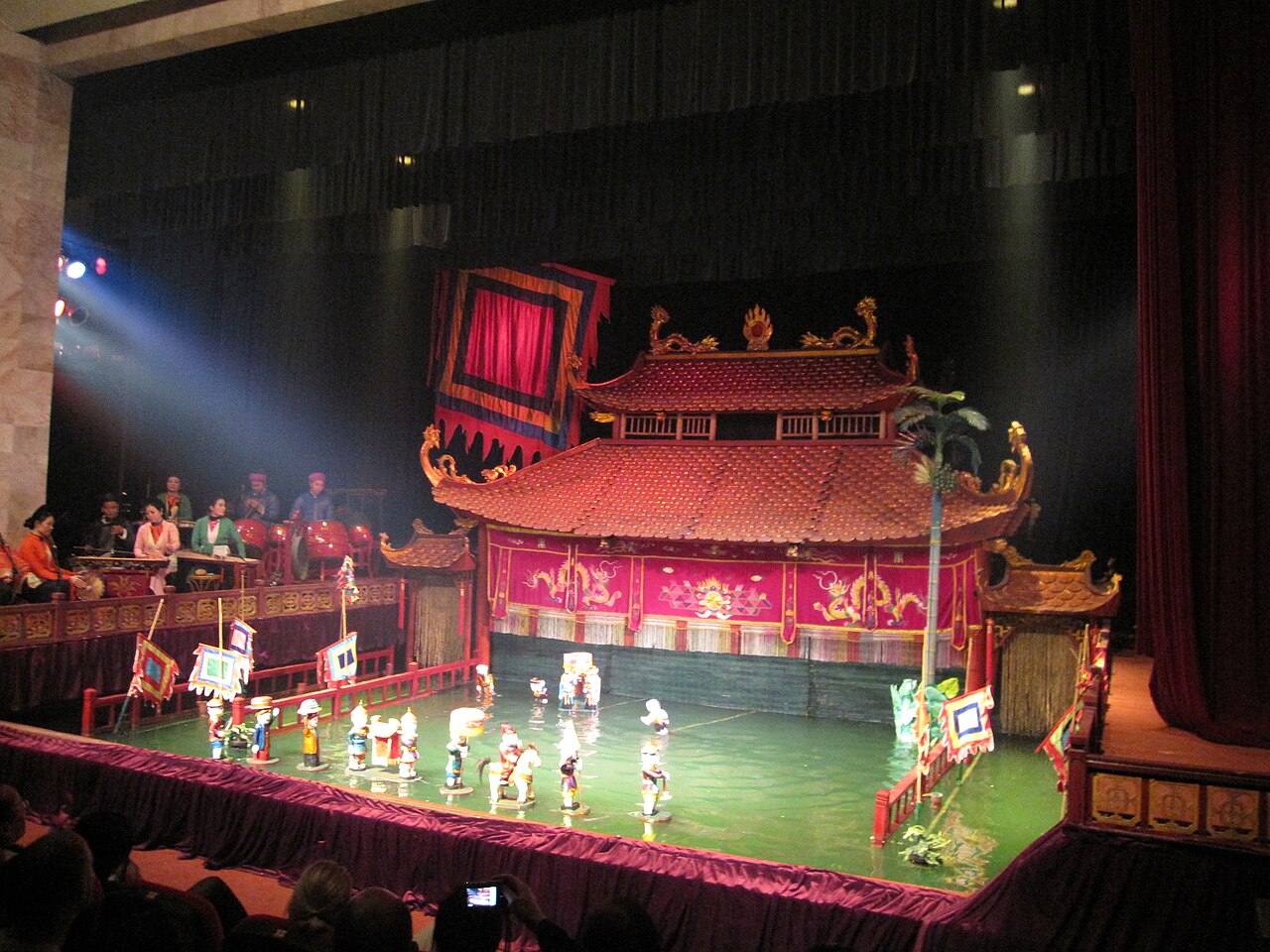
An 11th-century art form performed on the water: lacquered wooden puppets enact folk tales of rice harvests and dragon dances over a submerged stage. Book ahead for weekend shows.
Twenty-cent fresh-brewed beer poured from a keg, plastic stools on the pavement, and half of Hanoi packed into one intersection — the world's most democratic nightlife.
Friday to Sunday evenings the northern Old Quarter streets close to traffic and fill with clothing stalls, street snacks, and live music — the neighbourhood at its most festive.
A 19th-floor terrace above Ly Thuong Kiet in the Pacific Place tower, where well-mixed Vietnamese-inspired cocktails come with a sweeping night view over Hanoi's skyline and a rare breeze.
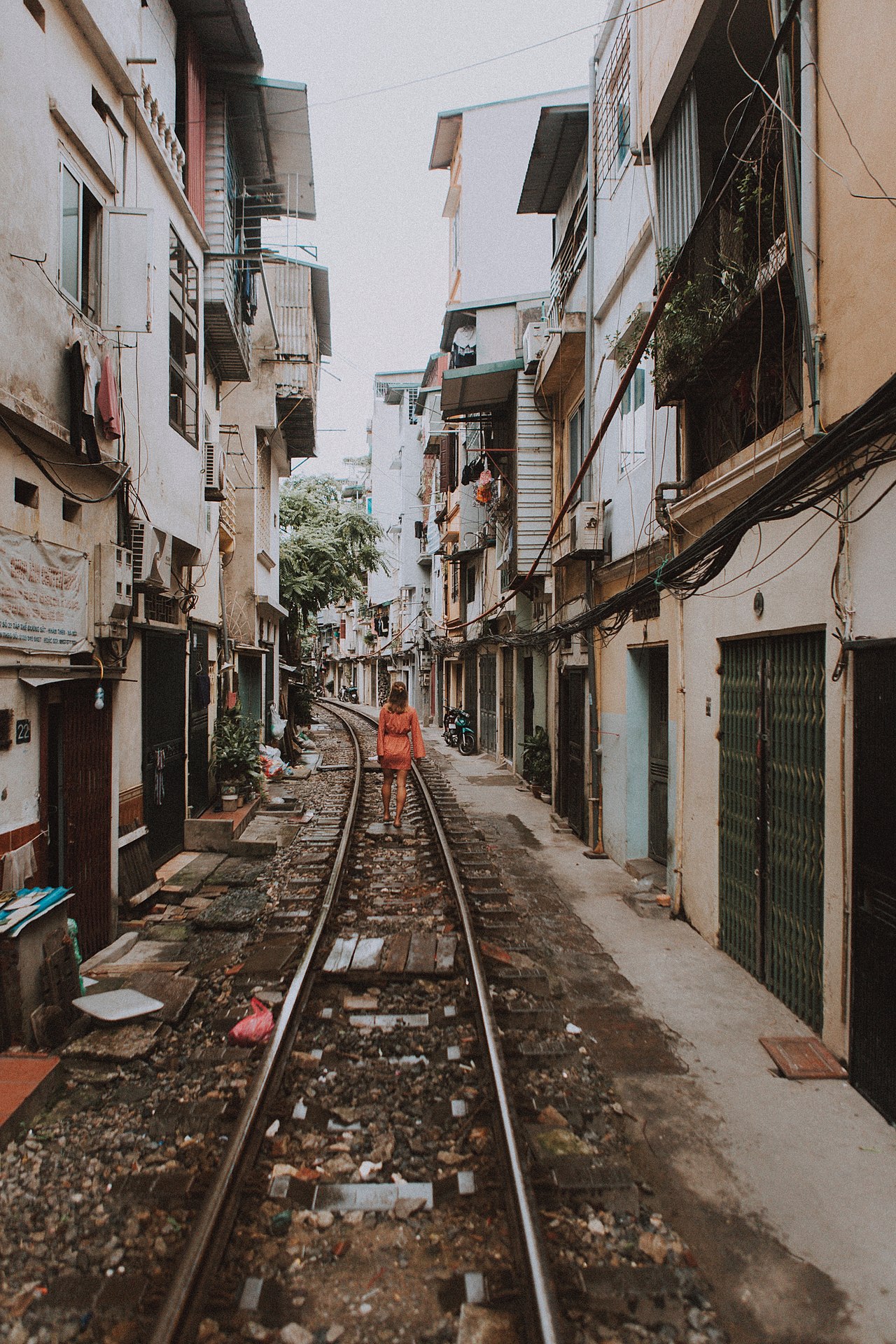
Twice a day a narrow residential lane doubles as an active railway corridor, cafe tables and laundry lines pulled back just long enough for a train to rumble through at arm's length. Evening light on the tracks makes for the best frames.
In a small performance space in the Old Quarter, a single vocalist and a lute player perform ca trù, a centuries-old chamber music once reserved for royal courts. It is an intimate, unhurried counterpoint to the city's honking streets.
Grilled pork patties over rice noodles and herbs, the way Hanoians have eaten it for generations, served at a family-run table rather than a tourist counter. Pull up a plastic stool and eat as the locals do.
An 1901 neo-classical palace where Charlie Chaplin and Graham Greene stayed — the hotel's wartime bunker tour, Oscar's bar and a Vietnamese-herb spa carry over a century of living legend.
Fifteen suites pay homage to Vietnamese opera and its divas, with lacquered furnishings, a private cinema and Hanoi's most theatrical cocktail bar beneath one Haussmann-esque roof.
Forty over-water rooms and suites extend onto the surface of West Lake, offering misty dawn panoramas of the Tay Ho pagoda and a spa housed in a traditional stilt-house pavilion.
Carlos Zapata's wave-inspired tower delivers the city's grandest ballrooms, a rooftop pool with West Lake vistas and a sake-forward Japanese restaurant cantilevered on the 26th floor.
Rates change — check the live price.
Photography shows the dishes and cuisine — representative, not from the restaurants themselves.
The most storied pho in the city: rich northern-style beef broth, hand-cut noodles, no-frills setting. Queue before 7:30.
One dish, one recipe, since 1871 — turmeric-marinated catfish fried at the table with dill and shrimp paste. A Hanoi ritual.
A social-enterprise training restaurant serving creative Vietnamese food — excellent quality with a good-conscience price tag.
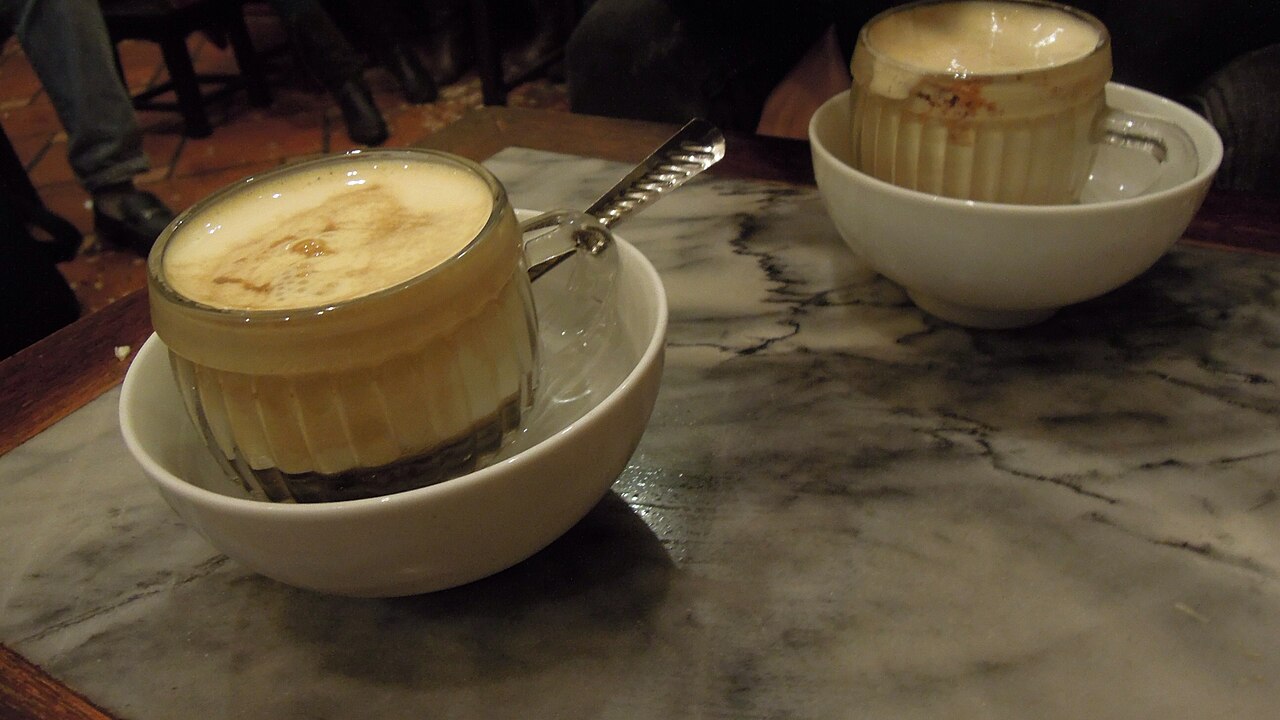
The originator of ca phe trung (egg coffee): a velvety beaten-yolk foam over robusta, served in a bowl of hot water. Tiny, timeless.
Made world-famous by Anthony Bourdain and Barack Obama — grilled pork patties, dipping broth, and herbs. Exactly as good as billed.
French-Vietnamese tasting menus in a restored colonial house — the kitchen is serious, the garden courtyard is beautiful.
Walk at a steady pace into traffic — motorbikes will flow around you. Hesitating or rushing is more dangerous than a confident, constant stride.
The Grab app gives fixed prices before you board — avoid unmarked taxis and always confirm the fare with metered cabs before getting in.
Ho Chi Minh's Mausoleum is closed Monday and Friday mornings, plus an annual maintenance closure that runs from early September into November. Check the current schedule before making it your first stop.
Hanoi's cool, dry winter runs October through April. Summer brings oppressive humidity and heavy rain — pack light layers for the cool season.
Street numbers reset in odd ways — use landmarks and map pins rather than street numbers, and share your pin with any driver.