Wander
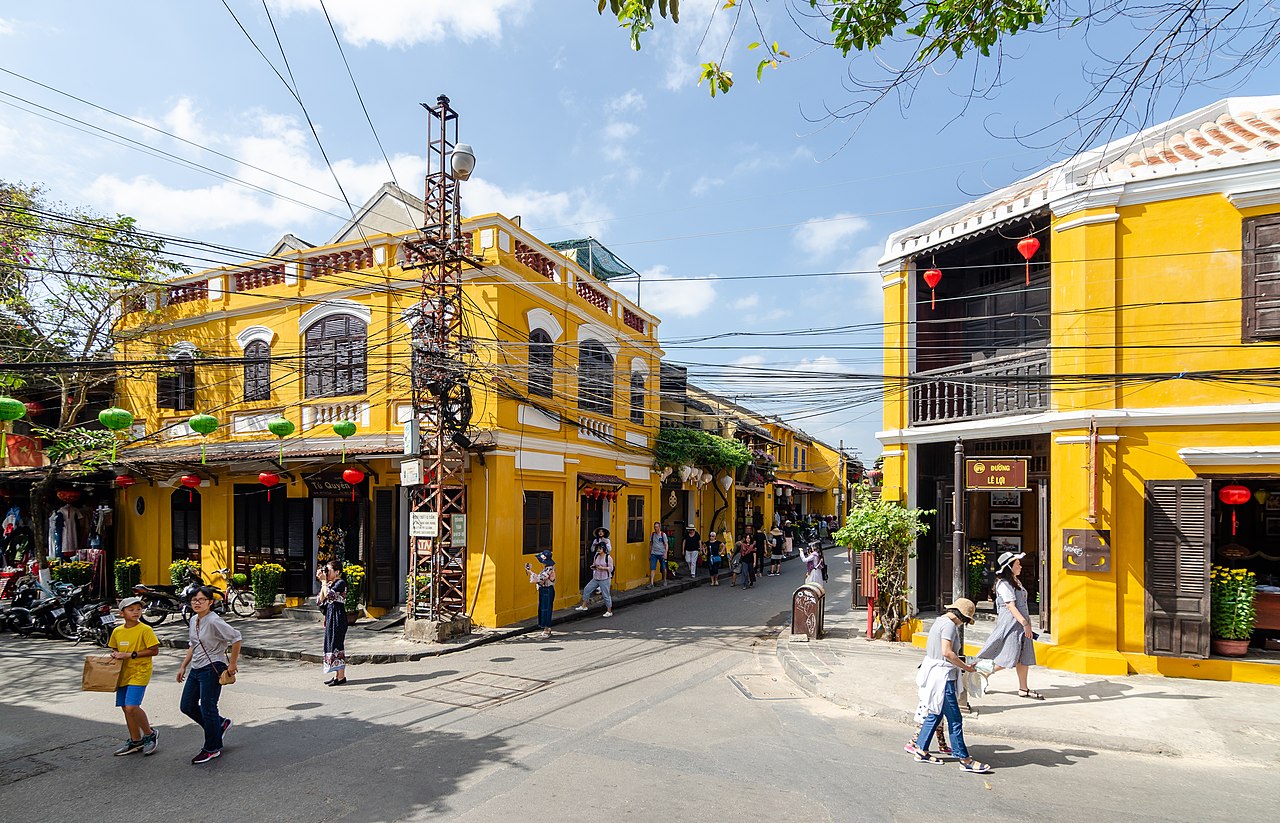
Ancient Town dawn walk
Before the tour groups arrive, the warren of merchant houses is almost entirely yours — buy the Ancient Town ticket and explore assembly halls and Japanese residences in cool quiet.
Phố Cổ Hội An
A UNESCO-listed merchant town that has somehow remained intact — Japanese covered bridges, Chinese assembly halls, and French colonial windows all within a quarter-mile, the streets glowing with hand-sewn silk lanterns every night of the year.
Before the tour groups arrive, the warren of merchant houses is almost entirely yours — buy the Ancient Town ticket and explore assembly halls and Japanese residences in cool quiet.
Hoi An's signature noodle dish — thick rice noodles with char siu pork and local greens, only made properly with water drawn from one ancient well in town.
Bicycle out to this market-garden hamlet, tend the plots with a farmer, then cook a three-course Vietnamese meal from what you picked alongside the chef.
Round coracle boats spin and pirouette through water-palm jungle in the Cam Thanh water coconut forest — skilfully theatrical and completely specific to this place.
A valley of fourth-to-fourteenth century Hindu towers built by the Champa kingdom, partly destroyed in the war, now a UNESCO site in a jungle clearing twenty minutes away.
Pedal the flat, tree-lined road to the coast for a morning swim before the beach bars set up their sunloungers — bring a towel, lock the bike to a palm tree.
A short boat ride across the Thu Bon River leads to a village of woodcarvers and boatbuilders who have supplied Hoi An's shophouses for generations. Workshops open their doors to visitors between deliveries.
The iconic 1593 roofed bridge, then two streets over the Fujian Chinese assembly hall with its courtyard of incense coils and red lanterns drifting smoke.
A merchant's house left almost entirely as it was in the 18th century — Japanese roof beams, Chinese carvings, and a Vietnamese family still living on the upper floor.
Hoi An has over four hundred tailors; spend an afternoon choosing silk or linen, being measured, and returning the next day for a fitting. Yaly Couture and A Dong Silk are reliable.
Start with a market tour, take a boat to a riverside school, and cook five Vietnamese dishes with an attentive chef — the setting alone is worth the price.
Drift past riverside villages, fish-trap builders, and waterfront temples as the late afternoon light turns everything amber — a slower view of Hoi An than the busy streets offer.
Five marble-and-limestone peaks fifteen minutes north, honeycombed with Buddhist and Hindu shrines, cave altars, and a summit view over the South China Sea.
Across the river from the Ancient Town, a family workshop bends bamboo frames and stretches silk into the lanterns that light Hoi An's evenings. Visitors assemble one to carry home glowing that same night.
On the 14th of every lunar month the Ancient Town cuts its electric lights and the river fills with floating silk lanterns — genuinely magical and worth planning a trip around.
The pedestrian bridge market and Nguyen Hoang street fill with banh mi carts, white rose dumpling stalls, and grilled skewers from dusk onward — cheap, vivid, crowded in the best way.
A proper sit-down dinner at one of the Ancient Town's family restaurants: translucent shrimp dumplings, fried wontons, and the full Hoi An table.
Two floors above the Thu Bon river, Cargo Club's terrace is Hoi An's best-placed cocktail perch — lychee gin fizz in hand, lanterns lit below, the bridge glowing.
As the fishing boats come in, low tables and driftwood fires appear along An Bang's sand, and the day's heat gives way to a sea breeze. It is the unhurried, unpolished flip side to the Ancient Town's lantern glow.
On certain evenings the streets around the market fill with the call-and-response verses of bài chòi, a centuries-old card game sung rather than played, recognised by UNESCO as living heritage. Onlookers are welcome to join in, even without a word of Vietnamese.
Hoi An's dessert stalls specialise in chè, a family of sweet soups and puddings built from beans, coconut milk and tapioca, ladled out beneath strings of silk lanterns. Order a few small bowls and compare notes as you go.
Forty private pool villas along one of central Vietnam's most unspoiled beaches, with a three-tiered infinity pool, a legendary spa and cooking classes held in a heritage Hoi An kitchen.
A lantern-lit colonial trading house on the Thu Bon riverbank, two minutes from the UNESCO Ancient Town's lantern-hung alleyways; the riverside terrace at dusk is utterly unmissable.
A boutique wellness retreat anchored by an acclaimed Hoa Nhai spa and three pools, tucked between silk-tailor lanes and the colonnaded Old Town streets it overlooks from its rooftop garden.
A colonial Indochinese resort on Cua Dai beach with private banana-leaf beach pavilions, a candlelit beachfront restaurant and bicycles for pedalling the silk alleyways of the Ancient Town at dawn.
Rates change — check the live price.
Photography shows the dishes and cuisine — representative, not from the restaurants themselves.
An intimate tasting-menu experience in a garden pavilion built on the edge of Tra Que's organic farms, where every course traces the Thu Bon valley from river fish to wild herbs grown steps from the table.
The banh mi shop Anthony Bourdain called the best in the world — crispy baguette, pate, pork, and coriander at 35,000₫. Queue early.
A three-floor merchant house cooking the full canon of Hoi An dishes, from white rose to cao lau to fried wonton.
Hoi An-style chicken rice — poached bird, turmeric-tinted rice, and pickled greens served from a family kitchen on plastic stools.
Fresh cocktails, wood-fired pizza, and sunloungers for the afternoon at An Bang — live music most evenings.
A silent cafe run by hearing-impaired staff — order by pointing at chalkboards, drink excellent Vietnamese tea, and appreciate the rare quiet.
A single ticket covers five of the main heritage sites — buy it from any official booth and keep it in your pocket; inspectors appear without warning inside the houses.
The Ancient Town is tiny and pedestrianised in the evening — a bicycle is the ideal tool for market runs, beach trips, and cookery-class commutes.
Any tailor worth their needle needs at least two fittings; build a 48-hour buffer before you leave. Arrival prices are fixed — bargaining is normal but do not undercut the craft.
The full-moon lantern night happens every lunar month — check the lunar calendar before booking and arrange your Hoi An night accordingly.
Cua Dai Beach has suffered serious erosion; An Bang, a few kilometres north, has better sand, calmer surf, and much cleaner water.