Li River cruise, Guilin to Yangshuo
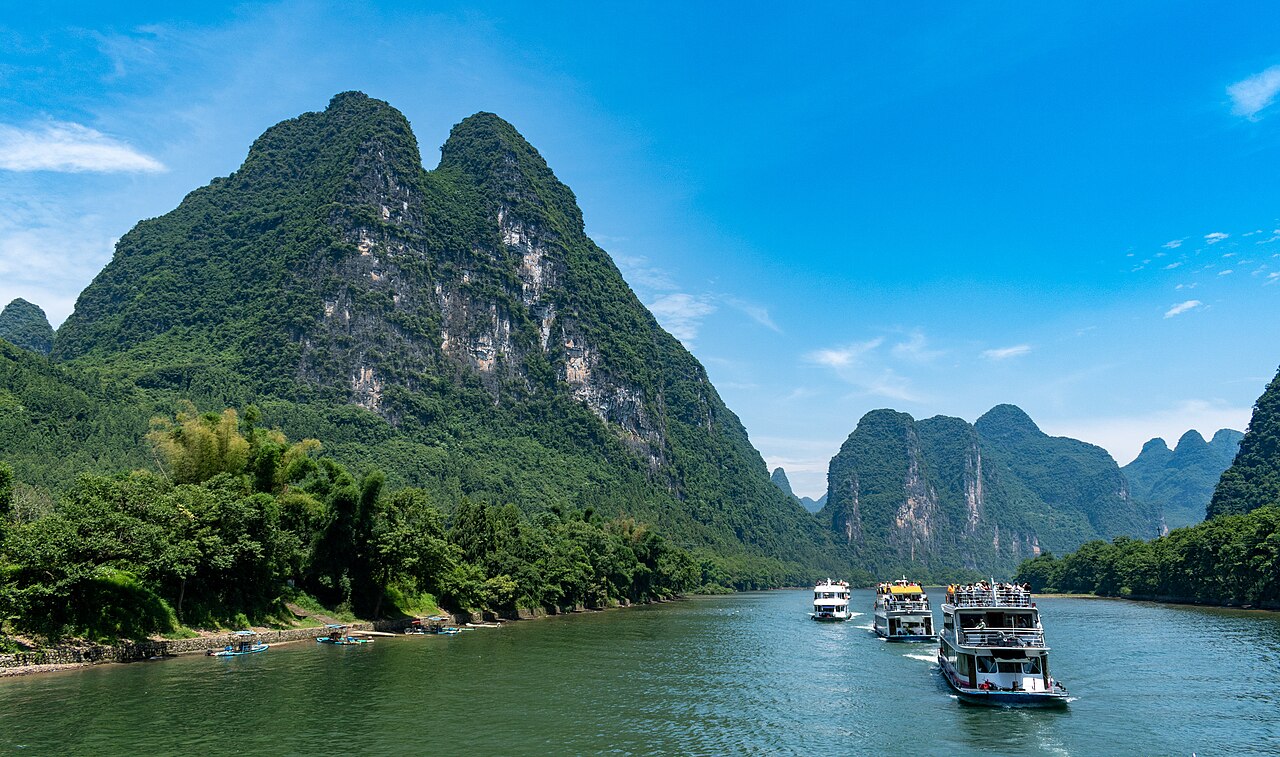
The full 83-kilometre drift past Mural Hill, Nine-Horse Fresco Peak, and Yellow Cloth Shoal — the classic boat is slower and more scenic than the speedboat, and breakfast in the valley mist is remarkable.
桂林山水甲天下
The limestone towers of the Li River valley, rising like ink-wash brushstrokes from emerald paddies and tea-dark water, have defined the Chinese ideal of landscape for a thousand years — and in person they exceed every expectation.
The full 83-kilometre drift past Mural Hill, Nine-Horse Fresco Peak, and Yellow Cloth Shoal — the classic boat is slower and more scenic than the speedboat, and breakfast in the valley mist is remarkable.
A bowl of Guilin's signature rice noodles in clear pork broth with a tableside condiment bar of pickled beans, chilli oil, and peanuts — the city's oldest breakfast tradition costs barely more than loose change.
Coloured lights illuminate stalactites in shapes locals have been naming for over a thousand years — crowd levels are manageable before 10 a.m. and the formations are genuinely otherworldly.
The city's most recognisable landmark — a limestone mass shaped like a drinking elephant at the confluence of the Li and Peach Blossom rivers, best lit by a low morning sun from the east bank.
Two hours north of Guilin, the Dragon's Backbone Terraces cascade down several mountains — the Ping'an viewpoints catch the light dramatically at dawn, and the Zhuang and Yao minority villages add cultural depth.
The largest park in Guilin city contains karst peaks, ancient stone carvings, and the famous Camel Hill — serene in the early hours before school groups arrive and the main paths fill.
Named for the glittering calcite that lines its chambers, this limestone cave near Yangshuo is quieter in the morning, its illuminated stalactites reflecting like frozen rain.
Rent a bicycle at the West Street and pedal the flat road toward Xingping through rice paddies and bamboo groves with tower karst at every compass point — the best way to understand the scale of the landscape.
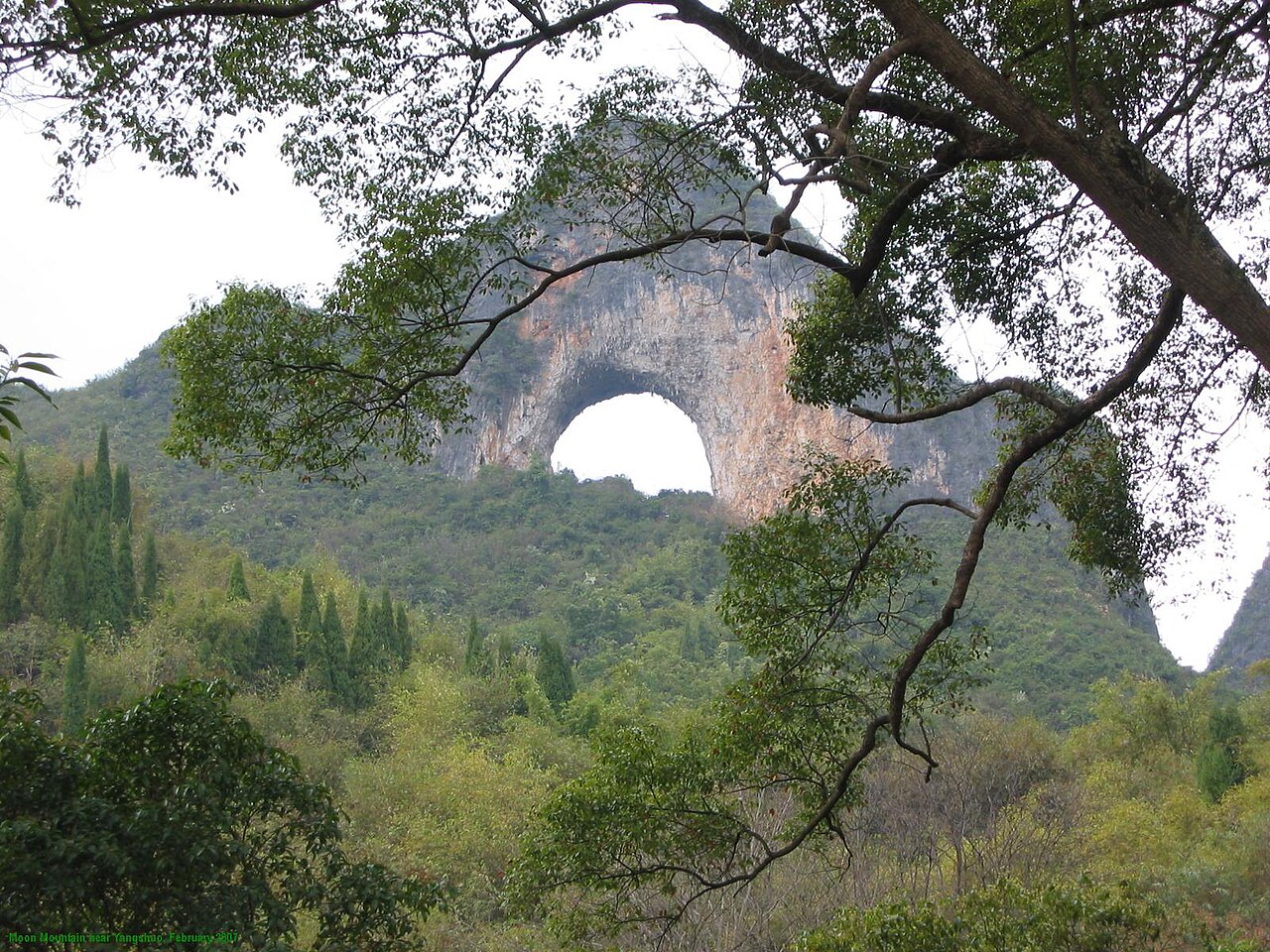
A natural limestone arch at the top of 800 stone steps — the arch frames the whole valley and the karst silhouette at sunset is extraordinary. Start no later than 3 p.m.
The Xingping bend of the Li River is the scene on China's 20-yuan note — rent a bamboo raft to reach the rock at the exact angle, then watch a local fisherman work his trained cormorants at dusk.
A 2,000-year-old riverside market town twenty kilometres south of Guilin with Ming-dynasty flagstone lanes, wooden merchant houses, and almost no tourist infrastructure — genuinely quiet in the afternoon.
Four peaks rising above the city with Buddhist carvings in the cave passages and a 360-degree summit view across the Li River basin. Worth the climb for the wide-angle perspective.
The Zhuang and Yao villages above the Longji terraces maintain distinct dress, cuisine, and festival traditions — a local guide adds context that the scenery alone can't provide.
A gentler, less crowded cousin of the main Li River cruise, a bamboo raft down the Yulong drifts past karst peaks and water buffalo at a pace made for an unhurried afternoon.
Zhang Yimou's spectacular outdoor performance uses the Li River as its stage and the karst peaks as its backdrop — 600 performers, coloured water projections, and a soundtrack that carries across the mountains.
Yangshuo's main tourist lane is best after dark when lanterns reflect in the puddles — settle into a riverside restaurant for the local speciality of carp braised with beer and chillies.
The Two Rivers & Four Lakes waterway lights up from dusk — rent a shared pedal boat to float past illuminated pagodas and willow-draped banks, or simply stroll the quiet lit paths.
A handful of guesthouses and bars near West Street have unlocked rooftop terraces with direct sightlines to the tower karst after dark — Cloud 9 and the Yangshuo Mountain Retreat terrace are the best options.
Guilin's main shopping street glows with lantern-strung facades and street performers after dark, its centuries-old buildings restored above modern boutiques and snack counters. It is the natural place to wander after a day on the river.
Guilin's signature sweet wine, brewed from the fragrant osmanthus blossoms that scent the city each autumn, pairs well with taro cake and stuffed tofu from a local snack counter. It is a gentle, aromatic introduction to local flavors.
Away from Yangshuo's lit-up strip, the karst peaks fade to silhouette and the river valley offers some of southern China's clearest night skies. Fireflies often join the stars on warm summer evenings.
Poised on the Li River's north bank with views stretching toward Elephant Trunk Hill, the Sheraton Guilin's signature Chinese restaurant and riverside terrace have anchored the city's international luxury scene for decades.
Converted from a 1960s working sugar mill by Vector Architects, this Michelin-Guide-listed riverside retreat pairs raw-concrete architecture with white-linen service and a terrace pool that appears to float among the limestone peaks.
Villas perched on a hillside with private plunge pools angled at the karst silhouette, a Rainforest spa of remarkable stillness, and a private boat mooring for dawn mist cruises along the jade Li River.
Presiding over the Two Rivers Four Lakes scenic corridor with unobstructed views of Solitary Beauty Peak, the Shangri-La's horizon pool and Chi Spa deliver Chinese classical luxury at the heart of the world's most painterly landscape.
Rates change — check the live price.
Photography shows the dishes and cuisine — representative, not from the restaurants themselves.
The Shangri-La Guilin's showpiece restaurant presents Cantonese classics alongside Guilin river-fish specialties in 12 private dining rooms, with garden views that frame the city's iconic limestone peaks.
The West Street institution for Yangshuo's signature dish — carp braised with lager, chillies, and tomatoes. Reserve a terrace table for the river light show.
The old-city favourite for guilin mifen — broth made overnight, a bewilderingly good condiment bar, and a full bowl for under 20 ¥.
Skewered river shrimp, sticky rice in bamboo, beer duck wraps, and sugar-cane juice stalls lining the evening pedestrian zone.
Glutinous rice packed into fresh bamboo and roasted over charcoal — a roadside snack that defines Xingping and costs a few yuan.
Draft Tsingtao and local baijiu cocktails above the lantern glow of West Street — ask for the table nearest the edge for the karst silhouette at night.
Official cruise tickets sell out during Golden Week (Oct 1-7) and Chinese New Year — book through a hotel or licensed agent at least two weeks ahead.
The Longji terrace system has several separate village clusters and it's easy to get lost — a local Zhuang guide costs about 200 ¥ and opens doors to home kitchens.
The 20-yuan viewpoint is packed at sunset — go at 7 a.m. instead, when the river mist is low and you may have the rock entirely to yourself.
Most small restaurants and cycle-hire stalls accept WeChat Pay but not international cards — draw cash at the Bank of China ATM on West Street on arrival.
Misty, overcast days turn the Li River valley into a living ink painting — don't despair at cloud cover, it is by most photographic accounts the finest light of all.