Victoria Falls rainforest guided walk
A guide walks you through the permanent rainforest created by the falls' own spray, pointing out the successive viewpoints — the Main Falls, Danger Point, and the Devil's Cataract — as the thunder builds.
Mosi-oa-Tunya
Twice as wide as Niagara and nearly twice as tall, Victoria Falls generates a permanent rain cloud visible from 50 kilometres away — and beyond the spray, the Zambezi serves up Africa's finest white-water rafting, sunrise elephant safaris, and sunsets that turn the whole gorge to copper.
A guide walks you through the permanent rainforest created by the falls' own spray, pointing out the successive viewpoints — the Main Falls, Danger Point, and the Devil's Cataract — as the thunder builds.
A natural rock pool on the very lip of the falls allows swimming above a 108-metre drop — one of Africa's most extraordinary experiences, accessible August to January when water levels drop.
Two-person canoes drift past hippo pods, grazing elephant, and kingfisher flashes on the upper Zambezi above the falls — the river is wide, calm and magical at first light.
A fifteen-minute open-cockpit microlight gives the definitive aerial view of both the falls and the 110-kilometre Batoka Gorge snaking below — more exposed and visceral than any helicopter.
Ride through jesse bush and mopane woodland at eye level with the canopy as the sun rises, then sit beside the elephants for a full breakfast in the bush.
Grade 5 rapids through one of the world's deepest gorges — 23 named rapids in a full-day run from the base of the falls. Only available at low water August-December.
Built in 1905 to carry Cecil Rhodes's unfinished Cape-to-Cairo railway, the bridge spans the gorge in a single arch with spray from the falls drifting across it. A border-post history exhibit sits at the Zambian end.
Return in the afternoon for opposite-angle light and often a full rainbow arching across the spray — the perspective from the Eastern Cataract is entirely different to the morning walk.
Cross to the island where Livingstone first viewed the falls in 1855 and named them for his queen — your guide traces his route and the colonial history with candour and care.
A guided walk through mopane woodland and floodplain fringing the park reveals giraffe, buffalo and sable antelope on foot — a completely different sensory register to the vehicle.
The 111-metre leap from the centre of the border bridge — shared between Zimbabwe and Zambia — is one of the world's classic bungee jumps, with gorge and spray rising below.
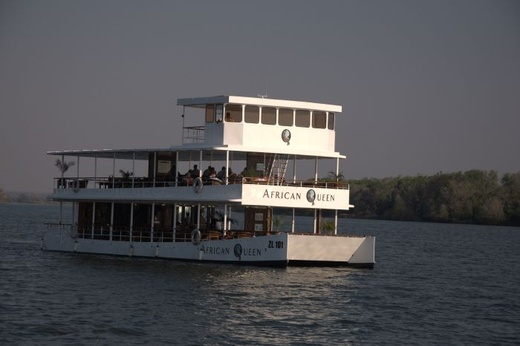
Board a double-decker boat above the falls for two hours of cold Zambezi Lager, hippos at close range, and a sky that turns violent orange as the sun drops behind Zambia.
The curio market and craft village near the falls entrance is a genuine workshop as well as a market — watch carvers working hardwood and buy directly from the maker at maker's prices.
A cable strung across the basalt gorge below the falls gives a swooping, birds-eye pass over the Zambezi's whitewater. It is a shorter thrill than the bungee jump but no less dizzying.
Africa's most celebrated bush dinner: 60 dishes including mopane worms, crocodile and impala, while a traditional band and praise singer fill the circular enclosure.
On the three nights around each full moon the spray catches the moonlight and produces a silver-white rainbow — a phenomenon unique to very few waterfalls on earth.
The terrace of this 1904 colonial hotel overlooks the spray plume and the bridge — gin fizzes at dusk, with the permanent thunder always audible in the background.
A spotlight picks out civets, genets, and the occasional lion pride moving through the Zambezi National Park woodland — the roar of the falls provides a constant backdrop.
Far from any city glow, the river's edge offers one of the clearest views of the southern sky you will find anywhere, with the distant roar of the falls as a soundtrack. A guide points out the Southern Cross and Magellanic Clouds.
Zimbabwe's version of the barbecue is done outdoors on the riverbank, with grilled game meats, boerewors, and sadza served family-style as hippos call in the dark. It is an unpretentious, satisfying end to a day at the falls.
The mbira, or thumb piano, has been central to Shona ceremony for centuries, and a live performance paired with drumming and dance offers a window into Zimbabwe's spiritual traditions. The hypnotic, looping melodies stay with you long after.
Open since 1904, the colonnaded veranda of this Edwardian grande dame frames mist rising from the falls across manicured gardens—afternoon tea here, within earshot of the Smoke that Thunders, remains one of Africa's most transcendent experiences.
On the Zambezi bank steps from the falls on the Zambian side, resident zebra graze the lawns at breakfast, the private river pier leads to sundowner cruises, and spa treatments overlooking the hippo-filled water offer a gracious and thoroughly African luxury.
Individually designed cottages and tree houses line the Zambezi's banks 12km above Victoria Falls near Livingstone, each with its own style; sunset cruises and canoe safaris depart from the lodge's private jetty.
A garden hotel an eight-minute walk from Victoria Falls — the closest hotel to the falls — anchored by the award-winning Cassia Restaurant.
Rates change — check the live price.
Photography shows the dishes and cuisine — representative, not from the restaurants themselves.
Sixty-dish African buffet including wild meats, face painting, and a drummer who will not let you leave without dancing.
White-glove service in a 1904 dining room with a wine list that reaches deep into the Cape Winelands.
Perched directly above the first rapids — the only restaurant in the world where bungee jumpers arc past the window mid-meal.
Lively and informal for sadza, hunter's pots, oxtail and cold Zambezi Lager — the go-to for unfussy town lunches with a lively township-jazz soundtrack on Thursday to Saturday evenings.
Colonial artefacts and a terrace overlooking the spray plume — order the hotel's signature G&T and settle in for the light show.
Two hours of canapes, cold drinks and close-range hippo viewing as the sun sinks over Zambia.
The Zimbabwe side has more viewpoints and stays drier; the Zambia side (Livingstone) offers Devil's Pool and Livingstone Island — a day visa makes crossing straightforward.
High water (March-June) means full spray but some viewpoints flood; low water (August-December) reveals the full gorge for rafting and Devil's Pool swimming.
Zimbabwe uses USD in practice; carry small denominations as change is often given in sweets or South African rand rather than dollars.
Bungee, microlight and rafting operators are clustered in the town centre; going direct is often cheaper than booking through your hotel desk.
The permanent mist above the falls means you will be soaked within minutes — pack a lightweight poncho or rent one at the gate, and put electronics in a dry bag.