Culture
Stone Town guided walking tour
A local guide leads you through the UNESCO-listed old town's warren of lanes, pointing out the ornately carved Omani doors, the Arab Fort, and the house where Freddie Mercury spent his childhood.
Visiwa vya Spice
A coral island in the Indian Ocean where the legacy of Arab, Persian, Indian and Portuguese traders layers into Stone Town's carved doorways, and where the east coast unfolds into powder-white beaches and turquoise reef-ringed waters.
A local guide leads you through the UNESCO-listed old town's warren of lanes, pointing out the ornately carved Omani doors, the Arab Fort, and the house where Freddie Mercury spent his childhood.
Wander a working plantation where cloves, cardamom, vanilla, nutmeg and black pepper have grown since Omani planters introduced them in the 1800s; your guide cooks a spice-infused lunch from what surrounds you.
Zanzibar's only national park protects around 5,500 endangered endemic red colobus monkeys; a quiet dawn walk through mahogany forest brings them close enough to count their whiskers.
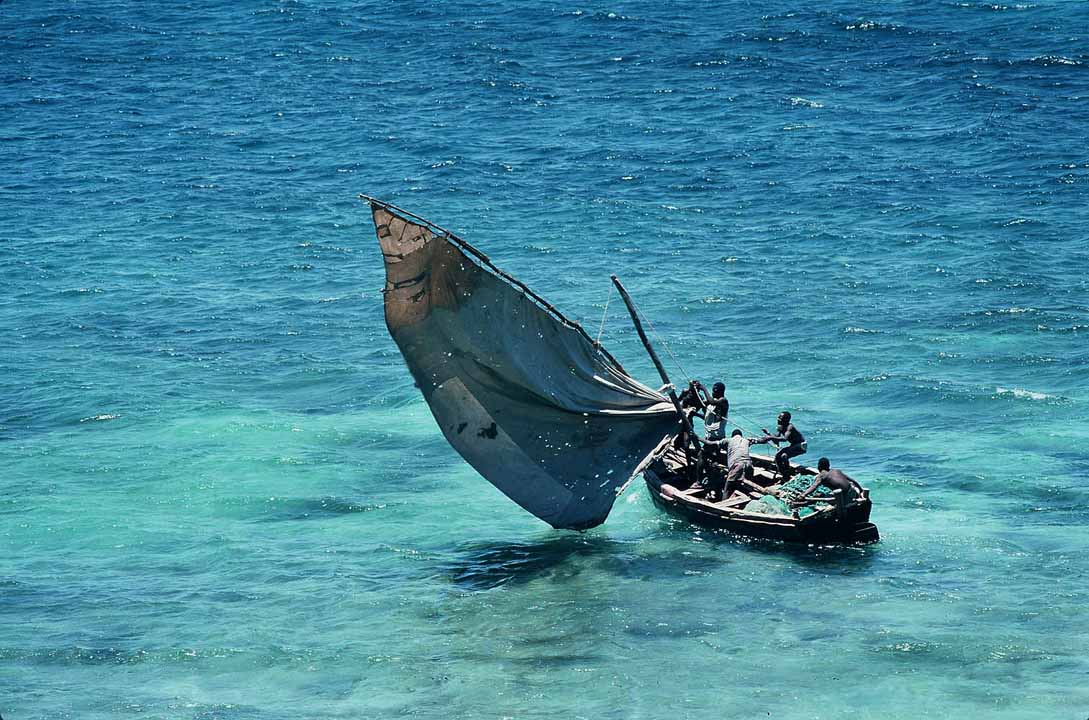
Board a traditional wooden dhow as the fishermen do at dawn, sails filling with the kaskazi north wind across a sea that shades from jade to sapphire as the sun rises behind the island.
The Anglican Cathedral built on the site of the Arab slave market is one of the most sobering historical sites in East Africa; the holding cells beneath remain intact and undisturbed.
A short dhow ride to Changuu Island, home to Aldabra giant tortoises gifted in 1919; the oldest residents are over a century old and entirely unbothered by the company of visitors.
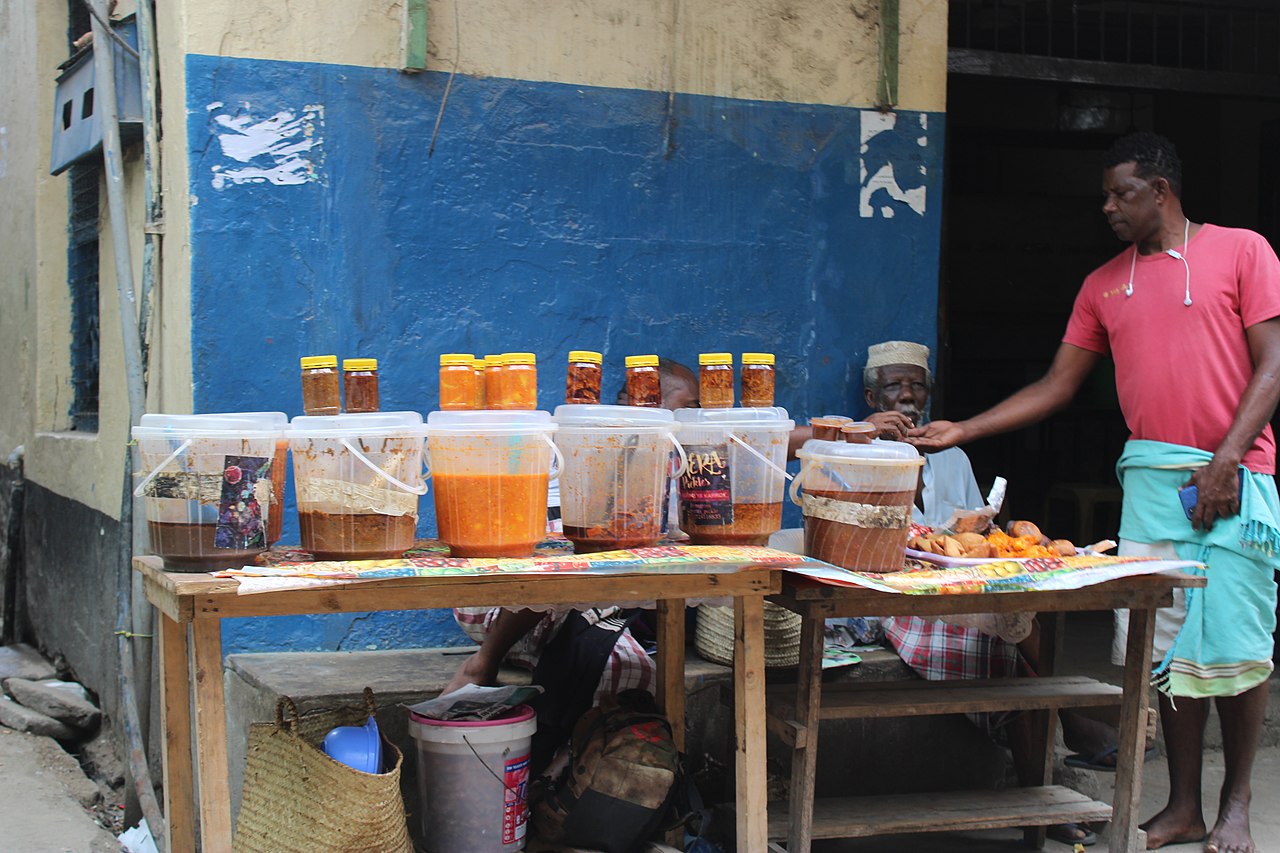
Stone Town's produce market fills early with fishmongers, spice sellers, and mountains of tropical fruit stacked for the day's trade. A local guide can navigate the stalls and translate the Swahili banter.
A wooden dhow lands you on a sandbar that only appears at low tide, surrounded by fish-thick reef just below the surface; grilled lobster and cold beer arrive by boat for lunch.
Browse the Darajani market for dried fish, fresh coconuts and secondhand kangas, then lose yourself in the lanes until you find a rooftop café with a view of the harbour dhow traffic.
The protected atoll on the north-east tip of the island is home to hawksbill turtles, humpback dolphin and an extravagance of reef fish; a boat dive here rivals the Red Sea for colour.
Indo-Pacific humpback and bottlenose dolphins are resident year-round off the southern tip of the island; snorkelling with a pod in the open ocean is genuinely wild, not curated.
The north coast's best beach has white powder sand and calm, clear water; the natural rock pool at Ras Nungwi means swimming is possible even when the rest of the coast drains at low tide.
The lagoon at Paje is one of the Indian Ocean's best kite schools — consistent south-east trade winds June to September; most complete beginners stand up within their first afternoon.
East coast tidal channels wind through dense mangrove forest that shelters crabs, herons, and juvenile reef fish. Paddling here is unhurried and cooler than the open-water excursions further north.
As the sun sets over the Arab Fort, the waterfront fills with smoke from a hundred grills — Zanzibar pizza, fresh octopus, sugarcane juice and urojo soup eaten on plastic stools as the Indian Ocean laps beside you.
A classic Zanzibari dhow circles the Stone Town waterfront as the old town glows amber and the call to prayer drifts across the water — cold Kilimanjaro beer and spiced cashews included.
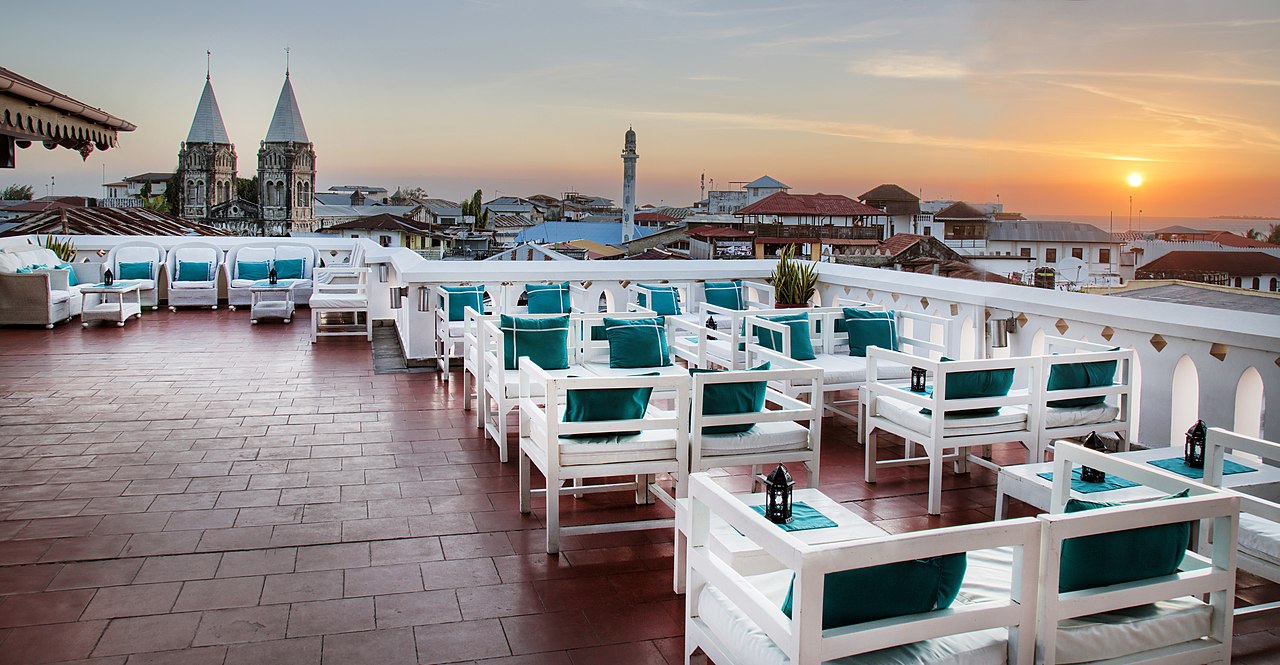
Named for Freddie, this Stone Town seafront rooftop mixes a genuinely good mojito and usually has a live band — the view of the harbour lights as dhows return is the best in the old town.
Any of Nungwi's beach restaurants will set a table in the sand — order the whole grilled kingfish or the lobster thermidor, cooked over coconut husks and brought with turmeric rice.
As dhows return to harbor and the call to prayer rises over the rooftops, a slow walk along the seafront gardens is the best free show in town. Vendors set up early for the night market just behind you.
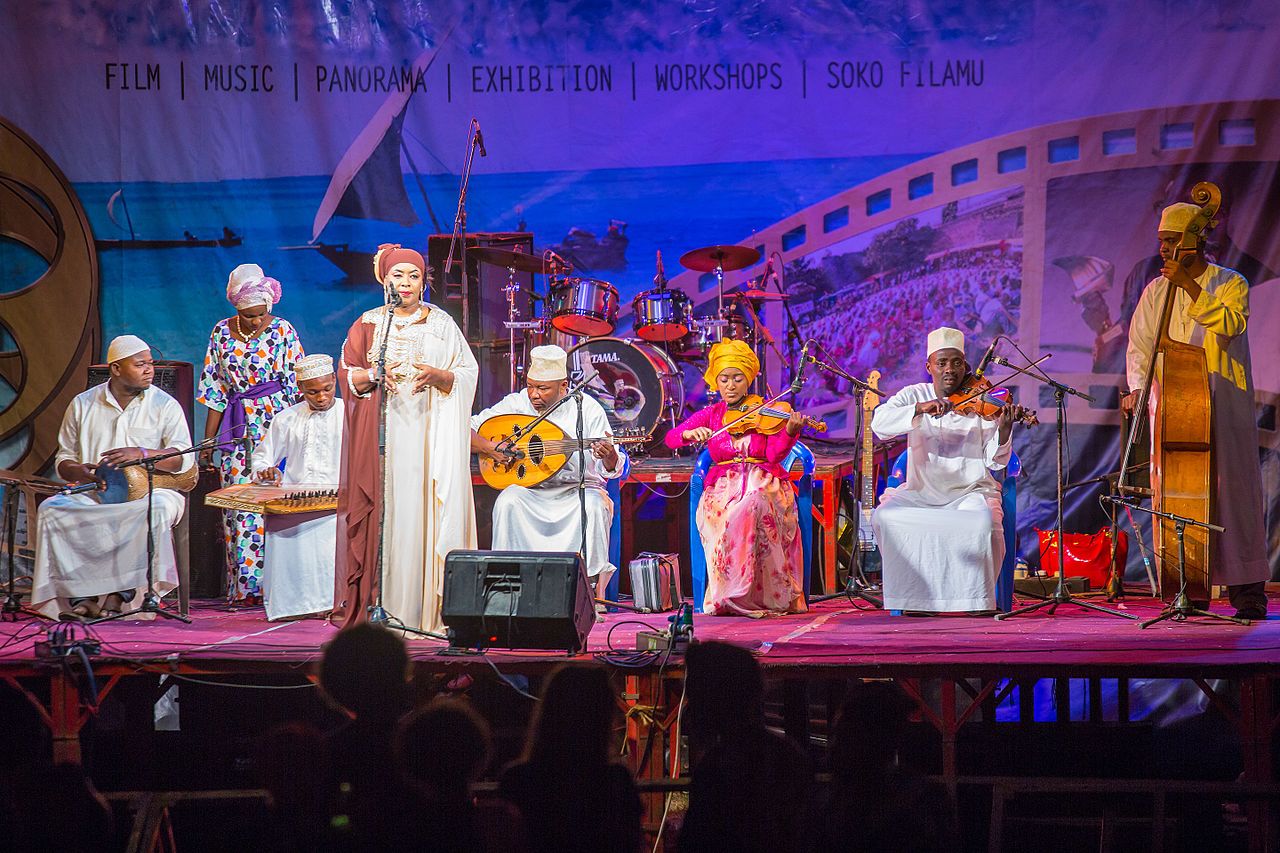
Taarab blends Swahili poetry with Arabic, Indian, and African melody, and a small ensemble performing in a courtyard theater captures Zanzibar's cosmopolitan soul better than any museum. The orchestra's oud and violin lines drift out into the warm night.
Hosted in a family home away from the tourist restaurants, this dinner of coconut fish curry, pilau rice, and cardamom-spiced sweets is Zanzibar's everyday cooking at its best. Conversation flows as easily as the food.
Sixty-six private pool villas along a quiet south-coast beach with a dedicated villa host, The Dining Room's Swahili-French tasting menus, snorkelling with wild dolphins at sunrise, and an Angsana Spa where clove-scented trade winds drift through open-air treatment rooms.
An exclusive-use private island ringed by one of East Africa's finest coral reefs, where twelve beach bandas with open-air bucket showers, all-inclusive scuba diving across pristine reef walls, and barefoot Robinson Crusoe luxury at its most refined await.
An all-villa boutique resort of Swahili-Arabesque architecture on Bwejuu's powder-white east coast beach, the Frangipani Spa, an award-winning wine cellar for this latitude, and butlers arranging dhow sunset sails distinguish it as Zanzibar's most curated small resort.
Occupying a restored 19th-century Omani building and an adjacent contemporary tower within UNESCO-listed Stone Town, its Indian Ocean-facing infinity pool, Living Stone restaurant's Swahili seafood, and curated cultural walking tours make it the essential Stone Town address.
Rates change — check the live price.
Photography shows the dishes and cuisine — representative, not from the restaurants themselves.
Marooned on a coral outcrop offshore — a boat delivers you at high tide — for the island's most theatrical dining room and flawless fresh seafood.
Tables in the sand, a daily catch of red snapper and tuna, and a Kilimanjaro sunset. Reserve at sundown or arrive early.
A four-storey Omani merchant house turned atmospheric café — Zanzibari chai and cardamom-scented pastries on the top-floor terrace.
Zanzibar pizza, grilled octopus and fresh sugarcane juice eaten on the harbour wall for a few dollars — the real food soul of the island.
Seven-course dinner on the highest rooftop in Stone Town, each course paired with a different island spice — book weeks ahead in high season.
A natural tidal pool doubles as the aquarium; cold beers and grilled fish served while turtles cruise the water at your feet.
Zanzibar is a predominantly Muslim island; cover shoulders and knees in Stone Town and at markets — a light kanga bought for a few dollars at Darajani market works perfectly.
The east-coast beaches (Paje, Jambiani) drain almost completely at low tide; check tide tables and plan swims around the high-tide windows each day.
Curio and fabric prices are negotiable at Darajani; restaurant menus are fixed and haggling there is considered rude — know which context you are in.
Tanzania is a low-wage economy; $2-5 added to a meal, $10-15 per day for a guide, and $1-2 for hotel staff makes a real and tangible difference.
Zanzibar Telecom (Zantel) and Vodacom Tanzania SIMs are available at the airport for a few dollars — data is fast, cheap, and essential for maps and tide tables.