Adventure
Paro Taktsang (Tiger's Nest) monastery hike
Climb switchback trails through blue pine forest to the monastery clinging to a sheer cliff 900 metres above the valley floor, then rest before the final ascent.
Bhutan, Land of the Thunder Dragon
Bhutan unfolds like a devotional scroll — whitewashed dzongs anchor emerald valleys, monks in maroon robes chant beneath fluttering prayer flags, and the cliffside monastery of Taktsang seems to hover on nothing but faith above pine-scented gorges where the Himalaya begins in earnest.
Climb switchback trails through blue pine forest to the monastery clinging to a sheer cliff 900 metres above the valley floor, then rest before the final ascent.
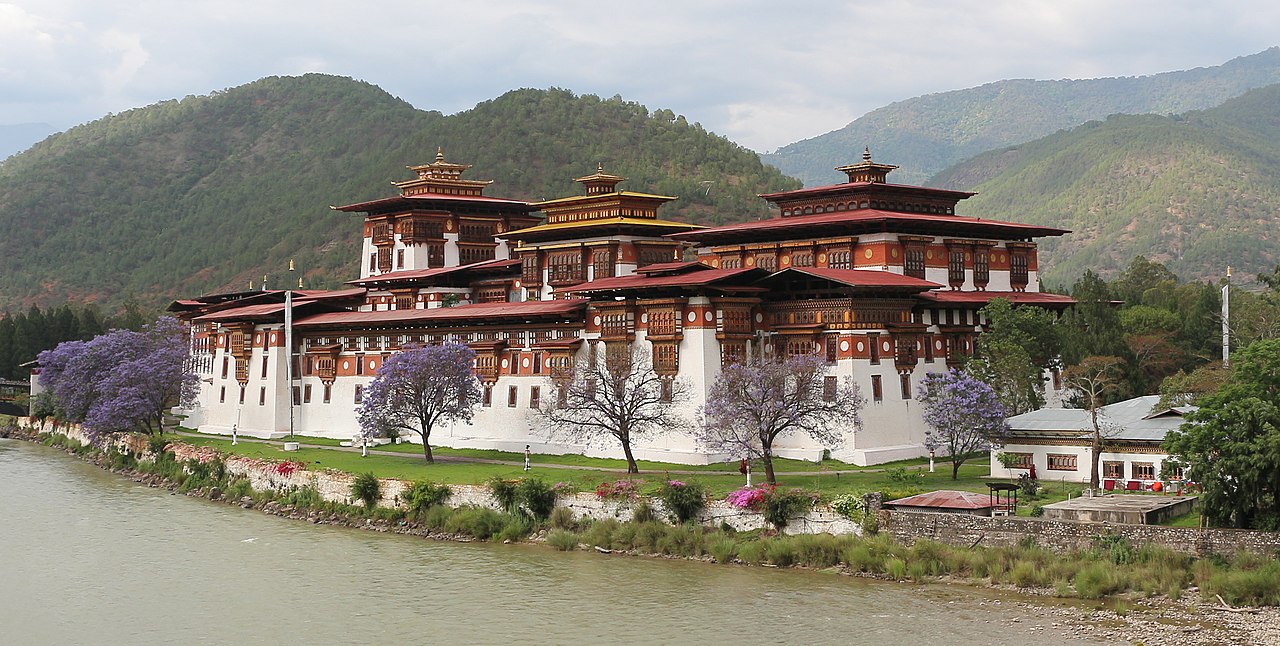
Reach Bhutan's most beautiful fortress-monastery before the tour buses arrive, when jacaranda blossoms drift across the courtyards where the Pho Chhu and Mo Chhu rivers meet.
Farmers from surrounding valleys sell yak cheese, red rice, and dried chillies from riverside stalls, while incense sellers crowd the covered market halls.
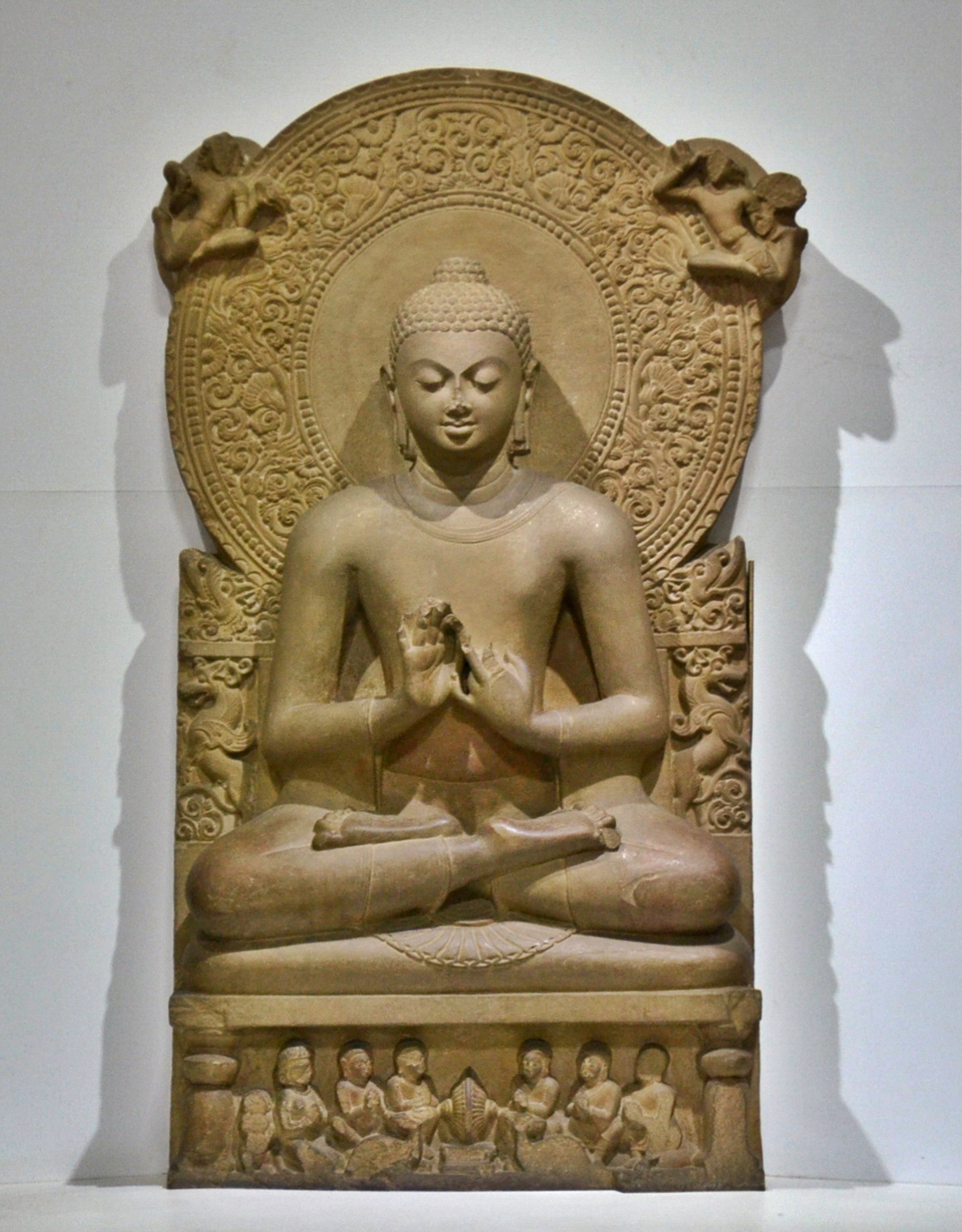
One of the world's tallest bronze Buddha statues catches the first light above Thimphu valley, its gilded surface glowing as prayer wheels turn below.
Slip into the 17th-century monastery overlooking the Phobjikha valley as young monks chant morning prayers, voices carrying over dwarf-bamboo meadows below.
At 3100 metres, a ring of 108 memorial stupas frames an unbroken wall of Himalayan peaks at dawn, before cloud usually rolls in by midmorning.
A winding drive climbs above Paro to Bhutan's highest motorable pass, strung with thousands of wind-whipped prayer flags and views to Jomolhari.
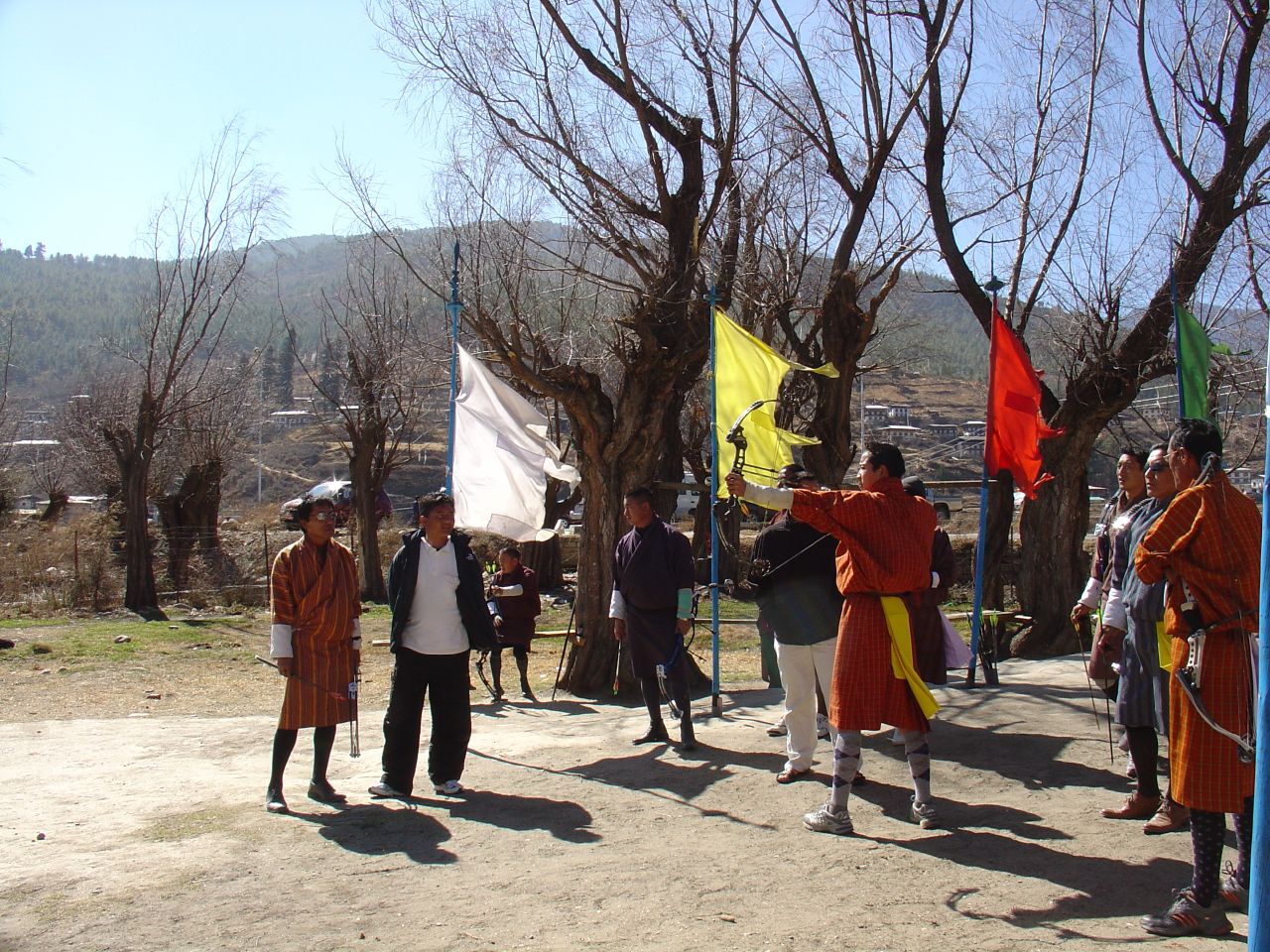
Join villagers at a riverside range to try Bhutan's national sport with bamboo bows and long, whooping celebrations after every bullseye at distant targets.
One of Bhutan's oldest temples, founded in the 7th century, sits quietly among orange trees and prayer wheels before Paro's daily visitors arrive.
Elderly Thimphu residents circle this whitewashed stupa clockwise all afternoon, spinning prayer wheels and murmuring mantras in one of the capital's most soulful rituals.
A hands-on living museum where visitors try archaic Bhutanese dress, grind buckwheat, and watch a folk-dance performance inside a reconstructed farmhouse.
Cross one of the kingdom's longest suspension bridges, strung with fluttering flags above the Mo Chhu, then wander rice terraces to a hilltop chorten.
Explore the dramatic ridge-top ruins of a fortress gutted by fire in 2012, now slowly rebuilt, with views down to the confluence of two rivers.
An easy trail crosses meadows and dwarf-bamboo scrub where black-necked cranes winter each year, linking farmhouses, chortens, and pine forest.
The National Textile Museum displays centuries of intricate hand-woven kira and gho fabrics, a short walk from shops selling handmade paper and scarves.
River-heated stones hiss into a wooden tub infused with artemisia leaves, an ancient remedy Bhutanese farmers still swear by after long days in the fields.
Pedal quiet farm roads past rice paddies, traditional farmhouses, and grazing yaks, with the white walls of Paro Dzong rising above poplar trees.
A set Bhutanese feast of chilli-cheese stew, red rice, and pork with radish is followed by masked and folk dances performed in full traditional costume.
The capital's main street comes alive at dusk with shopfronts, archery commentary crackling from radios, and Thimphu's famous manually operated traffic intersection nearby.
Share a home-cooked meal of ema datshi, buckwheat noodles, and butter tea around a wood stove in a family farmhouse, often followed by a hot-stone bath.
Sample the farmhouse spirit distilled from rice, maize, or wheat, traditionally warmed with a knob of butter and egg and poured generously by your hosts.
Local teams shoot at distant targets late into the evening, celebrating hits with spontaneous song and dance while spectators heckle good-naturedly from the sidelines.
The fortress-monastery glows above the confluence of two rivers after dark, its whitewashed walls and golden roof reflected in the slow-moving Mo Chhu.
Far from any city glow, the Phobjikha valley's clear high-altitude skies reveal the Milky Way in full, best watched from a crackling farmhouse campfire.
Dancers in wrathful deity masks and brocade robes perform sacred cham dances by lamplight, a rare chance to see rituals usually reserved for festival days.
The Aman group's flagship Bhutanese lodge sits amid blue pine forest near Paro Dzong, its courtyard architecture and copper-hued suites channeling a fortified dzong.
Part of a five-lodge trail across the kingdom, this hilltop retreat pairs sweeping valley views with an expansive spa built into the hillside.
Minimalist pine-and-slate architecture above the Paro valley, with an acclaimed COMO Shambhala spa and some of the kingdom's best guided hikes to Taktsang.
Bhutan's first luxury lodge, perched above the glacial Phobjikha valley with floor-to-ceiling views over meadows where black-necked cranes winter each year.
Rates change — check the live price.
Photography shows the dishes and cuisine — representative, not from the restaurants themselves.
An elegant tasting menu of refined Bhutanese classics — ema datshi, red rice, and slow-cooked pork — in the capital's most polished dining room.
Set Bhutanese feasts served on low tables inside a recreated farmhouse, with folk-dance performances that make it a favourite for groups.
A no-frills local favourite for ema datshi, momos, and red rice, popular with Thimphu office workers at lunchtime.
Bhutan's original specialty café, still the go-to for good espresso, cake, and wifi between temple visits.
Thimphu's liveliest current live-music room — local bands most nights, a full bar, and a restaurant menu to match the old Mojo Park buzz.
A long-running favourite for trekking groups, serving generous plates of ema datshi and momos in the heart of Paro town.
Bhutan charges a Sustainable Development Fee of roughly $100 per person per day on top of hotels and activities — factor it into your trip budget early.
Independent tourists must arrange visas and itineraries through a Bhutanese tour operator or agent, who also handles the SDF payment.
Long sleeves and covered knees are expected inside fortress-monasteries; a light scarf covering the shoulders works well for women.
Thimphu sits at 2300 metres and mountain passes climb higher still — pace the first day and carry water on hikes.
Card acceptance is patchy outside Thimphu and Paro's main hotels, so keep small bills for markets, temples, and rural farmhouses.