Fort
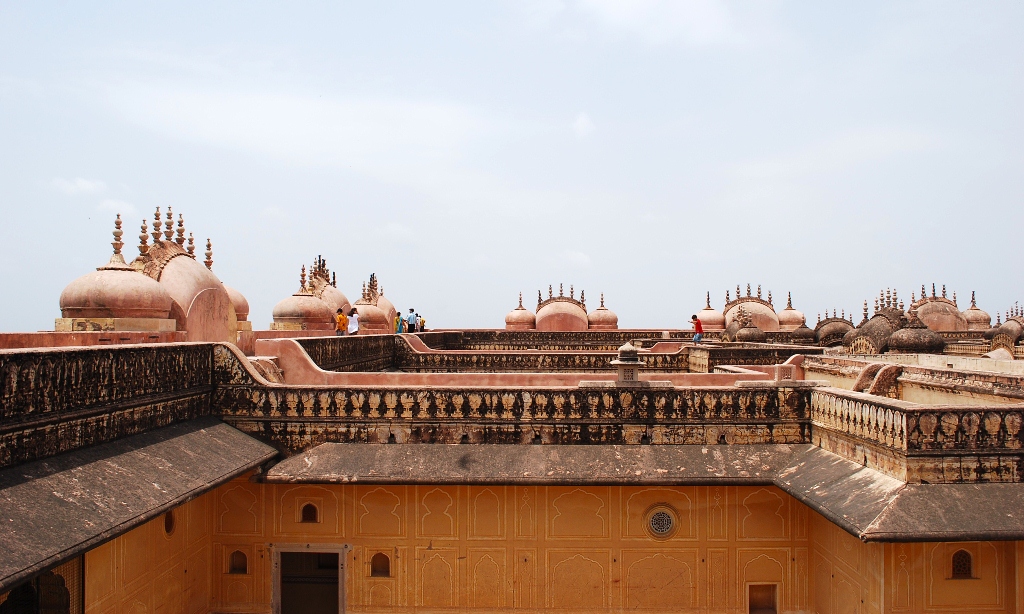
Amber Fort sunrise climb
Reach the battlements before the tour groups and watch Maota Lake turn gold in the first light — the elephant procession starts below around 07:30-08:00.
रंग-ए-जयपुर
Rajasthan's Pink City blazes with terracotta-washed havelis, elephant-backed forts, and bazaars fragrant with cumin and marigold — a living canvas where Mughal grandeur meets street-vendor chai.
Reach the battlements before the tour groups and watch Maota Lake turn gold in the first light — the elephant procession starts below around 07:30-08:00.
The iconic honeycomb facade is best read from within: 953 jharokha windows funnelling desert breezes through five pink-sandstone stories.
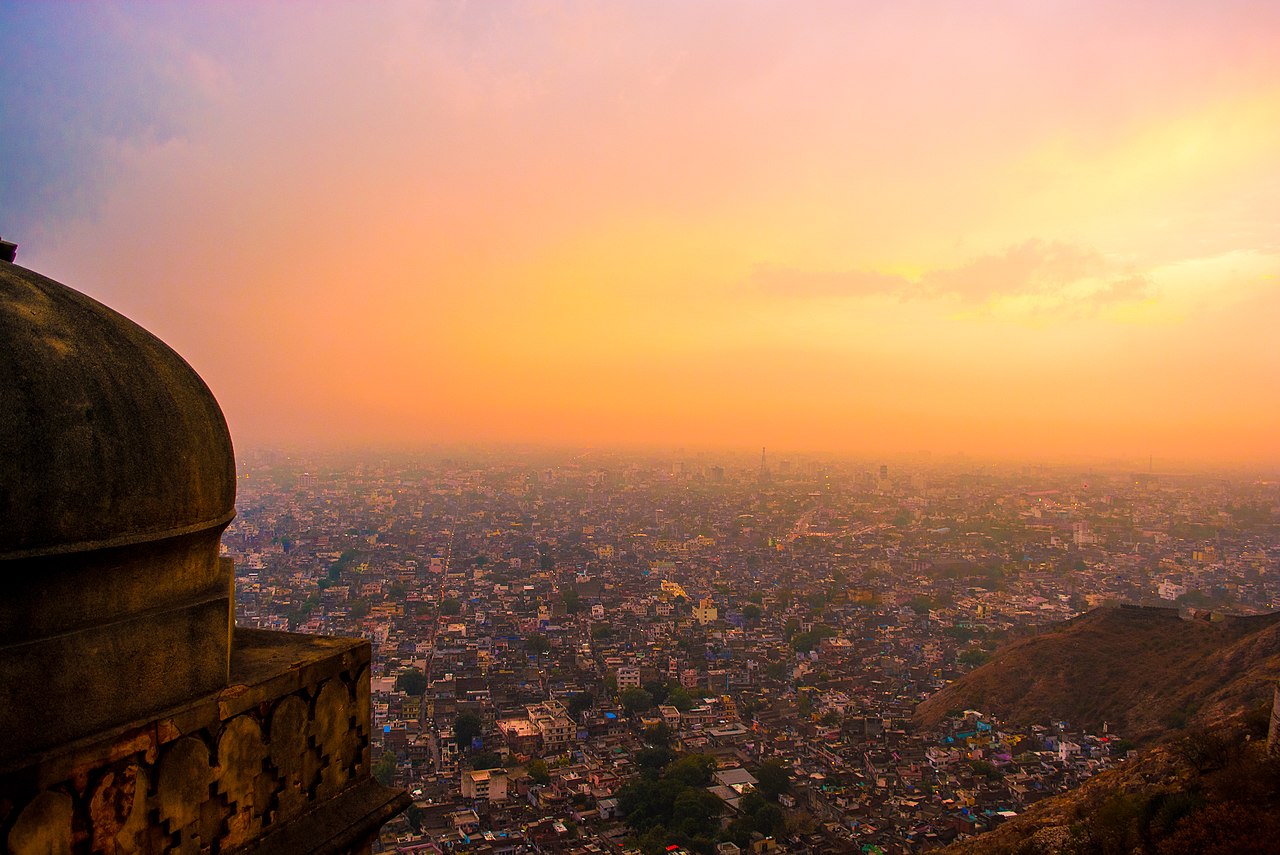
Climb to the ramparts of the Tiger Fort for an unbroken sweep of the walled city and the distant Aravalli range — arrive before haze sets in.
UNESCO-listed geometric instruments built by Maharaja Jai Singh II still predict solar noon to the second — a guide turns astronomy into theatre.
Join locals at Rawat Mishthan Bhandar for pyaaz kachori before the heat, then walk the gullies of the old city as vendors set up for the day.
Watch artisans carve teak blocks and press indigo and madder pigments onto cotton — your own printed length of fabric goes home with you.
A symmetrical maze of sandstone steps descends toward a still pool below Amer, its geometry sharpest in the low, early light. Few visitors make the detour before breakfast, leaving the stairs to a handful of early risers.
The Diwan-i-Khas displays a pair of silver urns — reputedly the world's largest — alongside Mughal miniatures and royal arms.
The Water Palace appears to float at the centre of Man Sagar Lake — best at golden hour; no entry inside, but the promenade is free and breezy.
Jaipur cuts around half of the world's coloured gemstones — whether buying or just watching craftsmen set kundan necklaces, this is a living craft district.
Government-run treasure chest of Rajasthani block-prints, blue pottery, and lacquerware at fixed prices — a good gauge of value before hitting private shops.
Even if you're not staying at the former royal residence, booking high tea on the terrace buys access to the Mughal gardens — a civilised, if not free, afternoon.
A 1,200-year-old stepwell with 3,500 narrow steps descending 13 storeys to a depth of about 30 metres — geometrically perfect and rarely crowded before early afternoon.
Set inside a restored haveli in Amer, this small museum traces the history of Rajasthani hand block printing through textiles, tools and live demonstrations. It is a focused counterpoint to the city's larger palace circuits.
Rajasthani thali under the stars with live ghoomar dancing, puppet shows, and camel rides — touristy and utterly joyful.
Drinks on the clifftop terrace bar as the Pink City goes amber and the street lights flicker on below — one of India's finest urban sundowner perches.
A guided crawl through old-city sweet shops sampling ghevar, mawa kachori, and kulfi — the ideal post-dinner walk through illuminated bazaars.
Seasonal evening concerts in the Indo-Saracenic Albert Hall Museum — check the Rajasthan Tourism calendar for dates during your visit.
After dark, the fort's ramparts and courtyards are washed in colour as narration and music retell the sieges, marriages and intrigues of the Kachwaha dynasty. Watching the hillside fortress glow above Maota Lake is a different experience entirely from the daytime climb.
As temperatures drop, Bapu Bazaar's stalls of juttis, textiles and lac bangles stay lit and busy well past sunset. It rewards slow browsing more than any shopping list.
Rajasthani string puppets in miniature royal dress act out court dramas and folk tales to the rhythm of dholak drums, a tradition passed down through families of puppeteers. It is a small, jangling piece of theatre that predates the palaces next door.
The former hunting lodge of the Maharaja of Jaipur — now Taj Hotels' Rajasthan crown jewel — with Mughal gardens, a polo ground and the city's most storied royal dining room.
A rose-walled village-style retreat on 32 acres, with private plunge-pool haveli villas, a candlelit courtyard spa and a sunrise yoga deck overlooking the distant Aravalli hills.
A 250-year-old palace whose Mughal gardens and arched sandstone corridors have hosted viceroys and film stars alike — the garden-pavilion breakfast remains the finest in Jaipur.
A palatial contemporary property channelling Rajput grandeur through hand-painted frescoes, mirrored jharokha windows and a Willow Stream spa offering traditional Ayurvedic hammam rituals.
Rates change — check the live price.
Photography shows the dishes and cuisine — representative, not from the restaurants themselves.
Regal Rajasthani and Continental in a gilded ballroom once used by the Maharaja — dress for the occasion.
Reliable multi-cuisine menu and sweeping old-city views at prices that won't sting.
Legendary dal-baati-churma and unlimited thali since 1954 — go for lunch when the kitchen is at full tilt.
The city's most famous kachori stall: crispy, spiced, and devoured standing at the counter.
Run by the beloved Anokhi textile house, this plant-filled café plates organic salads, hummus, and a legendary carrot cake in a space as considered as the block-printed fabrics next door.
Jewel-toned interiors and expertly made gin cocktails — Jaipur's most atmospheric sundowner address.
The Jaipur Tourist Attraction Composite Ticket covers Amber, Nahargarh, Jaigarh, and more — better value if you plan to visit four or more monuments.
Government-approved guides at Amber Fort unlock the palace's hidden passages and zenana quarters that are easy to walk past unnoticed.
Cover shoulders and knees at Govind Dev Ji and Birla Mandir; remove shoes before entering any temple or haveli prayer room.
Haggling is expected in Johari Bazaar and Bapu Bazaar — start at half the asking price and meet in the middle with a smile.
October through March is ideal; April–June temperatures can exceed 45 °C, making outdoor sightseeing before 09:00 or after 17:00 essential.