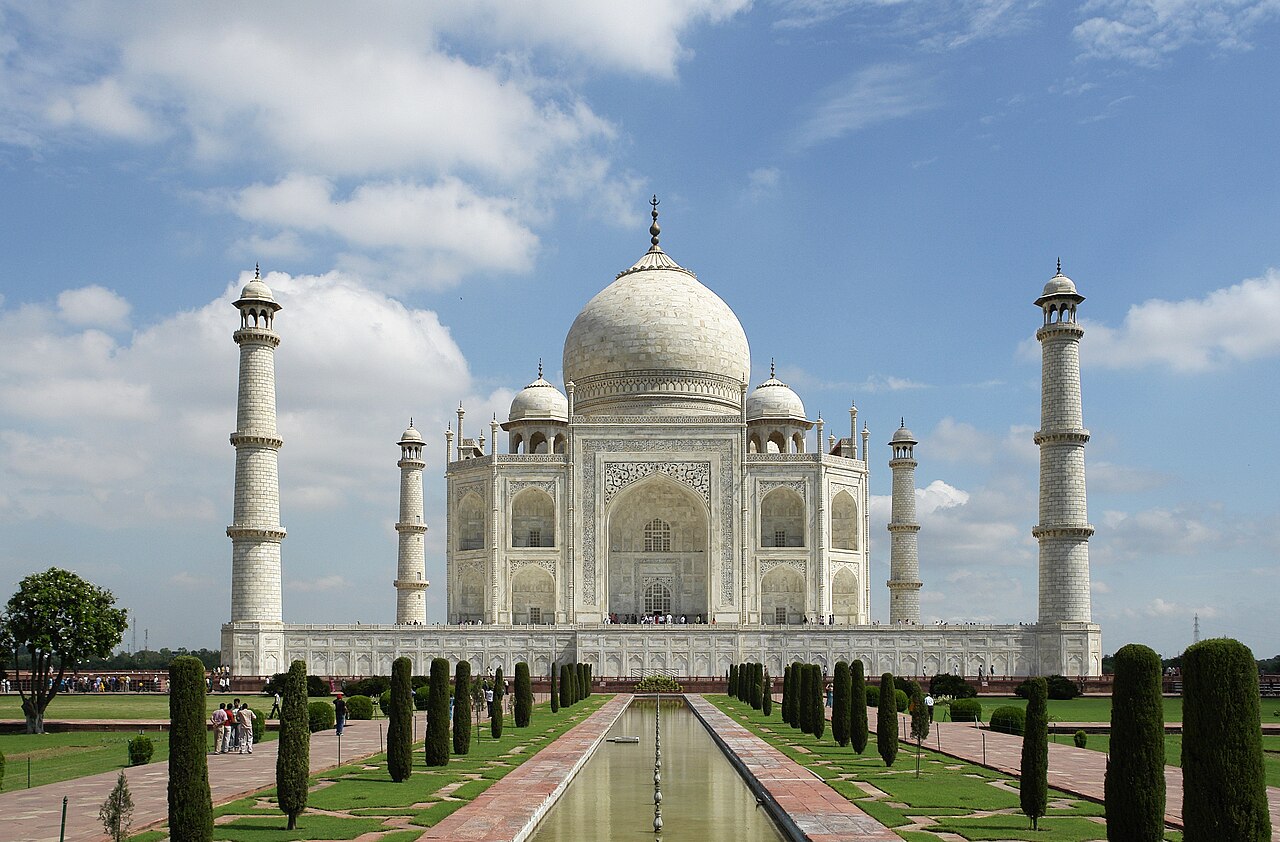
Taj Mahal at sunrise
Arrive at the east gate 30 minutes before opening; the marble shifts from pale rose to blinding white as the sun climbs — and the crowds haven't yet arrived.
Teen Shehr, Ek Safar
Three cities, three dynasties, three moods: Delhi's layered millennia of conquest and street food, Agra's white marble grief made eternal, and Jaipur's pink-sandstone swagger — India's most storied road trip.
Arrive at the east gate 30 minutes before opening; the marble shifts from pale rose to blinding white as the sun climbs — and the crowds haven't yet arrived.
Climb the minaret for a sea-of-rooftop view, then plunge into Chandni Chowk's alley restaurants for paratha and lassi at Paranthe Wali Gali.
The Mughal garden tomb that inspired the Taj — better stone detail and almost no queue in the early morning light.
Tour the Diwan-i-Am and Rang Mahal before the afternoon crowds; the fort's layered history spans Shah Jahan to the British Raj.
Akbar's sandstone capital, abandoned after 15 years due to water scarcity — the Buland Darwaza gateway is among the subcontinent's most dramatic stone compositions.
The fort's ramparts and hall of mirrors glow in the early sun — take the steep path up rather than the jeep for the best views over Maota Lake.
Old Delhi's oldest bazaar road opens for business at dawn, its side lanes thick with the scent of ground spices and jalebi frying in ghee. A morning walk here is sensory before it is historical.
The Harappan gallery and Mughal miniatures alone justify the visit — this is the richest single collection of Indian art and artefact in the world.
From the Musamman Burj tower, Shah Jahan spent his imprisonment gazing across the Yamuna at the Taj he had built for his queen.
The 72-metre iron-pillar complex predates the Mughals by three centuries — quieter than the Red Fort and architecturally richer.
Mughal-era tombs set in 90 acres of manicured parkland — a favourite of Delhi's joggers and picnickers in the late afternoon.
The Maharaja's family still occupies the inner wing; the public museum holds their ceremonial silver and textile collections in grand pavilions.
The garden on the opposite bank of the Yamuna gives the Taj's north face in silhouette at dusk — fewer visitors than the main gate, equally stunning.
On Agra's outskirts, Emperor Akbar's sandstone and marble mausoleum sits inside a deer-dotted garden far quieter than the Taj across town. Its blend of Hindu, Islamic and Jain motifs rewards unhurried afternoon attention.
State-run open-air bazaar where artisans from every Indian state sell textiles, pottery, and street food — the ideal first Delhi evening.
The 60-minute narrated light show over the Diwan-i-Am traces Delhi's history from the Mughals through Independence — atmospheric and surprisingly moving.
Village-themed cultural complex with ghoomar dancers, puppet shows, and an unlimited Rajasthani thali — a cheerful, immersive end to the Triangle.
The narrow alley off Chandni Chowk has served stuffed flatbreads fried in ghee since 1875 — twenty fillings, lit by bare bulbs, unmissable.
On the five nights around the full moon, a strictly limited number of visitors are let onto the grounds after dark to see the marble turn silver under moonlight. It is a rare, hushed alternative to the sunrise crowds.
Every Thursday evening, devotional qawwali singers gather at the shrine of the Sufi saint Nizamuddin Auliya, their voices and harmoniums building to a trance-like pitch as the courtyard fills. Visitors of any faith are welcome to sit and listen.
A handful of rooftop and riverside tables in Taj Ganj line up a view of the mausoleum lit softly against the night sky. It turns a familiar landmark into a backdrop for a slow, candlelit meal.
Every room and suite commands an unobstructed Taj Mahal vista through floor-to-ceiling windows; Mughal-inspired marble interiors, a languid courtyard pool, and a butler assigned solely to you complete this pilgrimage of pure luxury.
The former hunting lodge and residence of the Maharaja of Jaipur—now a Taj Hotels crown jewel—enchants with peacock-strolled Mughal gardens, a regal Jiva Spa, and lavishly appointed royal suites steeped in Rajput grandeur.
Set among the great embassies of Lutyens' Delhi, its palace-dome silhouette, the award-winning Qing restaurant, palatial Leela Suite, and impeccable butler service define the capital's most prestigious address.
Ten Mughal-inspired tent pavilions on the boundary of a tiger reserve deliver private naturalist-guided dawn drives, open-air dining beneath the Milky Way, and an Aman spa experience deep in untamed wilderness.
Rates change — check the live price.
Photography shows the dishes and cuisine — representative, not from the restaurants themselves.
Legendary frontier tandoor cooking; the dal makhani slow-cooks for 18 hours and Bill Clinton ordered seconds. Book three weeks ahead.
Open-air terrace dining with the Taj white in the distance — Mughlai kebabs and roomali roti stretched paper-thin.
Six generations of the family of Mughal royal cooks — mutton korma and nihari from a recipe that hasn't changed in a century.
Contemporary Indian small plates in a breezy museum café — the best lunch stop between Lutyens monuments.
Bedai with aloo sabzi and the city's famous petha candy — Agra's street corners are as memorable as its marble.
India's most inventive modern-Indian cooking; duck khurchan tacos and meetha achaar foie gras. The most important reservation on the circuit.
Online tickets sell out on weekends and holidays — book at least two days ahead and download the QR code offline before arriving at the gate.
Archaeological Survey of India guides at the Taj, Agra Fort, and Fatehpur Sikri are licensed, knowledgeable, and dramatically cheaper than private tour operators.
Use Ola intercity for the Agra–Jaipur leg via Fatehpur Sikri; agree on one driver for the whole circuit to avoid renegotiating fares at every stop.
The Golden Triangle is notorious for commission-driven gem and carpet shops — if a driver offers to show you the 'best' shop, politely decline and carry on.
Shoe covers are issued at the Taj's tomb chamber — slip-ons save time. Modest dress is expected at Jama Masjid and Fatehpur Sikri's mosque.