Temple
Boudhanath stupa circumambulation
Join monks and pilgrims on the early-morning kora around one of the world's largest Buddhist stupas. Spin prayer wheels as butter-lamp offerings glow in the morning haze.
Namaste, Himalaya
A city where ancient Newari courtyards and gilded pagodas press together around every corner, and where the scent of butter lamps and juniper smoke mingles with the electric promise of the Himalaya just beyond the valley rim.
Join monks and pilgrims on the early-morning kora around one of the world's largest Buddhist stupas. Spin prayer wheels as butter-lamp offerings glow in the morning haze.
Arrive before sunrise to watch cremation ceremonies on the ghats and sadhus in ochre robes — a vivid and moving encounter with Hinduism's sacred rites on the Bagmati River.
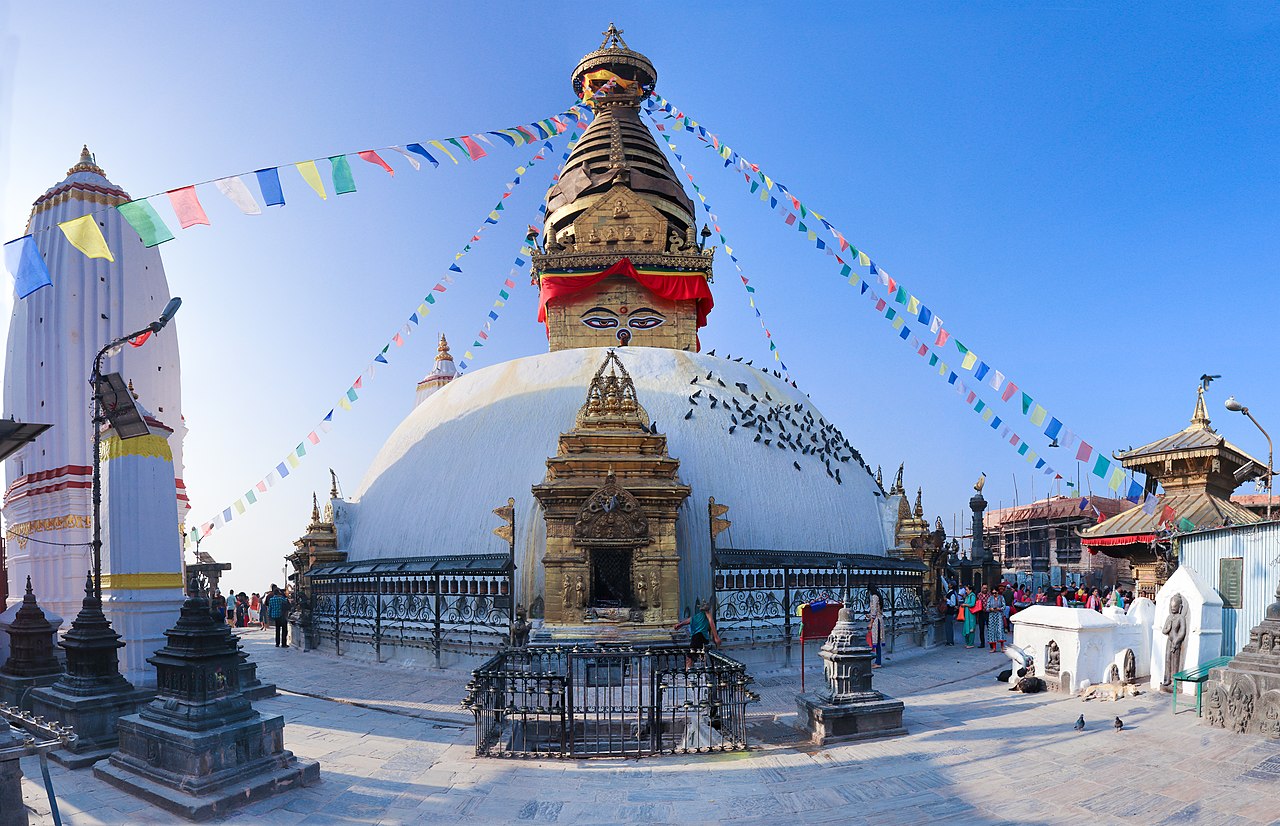
Climb the 365 steps as valley fog lifts to reveal the distant Himalayan chain. The all-seeing eyes of the stupa watch serenely from every direction.
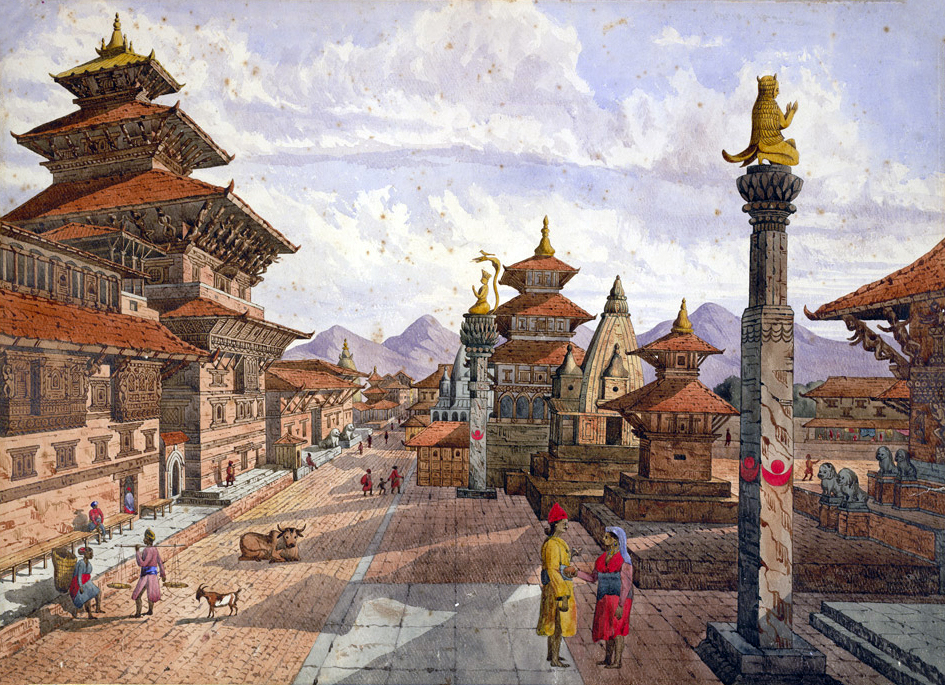
Wander the royal palace complex of carved timber windows, courtyards, and medieval pagodas. Look for Kumari, the living goddess, who occasionally appears at her gilded window.
The most refined of the valley's three royal squares, anchored by the Patan Museum — one of Asia's finest collections of bronze and gilt-copper deity sculptures in a beautifully restored palace.
An hour's drive to a hilltop terrace where, on clear mornings, the entire Himalayan arc from Dhaulagiri to Everest hangs suspended above the clouds.
A crossroads market in the old city fills each morning with spice sellers, rice merchants and porters navigating narrow lanes that have traded goods for centuries. It is Kathmandu's commercial heart before the shrines get their crowds.
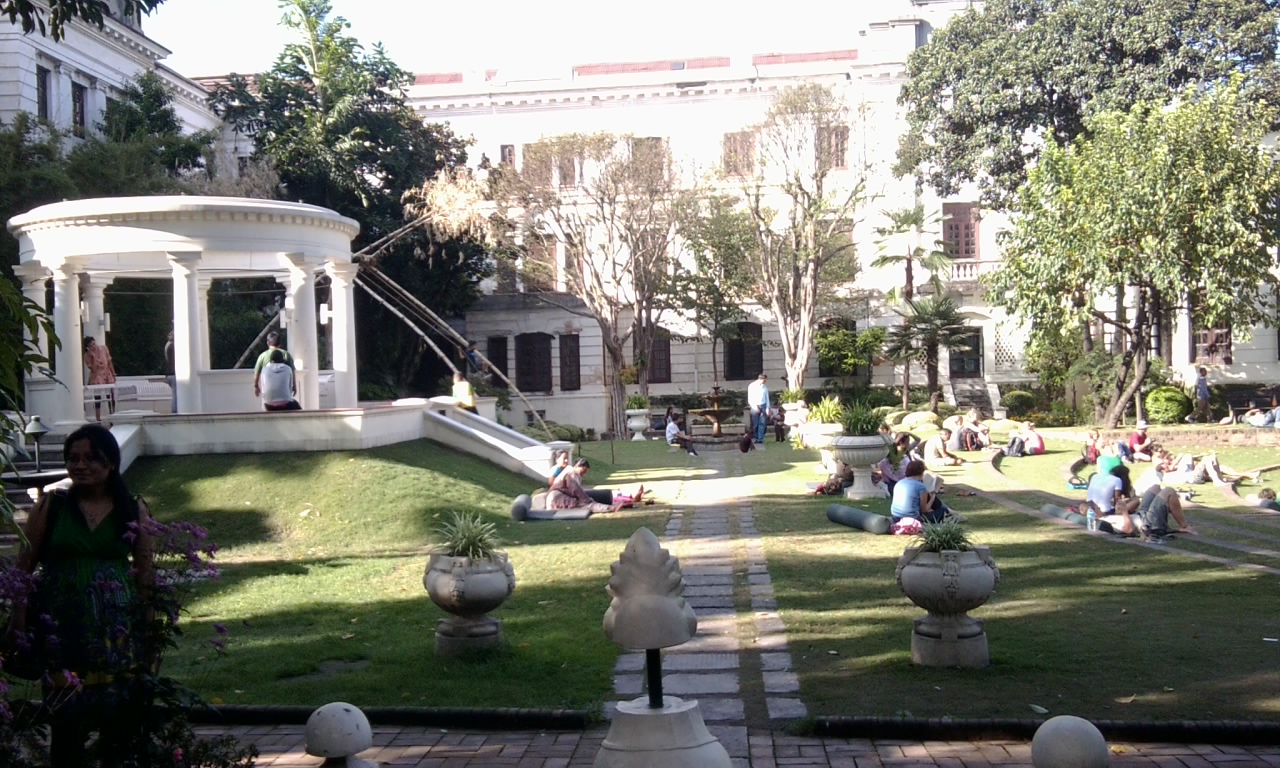
An Edwardian Neo-classical garden of pavilions and fountains hidden behind a wall in the heart of Thamel — a surprisingly quiet retreat from the city's noise.
Pashminas, thangka paintings, singing bowls, and trekking gear fill every doorway. Bargain patiently and pick up a hand-carved item as a genuine keepsake.
The medieval city that time missed, with the 55-Window Palace and Nyatapola temple as centrepieces. Potter's Square nearby has artisans at their wheels as they have been for centuries.
An easy uphill walk through farmland leads to Nepal's oldest Vishnu temple on a hilltop of peacocks and elaborately carved stone.
Learn to prepare beaten rice, black-eyed bean soup, and spiced buffalo meat in a traditional Newari kitchen — one of the valley's most distinct and underrated culinary traditions.
Terraced gardens at the foot of the Phulchoki ridge, good for butterflies and Himalayan birds after a morning of temple-hopping in the valley.
A Newari hill town on the valley's edge preserves brick courtyards, temple squares and mountain views largely untouched by Kathmandu's sprawl. An afternoon spent wandering its lanes moves at a distinctly slower pace.
As city lights flicker on and prayer bells chime from the alleys below, rooftop restaurants in Thamel serve excellent dal bhat alongside cold Everest beer.
Thamel reinvents itself after dark — small bars and live-music venues line the lanes, mixing travellers with local bands playing Nepali folk, jazz, and reggae.
A buckwheat-and-millet feast from the high-Himalayan Mustang region — served with meaty broth, clarified butter, and seasonal greens beside the Mangal Bazaar.
The old bazaar quarter at dusk — spice merchants, oil-lamp shrines, and fruit stalls pressed into narrow lanes that have barely changed since the Malla kingdom.
Each evening on the banks of the Bagmati, priests perform aarti with tiered oil lamps, bells and chanting in front of Nepal's most sacred Shiva temple. Watching from across the river, with cremation ghats glowing in the middle distance, is unforgettable.
Over a set Newari feast of buffalo, beaten rice and black lentil dishes, dancers perform courtly and folk pieces native to the Kathmandu Valley's original inhabitants. It pairs two of the valley's oldest traditions on one table.
A guided route through backstreet momo joints samples the valley's dumpling variations, washed down with raksi, a home-distilled rice spirit poured generously by the shot. It is a low-key, high-flavour introduction to Kathmandu after dark.
A living museum of endangered Newari craftsmanship, its hand-carved ancient brickwork, the Krishnarpan restaurant's 22-course tasting odyssey through Nepali royal cuisine, and the Pancha Kosha holistic spa are experiences that exist nowhere else on earth.
Positioned beside the great Boudhanath Stupa—a UNESCO World Heritage site—its sprawling resort grounds, heated outdoor pool, Regency Club suites, and vibrant Rox restaurant make it the Valley's grandest and most conveniently placed modern retreat.
On a ridge commanding a sweeping panorama from Ganesh Himal to Mount Everest, this sustainability-focused sanctuary blends yogic retreat programmes, Ayurvedic healing, and private meditation pavilions into a rarified Himalayan escape above the noise of the city.
Set within the ancient royal hunting forest of Gokarna, the turreted manor house, a championship golf course, riverside Ayurvedic spa, and jungle-canopy suites create an unexpectedly verdant world just minutes from Kathmandu's ancient temple squares.
Rates change — check the live price.
Photography shows the dishes and cuisine — representative, not from the restaurants themselves.
An extraordinary multi-course feast of Nepali court cuisine in a heritage Newari building. The 22-course version is a full evening; book well ahead.
Live folk music and a set feast of Newari delicacies in a restored mansion — more celebratory than culinary theatre, but very good on both counts.
Generous thali sets from the Mustang region, popular with local office workers. Come early for the best dal.
The city's best steamed and fried momos in a no-frills Tibetan dining room. Order the buff (buffalo) version with the house chilli sauce.
A reliable all-day spot for espresso, wood-fired pizza, and good Wi-Fi after a morning of temple circuits.
A long-standing travellers' institution with cold Everest beer, Nepali spirits, and a convivial crowd through the evening.
Even at 1400 m, Kathmandu can trigger mild altitude effects — drink water, avoid alcohol on day one, and rest at the first headache.
Leave footwear at the entrance of all Hindu and Buddhist sacred sites; socks are fine but bare feet show the most respect.
Fixed-price shops exist but most stalls expect negotiation — start at roughly half the asking price and settle somewhere comfortable.
Entry fees include a guide option at each square; it adds significant depth to the carved iconography and palace histories.
Load-shedding in Kathmandu can last an hour or two, especially outside the tourist core — a charged power bank keeps the day moving.