Burj Khalifa 'At the Top' sunrise
Book the earliest slot for the 124th-floor deck — the city spreads in every direction, the desert beginning where the towers end, the Gulf a silver band at the horizon.
Between Desert and Sea
Dubai has compressed centuries of ambition into decades — the world's tallest tower casts its shadow over Bedouin souks selling frankincense by the packet, and the desert is never more than twenty minutes from the sea.
Book the earliest slot for the 124th-floor deck — the city spreads in every direction, the desert beginning where the towers end, the Gulf a silver band at the horizon.
The Gold Souk holds 300 shops in a covered arcade that glitters from end to end. Across the road, sacks of frankincense, saffron, and dried rose petals fill the Spice Souk.
Wind-tower houses from the 1800s now host galleries, teahouses, and the Dubai Museum in the oldest preserved quarter of the city — a cool, quiet counterweight to the new.
The wooden water-taxi across the Creek costs just 1 AED and remains one of the city's most authentic experiences, threading between dhows loaded with goods.
One of the few mosques in Dubai open to non-Muslim visitors, offering tours that give a thoughtful introduction to Islamic practice and Emirati culture.
An early start to the red dunes of Lahbab for a sunrise camel ride before the sand gets hot — the light is warm and the silence is complete.
A cluster of converted warehouses in Al Quoz houses contemporary art galleries, design studios and project spaces that rarely make the standard Dubai itinerary. Mornings here are cool, uncrowded and refreshingly unpolished.
The world's largest mall contains, improbably, a real ski slope with fresh powder. Non-skiers come to watch penguins waddle through the snow.
Ride the monorail to the tip of the palm and explore the Atlantis hotel's public boardwalk — oversize and spectacular, with sea views back to the full skyline.
A 4x4 convoy crests and dives through red dunes at high speed before settling at a Bedouin camp for camel rides, henna, shisha, and grilled meat under the stars.
A 150-metre picture frame with old Dubai on one side and new Dubai on the other — the glass floor walkway between them is vertiginous and thrilling.
The calligraphy-wrapped torus on Sheikh Zayed Road houses immersive experiences about future cities, space travel, and climate resilience — more spectacle than exhibition, but genuinely dazzling.
The public beach at Jumeirah Beach Residences is clean, busy, and lined with open-air restaurants — a democratic stretch of sand against a backdrop of towers.
Known locally as d3, this planned creative quarter mixes homegrown fashion ateliers, cafes and public sculpture along shaded walkways. It offers a slower, design-forward afternoon away from the mega-malls.
The world's largest choreographed fountain dances every thirty minutes after sunset in the shadow of the Burj Khalifa — best from the Souk Al Bahar bridge.
A converted dhow slides up and down the illuminated Creek, past the souks and wind towers, with a live oud player and a buffet of Arabic and international dishes.
Fifty-four floors up in the Address Sky View hotel, with the Burj Khalifa close enough to touch and the city lights stretching to the horizon — arrive for the golden hour.
After dark the old Deira lanes take on a different character — more local, less tourist, the air thick with oud incense and the sound of Arabic and Urdu from the stalls.
Along the Dubai Creek, Al Seef's reconstructed wind-tower houses and wooden abras make for an easy evening walk between the old city and the new. Lantern-lit cafes along the waterfront are made for lingering.
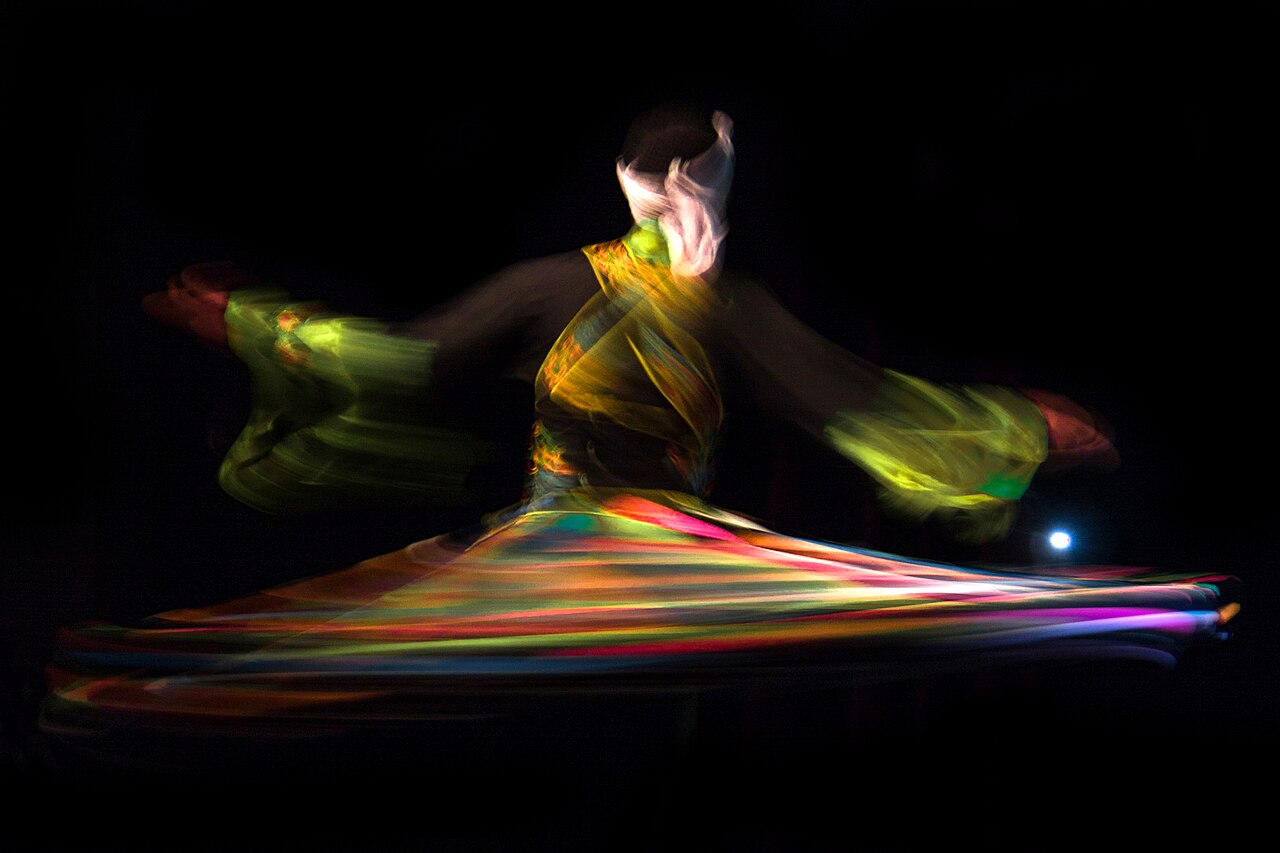
Beyond the dunes, a Bedouin-style camp serves a barbecue spread beneath the stars while a tanoura dancer spins in layered, lit-up skirts to live drumming. It is the theatrical bookend to an afternoon of dune bashing.
This stretch of Jumeirah coastline stays lively well after sunset, its murals, food trucks and open beach making for an easy, unstructured evening by the water. It is Dubai at its most relaxed, skyline glittering in the distance.
The world's most recognisable hotel silhouette delivers all-suite grandeur, private Rolls-Royce transfers, 24-carat gold iPad-controlled rooms, and the Al Muntaha restaurant 200 metres above the Arabian Sea—a standard of opulence that still defines a city.
A skybridge infinity pool suspended ninety floors above the Palm offers one of the world's most photographed views, while seventeen celebrity-chef dining venues, a private beach club, and vast suite floors redefine what a grand resort can aspire to.
A palatial Moorish-Andalusian retreat on the Palm crescent where a Guerlain spa, private beach, two-Michelin-starred Stay by Yannick Allenno restaurant, and an indulgent guest-to-staff ratio ensure seamless, unhurried, deeply personal exclusivity.
Directly on a private Jumeirah Beach stretch, the three-tiered pool deck, five award-winning dining venues including an open-air beachfront grill, and wraparound balconies over the glittering Arabian Gulf set the waterfront benchmark for the emirate.
Rates change — check the live price.
Photography shows the dishes and cuisine — representative, not from the restaurants themselves.
Robata-grilled black cod and signature Nobu rolls beside the Palm Jumeirah lagoon. Dress the part and book weeks ahead.
A theatrical recreation of a 1960s Emirati fishing village, serving reliable mezze, grills, and luqaimat honey doughnuts to a loyal local crowd.
Harees, balaleet, and karak chai served in a shaded courtyard — a rare chance to eat genuinely traditional Emirati food beside the wind towers.
Open since 1978 and still the city's most beloved cheap eat — Pakistani curries, biryani, and seekh kebabs at formica tables, always packed.
Specialty flat whites and avocado toast in a warehouse conversion that helped spark Dubai's café culture. Good for a post-gallery pause in the art district.
Robatayaki and Japanese cocktails in an open kitchen; the bar alone is worth visiting for the robata-smoked old fashioned and the design.
The Deira area is traditional — covered shoulders and knees are appreciated, even if not strictly enforced for tourists.
May to September temperatures hit 42 °C by midday — plan outdoor sights for before 10:00 and after 17:00.
The Red Line connects Deira to Dubai Marina cleanly and cheaply; get a Nol card on arrival and use it for buses too.
Music dims and some shops briefly close during the five daily prayers — a short pause rather than a disruption to your day.
Licensed bars are accessible and excellent, but alcohol is not sold in supermarkets or on the street — plan accordingly.