
Culture
São Bento station azulejo panels
Twenty thousand hand-painted tiles cover the grand hall's walls, narrating the history of Portuguese transport in epic blue-and-white. Go early before the ticket hall fills.
Às Margens do Douro
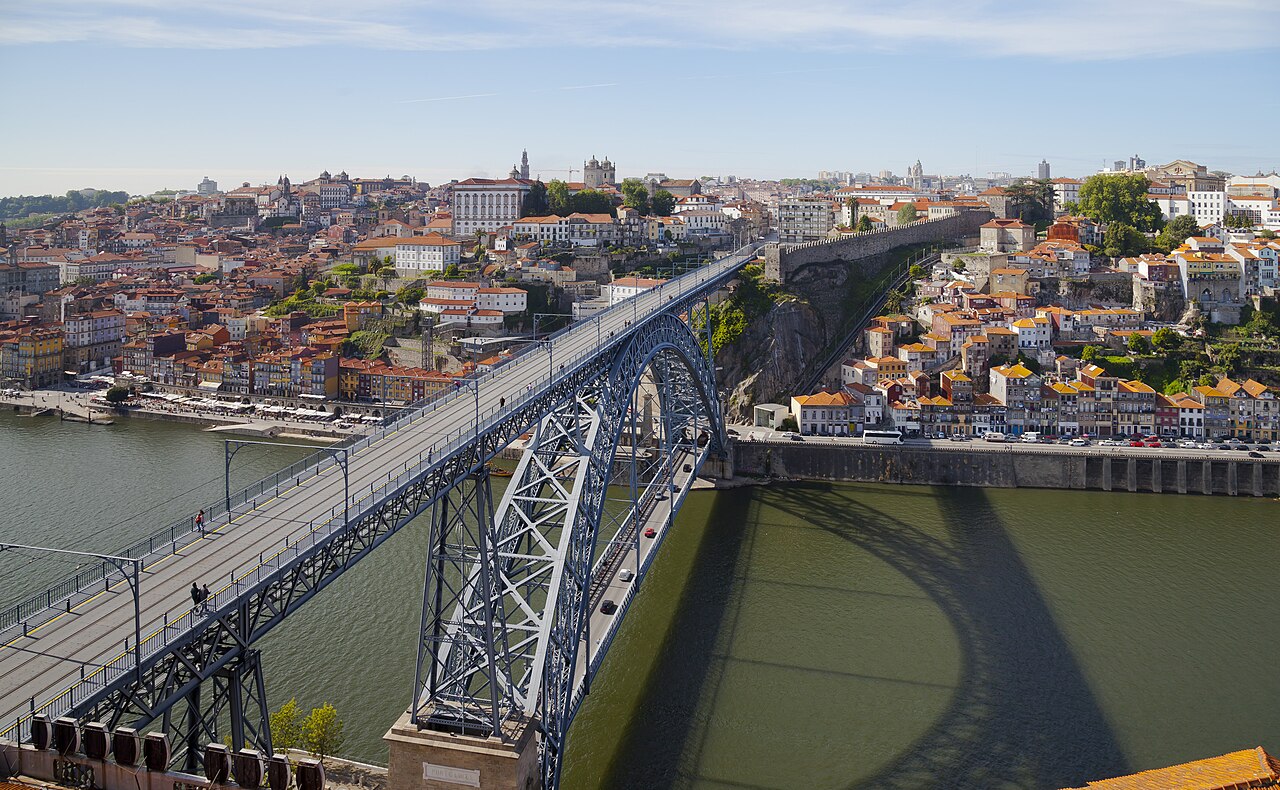
A city built on steep granite cliffs above the Douro, its baroque towers and azulejo-faced churches backed by the long sheds of Vila Nova de Gaia where the world's most complex fortified wine quietly ages.
Twenty thousand hand-painted tiles cover the grand hall's walls, narrating the history of Portuguese transport in epic blue-and-white. Go early before the ticket hall fills.
Walk the barrel-lined lodges of Graham's or Taylor's for a guided tour through the solera process, ending with a tasting of aged tawny and vintage reserve.
The restored iron-and-glass market returns to its 1914 form — vendors selling salt cod, Serra cheeses, presunto, and the best-priced queijinhas in the city.
Eighty-four steps up the tallest baroque tower in Portugal for a panorama of orange rooftops, the Douro, and the twin towers of the Sé cathedral.
The red-staircase neo-Gothic bookshop that reputedly inspired Hogwarts — reserve a timed slot to avoid the worst crowds; the ticket is redeemable against a purchase.
The 19th-century stock exchange hides the Arab Room inside — a Moorish fantasy of gilded stucco whose every surface is carved and painted. Guided tours only.
Behind a plain Gothic facade, the interior erupts into gilded woodcarving so dense it is nicknamed the golden church. Below, a bone-lined catacomb tells a quieter, older story.
A rabelo — the traditional flat-bottomed boat once used to carry port barrels — passes under all six bridges of Porto. The upper deck is worth fighting for.
Álvaro Siza Vieira's white Art Deco museum set in 18 hectares of manicured gardens. The permanent collection of Portuguese and international contemporary art is strong.
Follow the seafront promenade from the river mouth to the Molhe and back — Atlantic breakers, kite surfers, and a clutch of excellent terraced fish restaurants.
The entire exterior is covered in 15,000 blue-and-white tiles depicting the life of Saint Francis and Saint Catherine — one of the most photographed facades in Portugal.
The UNESCO-listed medieval waterfront of crumbling, painted houses draped in washing — at its best at low tide when the Cais da Ribeira reveals its oldest stones.
Porto's main shopping street leads to the Art Nouveau Café Majestic and a maze of side streets with independent designers, cork goods, and gourmet delis.
Porto's oldest riverside district climbs in steep stairways past antique shops, faded mansions, and laundry strung between windows. It sees a fraction of the crowds of the Ribeira just below.
The hillside gardens above the Douro offer some of the city's widest river views. Peacocks wander the lawns; the light at 19:00 in summer is extraordinary.
Two Michelin stars and the best wine cellar in Portugal — Ricardo Costa's tasting menu pairs native grape varieties with modern Portuguese cuisine. The terrace view is unsurpassed.
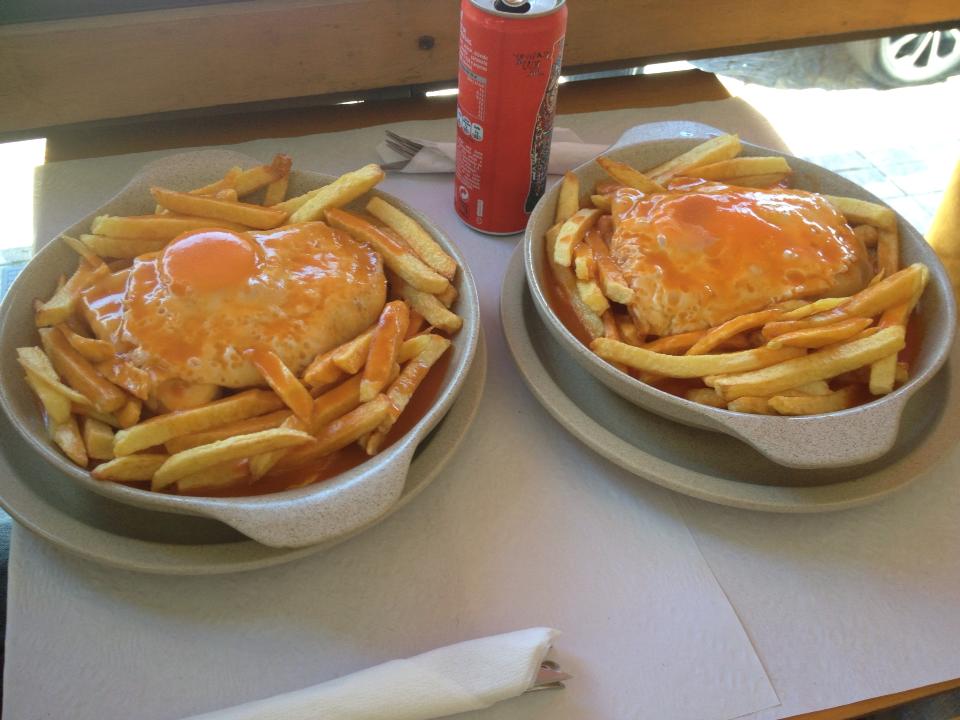
Porto's signature beer-and-tomato-sauce-smothered sandwich, layered with sausage, ham, and steak, topped with a fried egg. Café Santiago is the canonical address.
The cave-like bars beneath the arches of Cais da Ribeira spill onto the quay after dark — accordion, fado, and jazz drift across the water from Vila Nova de Gaia opposite.
A short rabelo boat crossing timed to the last light of day, gliding beneath the six bridges that stitch Porto to Vila Nova de Gaia as the Douro turns copper.
A flight of tawny and vintage ports tasted on a terrace above the river, poured slower and savoured longer than the daytime cellar tours allow.
Porto's own fado tradition is quieter and less staged than Lisbon's, sung in small riverside taverns where the songs of longing feel entirely at home.
Perched above the Douro's port wine lodges, The Yeatman's two-Michelin-starred restaurant, an 18,000-bottle cellar, and tasting-menu butler service make it the definitive gastronomic stay in northern Portugal.
A neoclassical 18th-century palace anchoring the city's central square, the Palácio das Cardosas offers palatial suites with gilded ceilings, a refined brasserie, and a spa channelling the mineral richness of the Douro Valley.
Fifteen themed Art Deco-meets-contemporary suites overlook a garden pool with sweeping Douro vistas, while the hotel's curated art collection and intimate rooftop bar create a private-club atmosphere unique to Porto.
Carved from a cluster of 18th-century merchant townhouses in the UNESCO Ribeira district, Flores Village reveals original granite walls alongside a cocooning thermal spa and dedicated wine-and-cheese butler service.
Rates change — check the live price.
Photography shows the dishes and cuisine — representative, not from the restaurants themselves.
Two Michelin stars above the Douro, with 25,000 bottles in the cellar. The tasting menu with regional wine pairings is a full evening.
A classic Ribeira adega for bacalhau à Gomes de Sá and caldo verde — the kind of place where nothing much has changed in forty years.
One Michelin star in a converted townhouse near the sea — octopus, percebes, and Atlantic fish cooked with real restraint.
The canonical address for Porto's iconic francesinha — a short menu, long queues, and zero pretension.
Gilded Art Nouveau interior dating to 1921 — the croissants and galão are secondary to the room itself.
Natural wines from across Portugal in a low-lit corner spot popular with the Cedofeita creative crowd. Small plates of cheese and charcuterie.
Livraria Lello requires a timed-entry ticket purchased in advance; walk-ups face waits exceeding an hour during summer.
The lower walkway of Dom Luís I bridge is for trams and pedestrians — cross to Vila Nova de Gaia on foot at mid-span level for the river view.
In Porto, the pre-dinner ritual is a chilled white port with tonic water and a slice of lemon, not a gin and tonic — try it in any Ribeira bar.
The Funicular dos Guindais saves a brutal uphill between the Ribeira and the Batalha neighbourhood — it runs until midnight most days.
Porto is genuinely rainy from October to March; a compact umbrella is worth packing even in late spring.