Pena Palace at opening time
Book the earliest slot and walk the ramparts while mist still clings to the treetops. The exuberant 19th-century eclecticism — Moorish arches, Gothic towers, Manueline windows — reads best without a crowd behind you.
Palácios na Névoa
A UNESCO World Heritage landscape of cloud-wreathed palaces and gothic follies rising from dense Atlantic forest, less than forty minutes from Lisbon and utterly unlike anywhere else on the continent.
Book the earliest slot and walk the ramparts while mist still clings to the treetops. The exuberant 19th-century eclecticism — Moorish arches, Gothic towers, Manueline windows — reads best without a crowd behind you.
A Gothic-Manueline estate built by a millionaire Freemason, with an underground initiation well spiralling nine levels down — the most theatrical folly in the Serra.
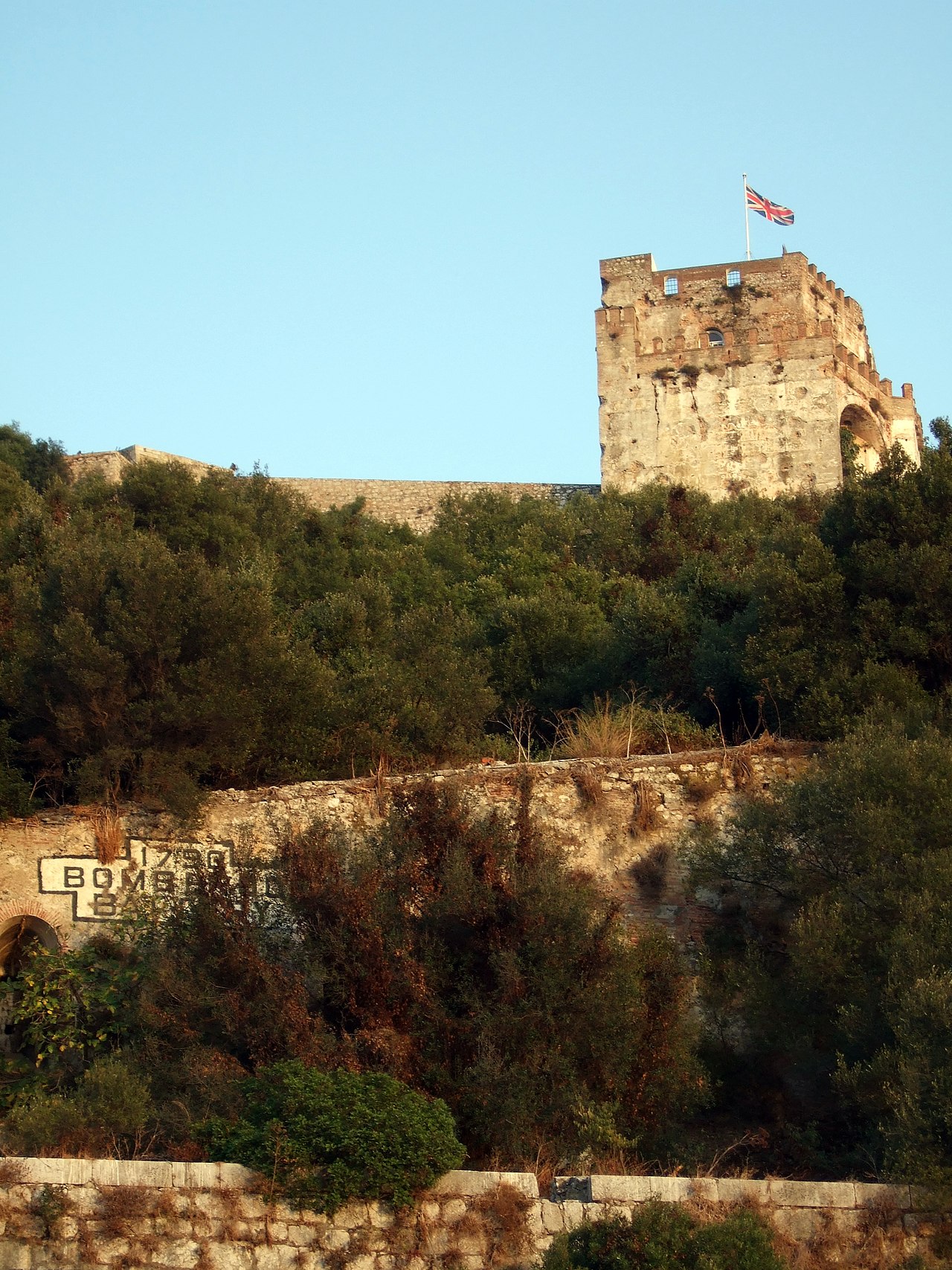
The 8th-century Moorish battlements climb the granite ridge above Sintra — the view of Pena Palace floating above the pines is the defining photograph of the region.
The royal retreat in the village centre, recognisable by its twin conical chimneys. The Sala dos Brasões ceiling — painted with the arms of 72 noble families — is extraordinary.
A signposted trail from the village through ancient oak and fern to the highest cross on the Serra at 529 m, with the Atlantic and the palaces spread below.
A 16th-century hermitage built into granite boulders, its tiny cells lined with cork bark — Byron called it 'the most beautiful desolation.' Half-hidden in deep forest.
Tucked into the Pena Park woods, this Alpine-style chalet was built as a private retreat and restored after a 1999 fire. Its cork-bark facade and fern-filled gardens feel like a secret kept from the main palace crowds.
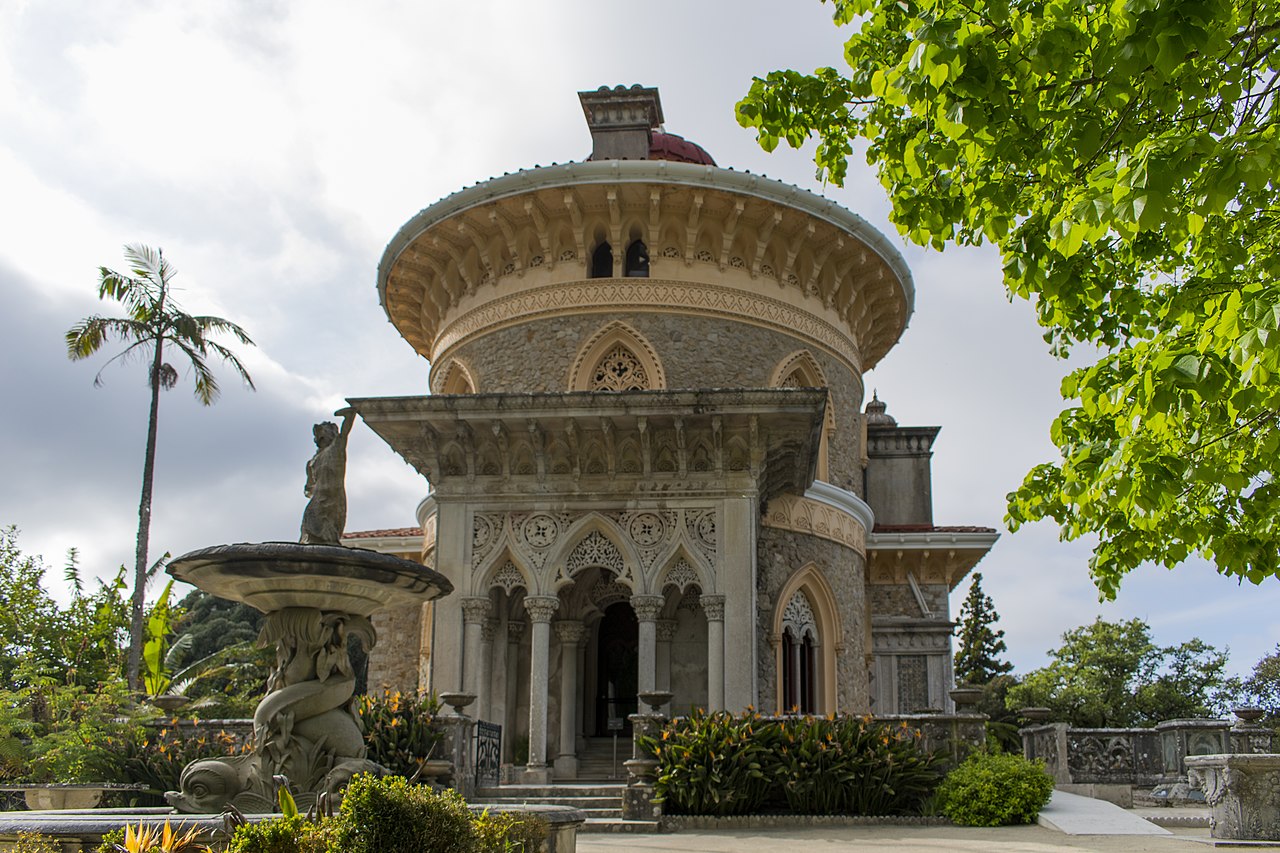
A Moorish-inflected fantasy palace set in 30 hectares of romantic botanical garden, with tree ferns from New Zealand and palms from Mexico growing alongside native oak.
Colares produces one of the world's rarest wines from ungrafted vines grown in Atlantic sand dunes. A visit to the century-old adega co-operative is a step back in time.
The westernmost point of continental Europe — a sheer cliff above the Atlantic where Camões wrote 'here the land ends and the sea begins.' Bracing in any season.
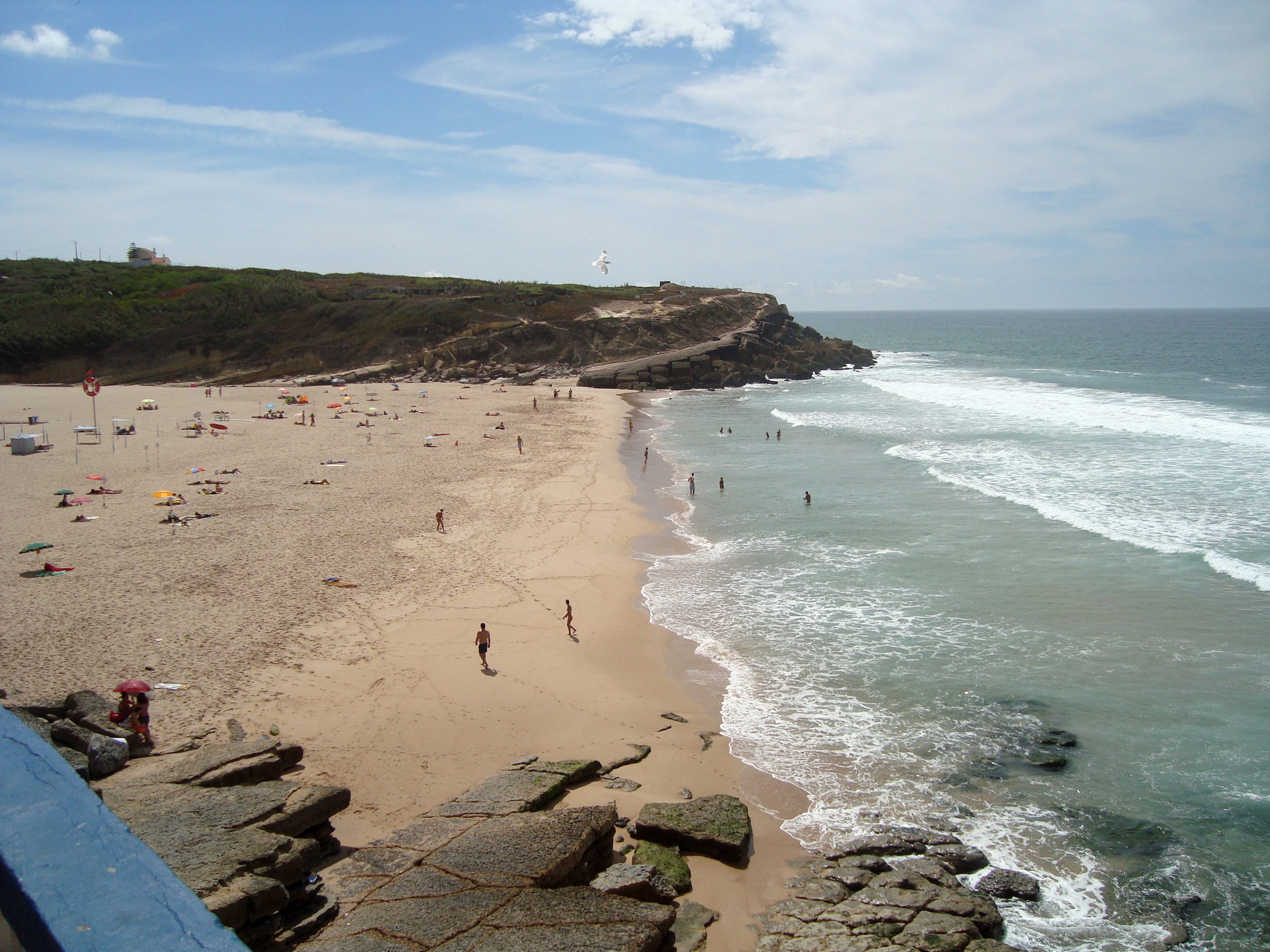
The old electric tram from Sintra (seasonal) delivers you to a wide Atlantic beach backed by modest seafood restaurants. Cold, clean water and uncrowded sands.
The fishing village turned royal resort has a well-preserved whitewashed centre, a decent municipal museum, and an esplanade of open-air fish restaurants facing the bay.
The wild Atlantic dune beach six kilometres west of Cascais — kite surfers, crashing waves, and the Serra de Sintra rising behind. Walk south from the car park along the sand.
Whitewashed houses cling to a cliff above a tidal rock pool on the wild Atlantic coast near Colares. It is a short drive from Sintra and a favourite spot for a slow, salt-air afternoon.
An evening ticket to the Palace gardens (palace closed) gives the upper terrace to yourself as the sun drops into the Atlantic — the pink-and-yellow towers turn golden.
The village restaurants come into their own once the day-trippers leave; Incomum by Luis Santos and Tascantiga serve refined regional cooking in rooms that feel genuinely intimate.
After dark the palaces and manor facades are softly lit and the streets belong to the hotel guests. A slow circuit from the National Palace through the old quarter takes under an hour.
The marina bars open onto a terrace facing the moored yachts — white port with tonic, a plate of local percebes, and the last warm light of the Estoril coast.
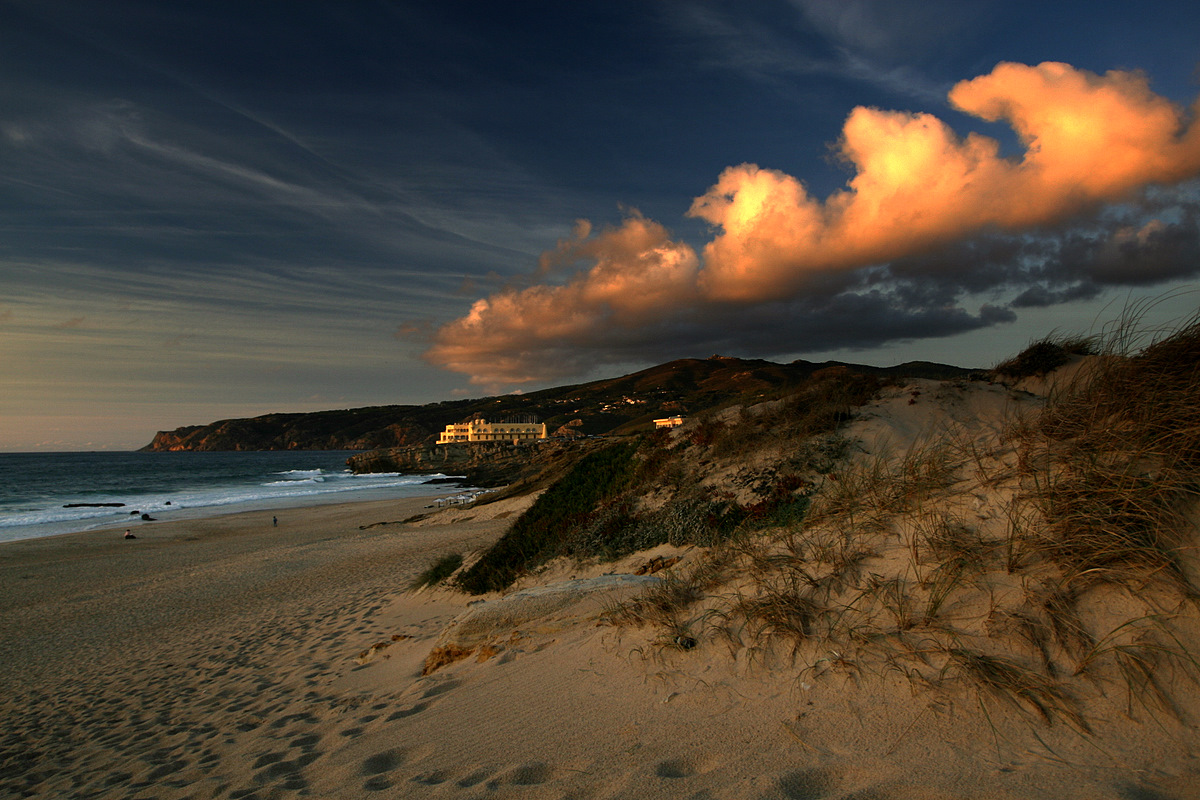
Framed by cliffs and largely free of crowds once the sun drops, this Atlantic beach turns into a wide, dark stage for stargazing, the surf providing the only soundtrack.
Said to have inspired Ian Fleming's Casino Royale, Europe's largest casino keeps its doors open well past midnight for anyone curious enough to dress up and try their luck.
Grown in sandy trenches dug against the Atlantic wind, Colares wine is a curiosity worth tasting slowly, paired here with small plates in a candlelit dining room outside Sintra village.
Nestled within a 16th-century Hieronymite monastery surrounded by Sintra's UNESCO forests, Penha Longa pairs a championship golf course with a palatial spa and suite terraces commanding the Serra de Sintra ridgeline.
James Bond's Estoril haunt since the 1950s, the Palácio's belle-époque grandeur, championship golf course, and legendary casino terrace dinners give it a cinematic mystique impossible to replicate elsewhere on the Lisbon Riviera.
A sleek resort anchored in Cascais's Sintra Natural Park, The Oitavos wraps floor-to-ceiling glass suites around an Atlantic panorama, a Tom Doak-designed links course, and an infinity pool gazing directly to sea.
A 17th-century Atlantic fortress perched on Europe's westernmost cape, Guincho's stone suites battered by sea wind, a one-Michelin-starred restaurant, and wild beach access create the most elemental luxury on the Portuguese coast.
Rates change — check the live price.
Photography shows the dishes and cuisine — representative, not from the restaurants themselves.
Chef Tiago Penão's intimate twelve-seat Michelin-starred counter brings kappo-style Japanese precision to the Atlantic coast — a nine-course omakase that is the most technically remarkable meal available in the Sintra region.
Tucked behind the National Palace, with a daily-changing menu anchored by Serra cheese, coastal fish, and heritage-breed pork.
Grilled sea bass, percebes, and linguado simply done in the old fisherman's quarter. Order the daily catch, not the menu.
A modern petiscos bar with natural wines, local charcuterie, and the best queijo de Azeitão in Sintra.
Invented here in 1862 — the travesseiro (puff-pastry pillow filled with almond and egg cream) is Sintra's signature sweet. Queue early.
A hidden gem in the Sintra-Cascais Natural Park corridor, pouring a thoughtfully curated selection of local Portuguese varieties and natural wines from small producers alongside artisanal cheese and charcuterie.
Pena and Quinta da Regaleira sell out during summer weekends — buy timed-entry tickets at least three days ahead on the Parques de Sintra website.
The Fertagus line from Rossio runs every 20 minutes and takes 40 minutes; driving into Sintra on summer mornings means gridlock from the village boundary.
The palaces, Serra trails, and the coastal towns cannot be done in a single day without feeling rushed — one night in the village transforms the experience.
The Serra de Sintra has its own weather system; clouds can roll in within minutes of a clear morning, so bring a waterproof even in July.
The palace circuit is steep; tuk-tuk shared shuttles run between the village, Moorish Castle, and Pena, but the forest trail is always more rewarding on foot.