Real Alcázar early entry
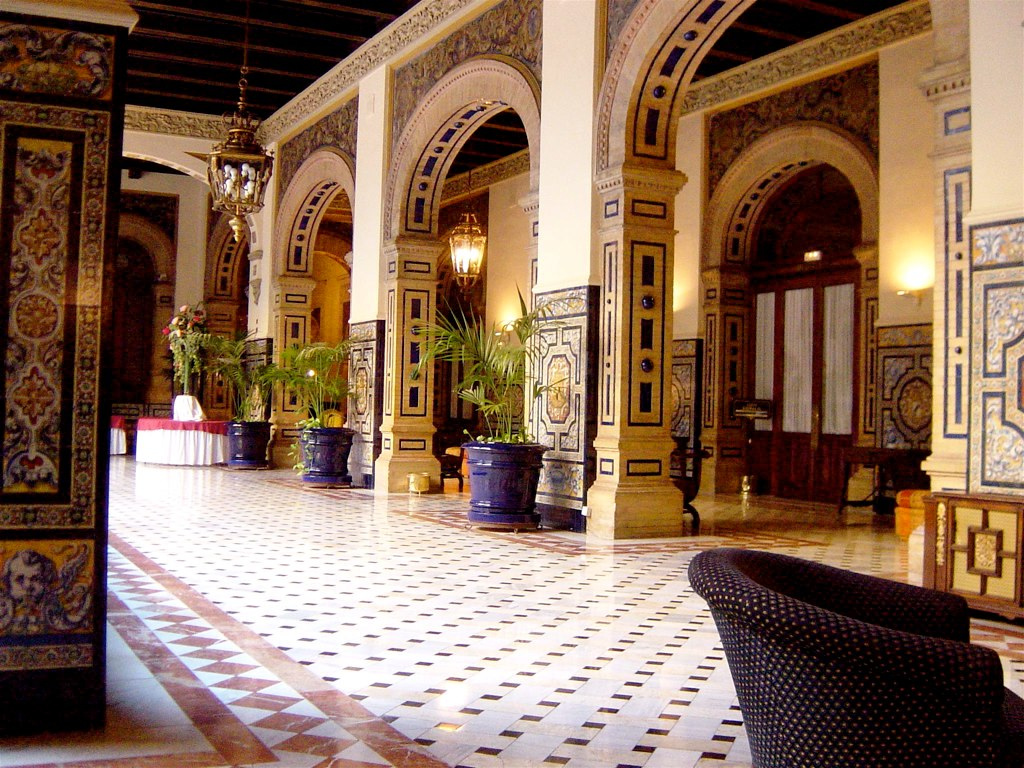
Book the first 9:30 slot to walk the Mudéjar halls and the gardens of orange and myrtle before the heat and the crowds arrive. The Salon de Embajadores dome is the finest in Andalusia.
Luz de Andalucía
Europe's most operatic city: a skyline of Giralda bells and orange trees, Moorish palaces of impossible intricacy, and a flamenco tradition that lives in basements and corrals rather than on stages.
Book the first 9:30 slot to walk the Mudéjar halls and the gardens of orange and myrtle before the heat and the crowds arrive. The Salon de Embajadores dome is the finest in Andalusia.
The world's largest Gothic cathedral contains Columbus's tomb and a nave that never fails to stun. Climb the ramp (not stairs) of the 12th-century Giralda minaret for rooftop views.
The old Jewish quarter of whitewashed lanes, flower-hung balconies, and small plazas with orange trees — best before 10:00, before the guided groups arrive.
A 15th-century aristocratic palace blending Mudéjar craftsmanship with Renaissance grandeur — still owned by the Dukes of Medinaceli. One of Seville's most undervisited treasures.
The giant wooden lattice structure (Las Setas) above the Encarnación market offers a panorama of the medieval skyline and modern Seville at its best in early light.
The covered market in the ceramics district opens at 8:00 — olives, Iberian ham, manchego, and the city's finest pescaíto frito being prepped for the lunch crowd.
Home to the revered Virgen de la Macarena, this basilica in the working-class Macarena district draws pilgrims year-round, not only during Semana Santa. Its adjoining museum traces the history of Holy Week processions.
A one-hour cruise from the Torre del Oro past the Plaza de Toros and the Triana bridge, with commentary on the city's maritime history and its role in the Americas trade.
Spain's second-finest art museum after the Prado, housed in a former convent. The Zurbarán and Murillo rooms are extraordinary, and the ticket price is almost insultingly low.
The Triana neighbourhood has produced Seville's painted azulejo tiles since the 14th century; several family workshops on Calle Alfarería let visitors watch the craft and buy direct.
The monumental 1929 semicircle of tiled Baroque revival architecture, with a moat you can row on, then a slow walk through the shaded formal gardens alongside.
A Mudéjar courtyard setting for the city's most authentic flamenco show — 70 minutes, no dinner, pure art. Book the afternoon show to reserve evenings for a longer session.
The Triana bank of the Guadalquivir faces the city's medieval skyline across the water — the terraced bars of Calle Betis are ideal for an afternoon cerveza watching the light change.
This long, plane-tree-lined square has gone from red-light district to bohemian hangout, ringed with vermuterías and vintage shops. Roman-column monuments still bookend either end, a reminder of the square's older life.
Start at Bar El Comercio for montaditos, move to El Rinconcillo (est. 1670 — the oldest bar in Seville) for spinach with chickpeas, finish at La Brunilda for creative updates on the classics.
A corral setting in the old quarter for a 90-minute performance of cante jondo, guitar, and baile — book a front-row table to feel the stamping through the floor.
The 13th-century Moorish watchtower turns gold in the late afternoon sun. Climb for the river view, then settle on the riverside terrace below for an aperitivo.
Triana's restaurants open late and close later. Abades Triana has floor-to-ceiling glass above the river; Sol y Sombra is the place for oxtail and rabo de toro in a whitewashed room.
Emptied of its daytime crowds and lit from below, the grand curved plaza turns theatrical after sunset, its tiled alcoves glowing along the water.
A handful of rooftop bars near Santa Cruz look straight across at the Giralda tower, best visited as the stone turns gold and the muggy Seville air finally cools.
A short flight of fino, amontillado, and oloroso poured in a family-run Triana bodega, the kind of unrushed tasting that explains why sherry deserves better than its reputation as an aperitif.
Commissioned by King Alfonso XIII for the 1929 Ibero-American Exposition, this Mudéjar-Renaissance palace defines Sevillian grandeur with its iconic Moorish courtyard, hand-painted azulejo tiles, and an arrival that feels like entering a royal ceremony.
A 1929 neoclassical masterpiece where Art Deco stained glass and antique tapestries set the stage for marble suites, a celebrated rooftop terrace, and a spa programme rooted in Andalusian orange blossom and olive oil rituals.
Facing the Giralda at point-blank range, the EME Catedral's rooftop pools and bar deliver arguably the closest and most theatrical views of the cathedral of any hotel on earth, wrapped in contemporary Sevillian design.
A constellation of 18th-century Sevillian townhouses arranged around a leafy courtyard pool in the quietest corner of Old Town, channelling the intimate luxury of an Andalusian private residence with flawless modern service.
Rates change — check the live price.
Photography shows the dishes and cuisine — representative, not from the restaurants themselves.
Glass-walled dining room above the Guadalquivir with modern Andalusian tasting menus and the city's most dramatic river view.
Creative small plates in a whitewashed room — the cod with truffle and the croquetas de ibérico are benchmarks. Reserve or wait 45 minutes.
Seville's oldest bar, open since 1670, with bartenders who chalk your tab on the counter. Spinach with chickpeas, Iberian cured meats, chilled fino.
Multiple consecutive winner of Seville's best tapas — the slow-cooked egg with truffle foam is a permanent fixture for good reason.
Thick hot chocolate and freshly fried churros beside the Cathedral — Seville's most indulgent breakfast.
The heart of Seville's young tapas scene — fino en rama by the glass, fresh tigres, and a terrace that never really quiets down.
The Real Alcázar limits capacity strictly; the earliest slot books out weeks in advance online — it is the one reservation in Seville you cannot afford to miss.
Lunch is 14:00–16:00 and dinner rarely starts before 21:00 in Seville; arriving earlier means an empty restaurant and an indifferent kitchen.
July and August afternoons regularly exceed 40°C — plan all outdoor sightseeing for before 12:00 and after 18:00, and treat the long siesta seriously.
Most visitors cross the river for an hour; the ceramics quarter, the market, and the riverfront bars deserve a full afternoon on their own.
Shoulders and knees covered are required in the Cathedral and all parish churches; a lightweight scarf or linen layer solves this in any season.