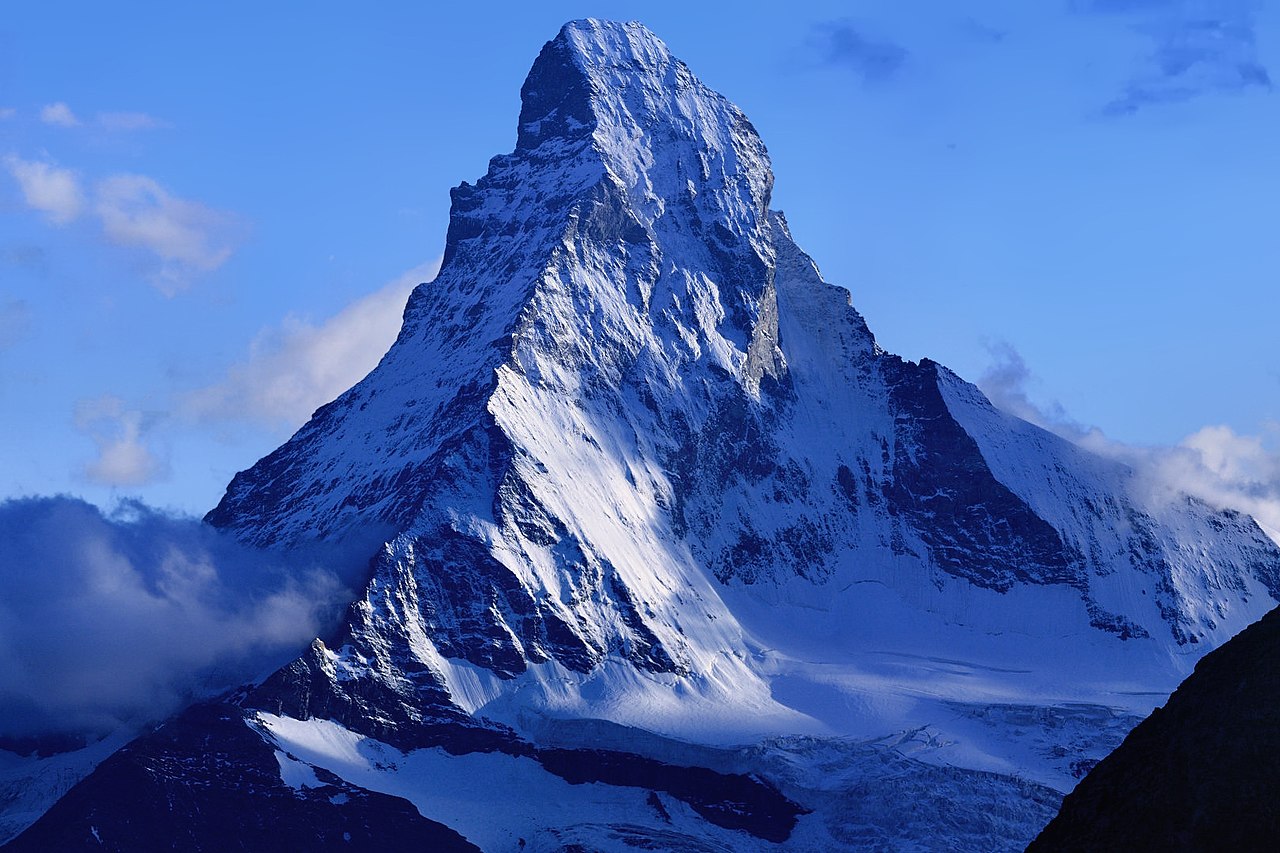
Matterhorn sunrise from Riffelalp
Take the Gornergrat Bahn to Riffelalp station before dawn and walk the moraine trail to the viewpoint where the pyramid turns from grey to fire in the first light — nothing in the Alps prepares you for it.
Über den Wolken
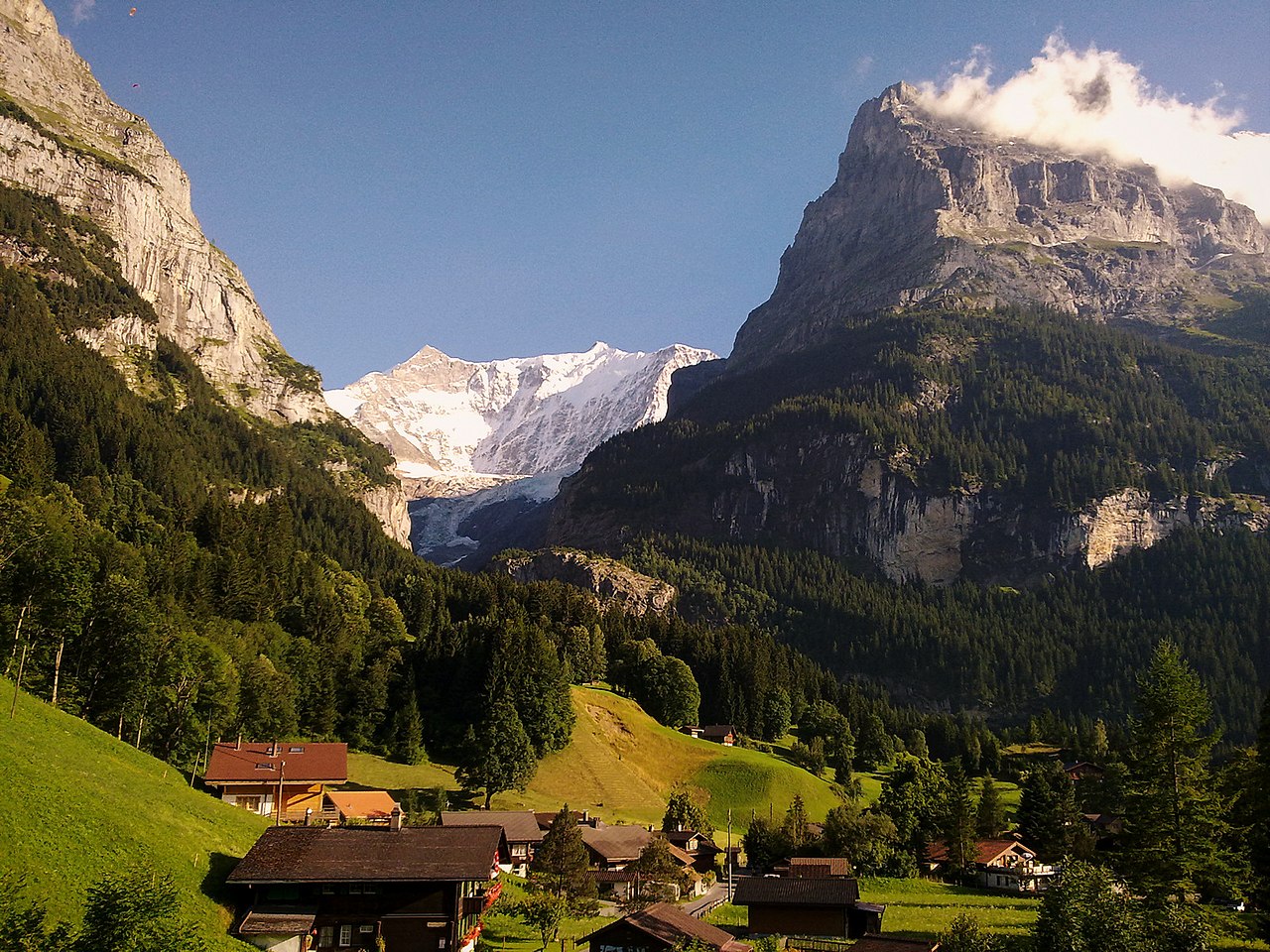
Switzerland's mountains exist on a scale that continues to surprise even those who have seen them before — the Eiger north face from a meadow of gentians, the Matterhorn pyramid at first light, the Aletsch Glacier creeping down a valley that has been moving since the last ice age.
Take the Gornergrat Bahn to Riffelalp station before dawn and walk the moraine trail to the viewpoint where the pyramid turns from grey to fire in the first light — nothing in the Alps prepares you for it.
The rack railway from Kleine Scheidegg climbs through the Eiger and Mönch to Europe's highest train station at 3,454m — the Aletsch Glacier spreads below, the ice palace is carved inside the mountain, and on a clear day the Black Forest is visible.
The guided walk onto the longest glacier in the Alps crosses the medial moraine between two ice flows — crampons and helmets are provided, and the crevasse-field tour makes the geological scale personal.
The cogwheel railway from Zermatt to 3,089m was built in 1898 and still offers the finest sequence of mountain views from a train window in the world — the moment the Matterhorn fills the right-hand glass is the picture everyone takes.
The gondola to First delivers you to a cliff-edge walkway with the Eiger north face directly ahead — the suspended sections extend over sheer drops while alpine choughs perform overhead and Grindelwald is a toy village far below.
The revolving restaurant at 2,970m (the James Bond peak) completes a full rotation over the Eiger, Mönch, and Jungfrau every 55 minutes — breakfast here is either the most expensive or the most reasonable meal you will ever have, depending on the view.
A cable car lifts you above the treeline to a ridge with the Eiger, Mönch, and Jungfrau lined up in a row, the panoramic trail below near-empty at this hour.
The lake fed directly by meltwater from the Bernese glaciers is an impossible shade of turquoise; the paddle steamer from Interlaken to Brienz stops at the Giessbach waterfall where the water thunders into the lake below the Belle Époque hotel.
Verbier's lift-served biking descends from 3,000m through switchback single-track and open meadow, with the Mont Blanc massif as a backdrop for half the descent — guide-led rides match the terrain to your ability.
A tandem launch from Beatenberg delivers 20 minutes of open-air thermal soaring with the Eiger directly ahead and Lake Thun and Lake Brienz visible simultaneously — the standard introduction flight requires no experience.
Ten glacier waterfalls tunnelled inside the mountain, accessible by underground funicular — the combined meltwater of the Eiger, Mönch, and Jungfrau drains through here at up to 20,000 litres per second, and the noise is extraordinary.
The valley Tolkien immortalised as the model for Rivendell has 72 named waterfalls dropping from sandstone cliffs — walk from the village to Staubbachfall and back, pausing where each cataract crosses the path in spray.
A structured tasting at a Grindelwald dairy covers Emmental and Appenzeller in the wheel alongside single-origin Bernese mountain chocolate — the Alpine cheese flight alone explains why Switzerland exports neither at a discount.
Wooden walkways bolted into the rock face lead through a narrow gorge carved by glacial meltwater, cool and thundering even on the hottest alpine afternoon.
A bergrestaurant at 2,000m scrapes bubbling raclette over waxy potatoes, cornichons, and cocktail onions — the same meal has been served here in the same way for generations, and in the right mountain hut it feels ceremonial.
The car-free village fills with the hum of electric carts after sunset; the old quarter around the English Church, the Kirchbrücke, and the climbing-memorial display in the churchyard makes for a quiet and moving evening walk.
An organised evening in a traditional chalet restaurant begins with Vacherin fondue and continues with alphorn, accordion, and yodelling — touristy in the best sense, genuinely cheerful, and a completely accurate picture of Swiss alpine festivity.
At altitude, above the valley inversion layer, the Milky Way is structural — a guided dark-sky session above Grindelwald with laser-pointer constellation tours is run by the Astronomical Society of Interlaken from June through September.
A late gondola run climbs above Zermatt just as the Matterhorn's north face catches its last alpenglow. Few mountain views anywhere match this one at dusk.
The long, low call of the alphorn still echoes through certain alpine villages on summer evenings, played by local herders and enthusiasts alike. It is a strange, moving sound to hear live.
Terraced vineyards climb the slopes above the Rhône valley, and small cellars open in the evening for tastings of crisp Fendant and mineral Petite Arvine. It pairs naturally with a plate of alpine cheese.
A rock-and-steel sanctuary built into the cliffs above Zermatt's car-free village, reached by private tunnel lift, where every suite commands an unobstructed Matterhorn panorama and the spa glows with locally quarried natural crystal.
The grande dame of Zermatt since 1879, with white-glove service, a legendary wine cellar stocked with rare Swiss Chasselas and Heida, and suites whose Matterhorn panoramas turn a deep rose-gold in the last light of every alpine evening.
A 19th-century palace with the Eiger, Mönch, and Jungfrau as its permanent backdrop, where the Anne Semonin-certified Alpine spa, 200-metre garden promenade, and Belle Époque ballroom are unmatched anywhere in the Bernese Oberland.
GHM's alpine masterpiece blends clean Japanese aesthetics with Swiss mountain drama — a 2,400 square-metre spa, 35-metre indoor pool, and direct ski-in access to some of the Alps' most untouched terrain make it the region's most talked-about modern resort.
Rates change — check the live price.
Photography shows the dishes and cuisine — representative, not from the restaurants themselves.
Cliff-side hotel restaurant where floor-to-ceiling glass frames the Matterhorn through every course — ingredients are sourced within the valley wherever possible.
The most popular lunch stop in the Alps for good reason — ski in or hike up for the rösti, beef tenderloin, and the absolute best Matterhorn view from a restaurant table.
Vacherin fondue, raclette, and Bernese specialities in a low-ceilinged chalet room that has been doing exactly this since the 1950s — reserve the corner table by the stove.
The village bakery locals actually use, famous for its Wetterhornbread — sourdough started on the summit of the Wetterhorn itself — and a gold-medal Pain Chocolat worth detouring for on the way up the valley.
Reached by Europe's longest gondola, the summit restaurant serves mountain-farmhouse cheese platters and Valais Fendant white wine with the Eiger as the dining room's one painting.
The après institution in Verbier with a sun-trap terrace, live music at 16:00, and a rum-punch that the ski patrol has been trying to regulate since 1983.
The Swiss Travel Pass covers all trains, buses, and lake boats plus free entry to 500 museums — in the Alps it also unlocks discounts on most mountain railways and gondolas, paying for itself in a single Jungfraujoch ascent.
The Top of Europe train sells out on clear-day forecasts; book at least a week ahead for a morning slot (afternoon clouds are common) and choose the Good Morning Ticket for a significant discount before 08:30.
Mountain weather can change from 25°C sun to hail in 40 minutes; carry a down layer and waterproof shell even on perfect mornings, and check the MeteoSwiss summit forecast before any high-altitude plan.
All private vehicles must be parked in Täsch and the journey completed by the shuttle train — factor in the transfer time and the small luggage electric cart that meets trains at the station.
Switzerland is the most expensive destination in Europe and the mountain restaurants add a significant altitude premium; a cable car lunch for two with drinks easily reaches CHF 120 — plan for it rather than be surprised.