Spa
Széchenyi thermal bath soak
Slip into the steam and mineral pools of this grand neo-baroque complex while the morning crowd is thin. The outdoor pool in cooler months has an atmosphere all its own.
A Duna Két Partja
Two cities fused by the Danube — Buda's castle-crowned hills and Pest's grand boulevards — sharing one of Europe's most theatrical skylines, its thermal mineral waters, and its wild, repurposed ruin bars.
Slip into the steam and mineral pools of this grand neo-baroque complex while the morning crowd is thin. The outdoor pool in cooler months has an atmosphere all its own.
The neo-Gothic turrets of the Halászbástya frame the Parliament across the river in golden light — arrive before 8:00 and you'll have the terraces nearly to yourself.
A thousand years of Magyar history told through crown jewels, medieval armour, and folk art in an imposing neoclassical palace on Múzeum körút.
Iron-vaulted Vásárcsarnok heaves with paprika strings, lángos stands, and hand-embroidered linens — the best souvenir hunting in the city, free to enter.
Walk the ramparts before the tour groups arrive, then descend into the medieval cellars of the Castle Museum tracing occupation from the Romans onward.
Kaleidoscopic Zsolnay-tile roof outside, richly frescoed medieval nave inside — one of Central Europe's most ornate religious interiors above Fisherman's Bastion.
The excavated streets, baths, and mosaics of this Roman provincial capital sit quietly on Buda's northern edge, largely overlooked by day-trippers. A small museum on site fills in the story of Pannonia's frontier life.
Drift past the Parliament, the bridges, and Margaret Island as you eat; the seven bridges are best at close range from the water.
Begin at Szimpla's labyrinthine courtyards in the early afternoon when it doubles as a Sunday farmers' market, then work toward Instant and Fogas Ház.
Hungary's most sobering museum occupies the former secret-police HQ on the grandest boulevard in Pest — do not miss the basement detention cells.
The Millennial Monument frames a sweep of Városliget — Vajdahunyad Castle, the boating lake, and a string of grand museums all within easy strolling range.
The largest synagogue in Europe and one of the most beautiful, with a moving cemetery memorial garden sheltered behind its Moorish Romantic façade.
Climb from the Gellért baths through wooded paths to the Citadella for the city's best 360° panorama — both banks, all seven bridges laid out below.
Toppled monuments to Lenin, Marx, and Soviet heroism now stand exiled in this open-air sculpture park outside the city, an unusually candid reckoning with the past. The shuttle bus ride out becomes part of the pilgrimage.
The Duna-korzó comes alive at dusk as the Parliament and bridges switch on their floodlights — arguably Europe's finest illuminated riverfront, and free.
The Hungarian State Opera is gilded to excess and stages world-class repertoire at prices that feel almost apologetically modest compared to Vienna or London.
Two Michelin stars in a jewel-box room off Vörösmarty Square — modern Hungarian cuisine built on paprika, foie gras, and Tokaji-paired courses.
Kürtőskalács still warm from the coil oven paired with a Monyo pale ale as the ruin-bar district hits its stride; the VII. District hums until well past midnight.
The Art Nouveau pools of the Gellért turn softer and quieter after dark, mosaic tiles glinting under low light as steam rises off the thermal water. A late soak here is a gentler, less crowded alternative to the daytime rush.
A small ensemble performs csárdás footwork and fiery violin runs between courses of goulash and paprikás, a tradition that survives in Budapest's dinner theatres largely unchanged for decades. It is theatrical, warm-hearted, and unmistakably Hungarian.
Car-free and threaded with fountains and rose gardens, the island in the middle of the Danube empties out at dusk, leaving joggers, couples and the occasional busker beneath its plane trees. The musical fountain show near the entrance is worth timing an arrival around.
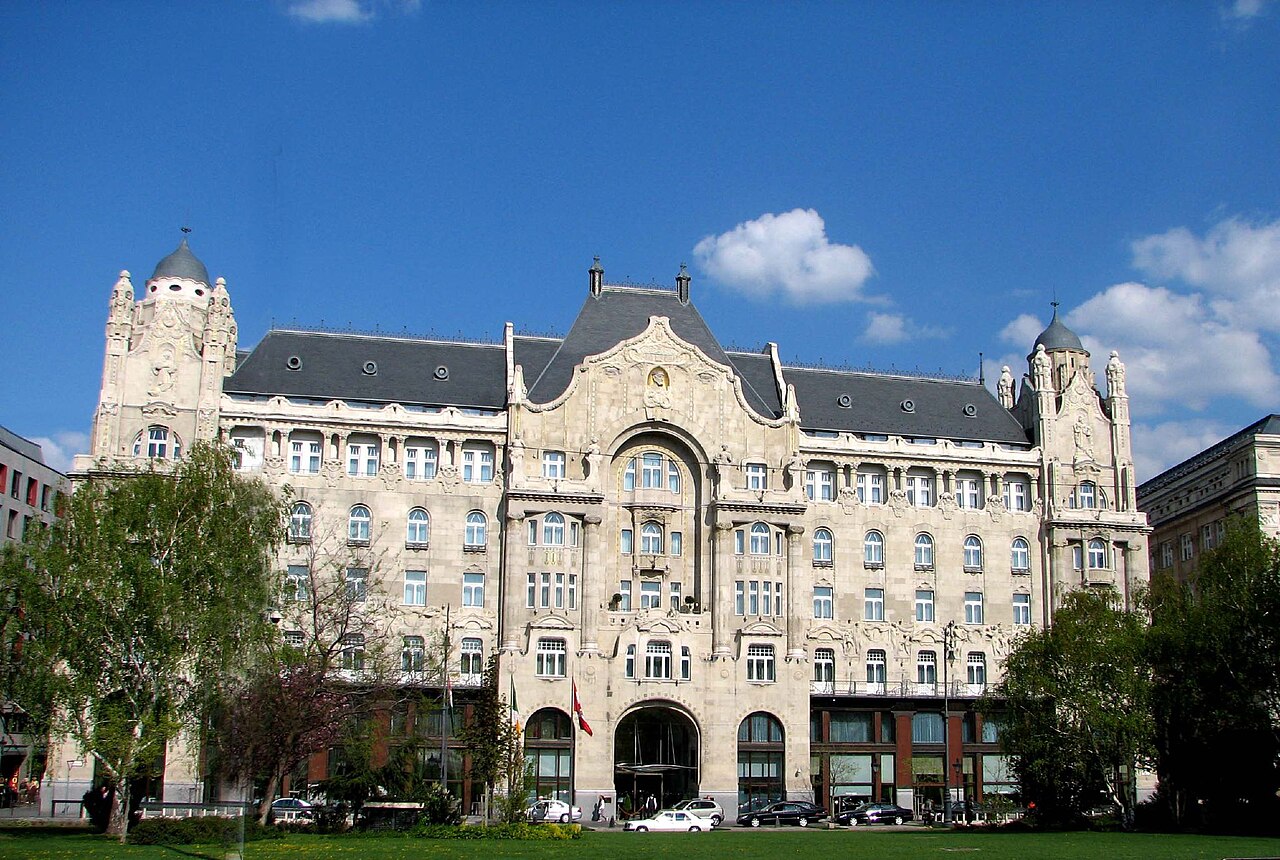
The city's greatest Art Nouveau masterpiece faces the Chain Bridge from the grandest riverfront address in Budapest—restoration of the peacock-gate mosaics alone justifies the pilgrimage.
Once home to the most beautiful café in the world, the gilded New York Café anchors this extravagant palace, where frescoed ceilings and butler service define every opulent floor.
A contemporary landmark on Erzsébet tér with a superb spa, bold art collection, and one of the city's finest restaurant terraces overlooking the sunlit inner city.
A palatial turn-of-the-century shopping arcade reborn as a hotel—the Moorish glass dome atrium is one of Budapest's most breathtaking interiors, intimate and wholly magnificent.
Rates change — check the live price.
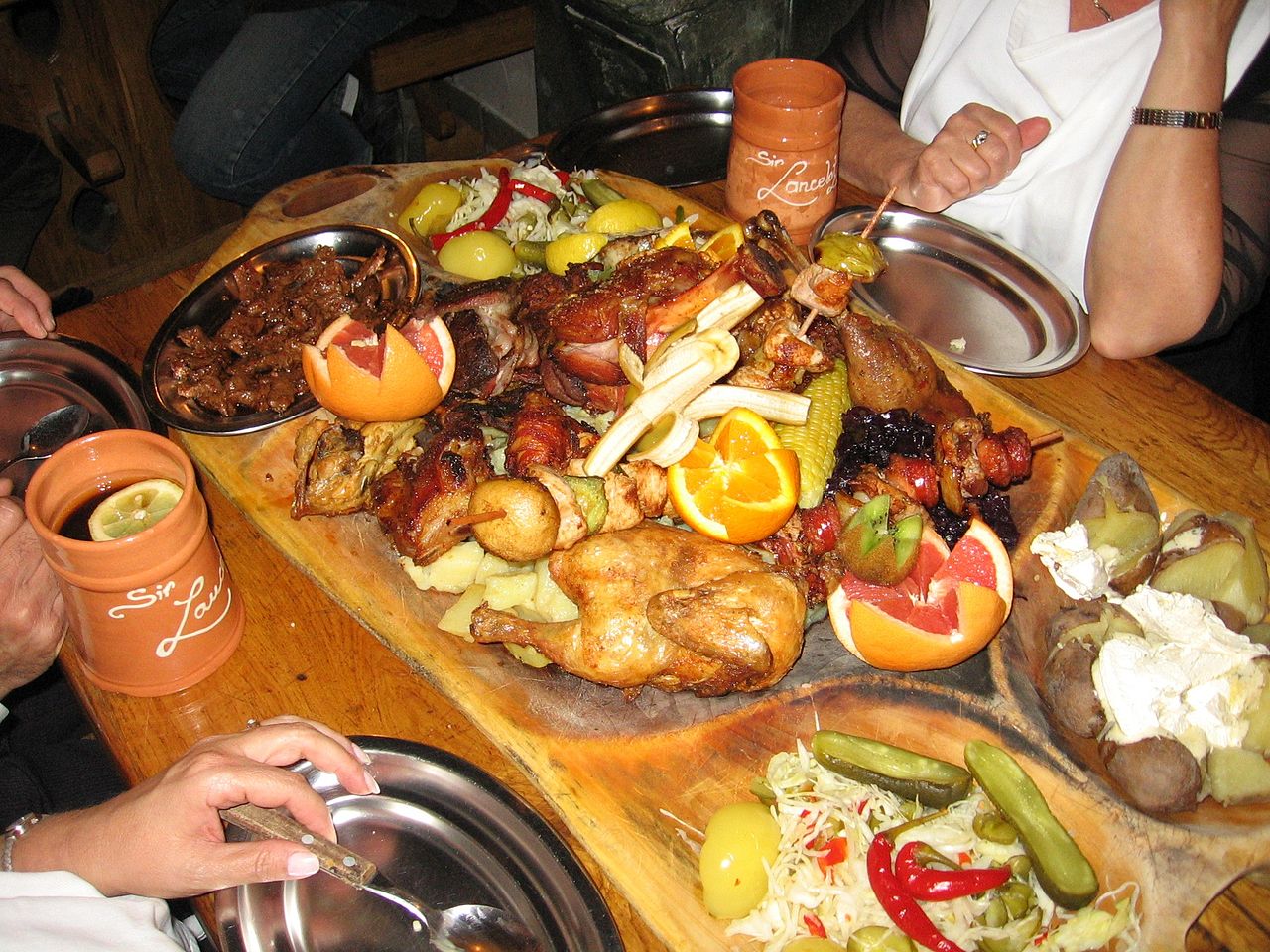
Photography shows the dishes and cuisine — representative, not from the restaurants themselves.
One Michelin star for a tasting menu that traces Austro-Hungarian and Transylvanian roots through a dozen precise courses, served in a hushed dining room with a Gothic cathedral glowing just outside the window.
One Michelin star, relaxed atmosphere, and a wine list that showcases every Hungarian growing region from Eger to Villány.
Retro-canteen styling with earnest gulyás, stuffed cabbage, and túrógombóc — comfort food done right at fair prices.
The permanent outdoor food court beside Szimpla Kert where eight trucks serve Hungary's best lángos, grilled meats, and chimney cakes to the Jewish Quarter crowd, day and evening.
Budapest's grandest coffeehouse since 1858; the Esterházy torta and double espresso are the ritual start to any morning.
Forty Hungarian wines by the glass with a view of St Stephen's Basilica — the best introduction to Tokaji Aszú and Eger Bulls' Blood.
The 72-hour card covers public transport, museum entry, and thermal-bath discounts — it pays for itself on day one.
Széchenyi and Gellért sell timed-entry tickets online; walk-up queues at peak times can stretch an hour or more.
The Great Market Hall and most street vendors rarely accept card — keep a few thousand forint accessible at all times.
Standing-room tickets at the State Opera House go for under 2 000 Ft — pick up same-day at the box office, arrive early to queue.
Tram 2 runs the full Danube embankment and is one of the world's great urban rides — a standard transit ticket doubles as a sightseeing pass.