Heritage
Hohensalzburg Fortress tour
The best-preserved medieval castle in the German-speaking world towers above the old town. Ride the funicular up and explore the prince-archbishop's state rooms and instrument collection.
Die Festungsstadt
Baroque spires crowd a narrow river bend beneath a rock-shouldered fortress, and the hills do indeed come alive — with concert music, Mozartkugeln, and the very real pleasure of a city that takes its beauty as seriously as its pastry.
The best-preserved medieval castle in the German-speaking world towers above the old town. Ride the funicular up and explore the prince-archbishop's state rooms and instrument collection.
The yellow building on Getreidegasse where Wolfgang Amadeus was born in 1756, now a museum of his violins, manuscripts, and family portraits. Quieter in the first hour.
The baroque formal gardens laid out for a prince-archbishop's lover are free and at their loveliest before the tour groups arrive — the Pegasus fountain, the dwarf garden, and the fortress above.
A woodland ridge path connects the Museum of Modern Art to the fortress along the cliff edge above the Altstadt — the best free overview of the city and its roofscape.
The archbishop's 17th-century summer villa features elaborate water-powered automata and trick-fountain seats that drench unsuspecting visitors — a genuine delight for all ages.
The vast baroque Dom where Mozart was baptised holds a crypt of Roman ruins below and an ornate ceiling fresco above — and remains uncrowded before the afternoon tours.
Housed in the Neue Residenz on Mozartplatz, this museum traces the prince-archbishops who shaped the city long before Mozart's fame did. It is an easy, uncrowded way to spend the first hour of the day before the Getreidegasse crowds build.
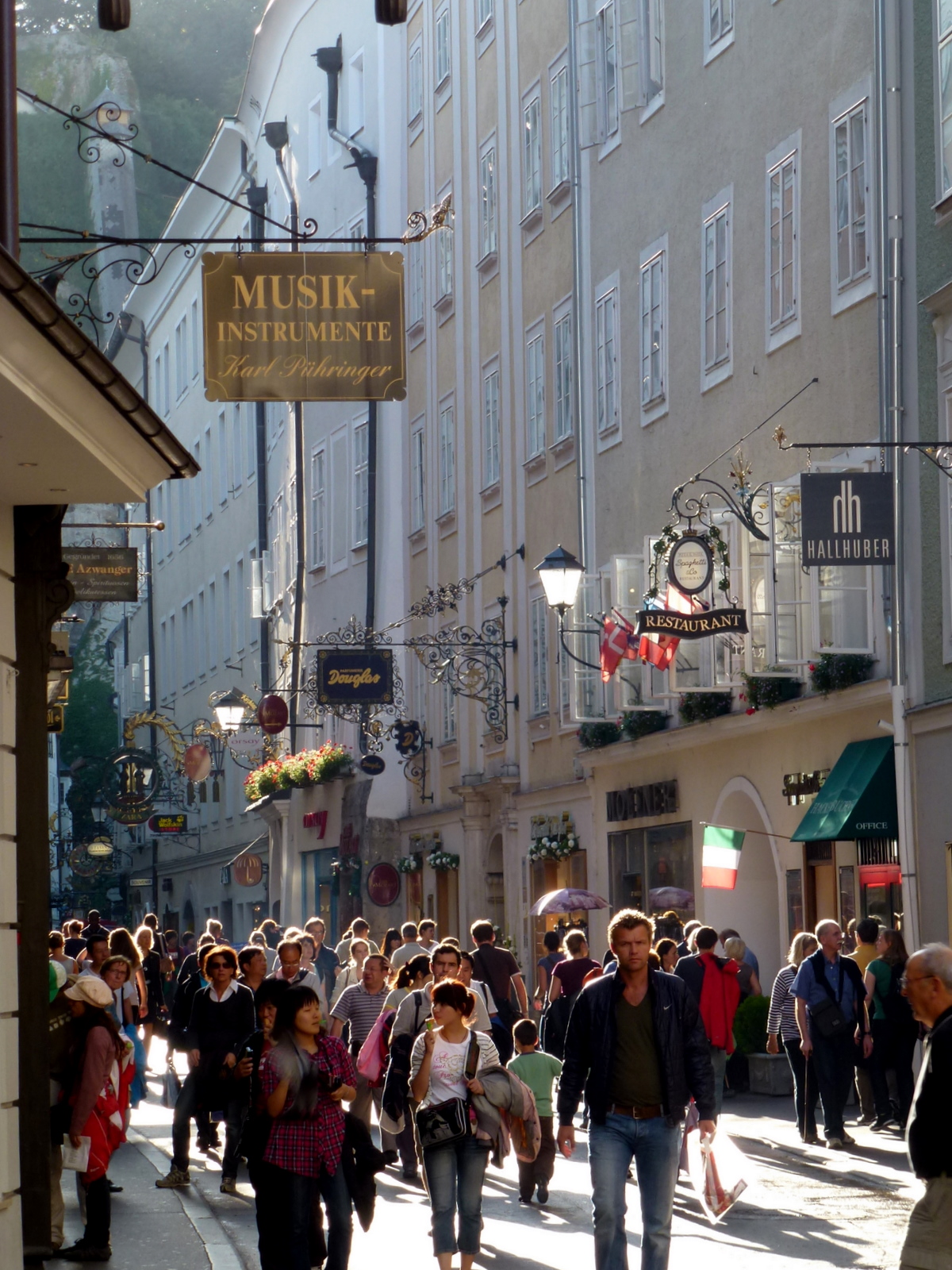
Salzburg's most famous street dazzles with wrought-iron guild signs above cellars selling everything from Mozartkugeln to cashmere. Stop at Café Tomaselli for a Verlängerter.
The oldest monastery in the German-speaking world's cemetery has iron-lanterned family vaults carved into the cliff face — serene and atmospheric in afternoon light.
The prince-archbishops' town palace displays tapestries, trompe-l'oeil ceilings, and a painting gallery of Dutch and Flemish masters rarely mentioned in the guidebooks.
A flat riverside promenade runs north from the Altstadt bridges to the pilgrimage church at Müllner Hauptstrasse — the local's afternoon walk, with several good wine bars along the way.
A 45-minute drive or train-and-bus hop reaches the turquoise Wolfgangsee. Take the rack railway up the Schafberg and descend by boat across the lake to the White Horse Inn village.
The limestone massif visible from every Salzburg viewpoint can be reached by gondola to 1,776 m in eight minutes. A short ridge walk reaches the summit cross and Alps panorama.
Reached by lift or a short forest path atop the Mönchsberg cliff, this museum of modern art pairs changing exhibitions with some of the best skyline views in the city. The terrace café alone justifies the trip up.
Mozart is performed nightly somewhere in Salzburg, but the Mozarteum delivers it in a serious concert hall with the city's resident orchestra. Check the programme and book ahead.
Austria's largest private brewery has a museum, beer garden, and a restaurant serving schnitzel and Zwiebelrostbraten paired with the full range of Stiegl lagers. Lively and local.
A monastic brewery selling dark Märzen from the barrel since 1621. Grab a stone mug, self-serve your beer, collect a Brettljause board, and take a table in the chestnut garden.
The quieter hill east of the Salzach offers a free, crowd-free panorama of the fortress, cathedral, and alpine foothills going pink at dusk — ten minutes' walk from the Linzergasse.
Thousands of padlocks cover the railings of this pedestrian bridge, framing a classic view of the fortress and old town reflected in the river. It is a favourite spot for a slow evening crossing.
This towering, cloud-like soufflé, said to represent the three hills around Salzburg, arrives dusted with sugar and steaming from the oven. Order it to share, and order it early, since it is made to order.
Since 1913, hand-carved marionettes have performed opera and ballet on this small stage with a craft and pathos that belies their size. It is UNESCO-listed intangible heritage, and utterly beguiling in person.
Straddling the Salzach opposite the Festung, the legendary Sacher delivers white-gloved butler service, a private Sacher Torte ritual, and suites gazing straight at the fortress at dusk.
A 16th-century castle crowning the Mönchsberg cliff, where private terraces survey all of Salzburg's spires and the hotel's Michelin-starred Glass Garden restaurant serves Austrian grand cuisine.
Mozart's own street, a 600-year-old house of hand-painted furniture and vaulted stone cellars — the insider address for Salzburg Festival maestros and discerning cognoscenti.
A 15th-century Archbishops' hunting lodge on its own lake peninsula, where guests arrive by rowboat, dine in a medieval great hall, and retreat to lakeside suites with private boat mooring.
Rates change — check the live price.
Photography shows the dishes and cuisine — representative, not from the restaurants themselves.
A rotating roster of the world's best guest chefs cooks for one month at a time inside a glass-and-steel aviation museum — the most unusual restaurant setting in Austria.
Reputedly Europe's oldest restaurant — vaulted 9th-century cellars, roast pork, and a wine list that does justice to Austrian vineyards.
Stylish wine-forward restaurant in a converted warehouse with a 1,000-label Austrian cellar. Ask for the changing blackboard menu.
Salzburg's oldest coffeehouse (1705) — marble tables, newspapers on wooden rods, and a Einspänner that is reason enough to visit the city.
Monastic dark Märzen from the barrel, Brettljause boards, and chestnut-garden tables. Expect a wait on summer evenings — it is worth it.
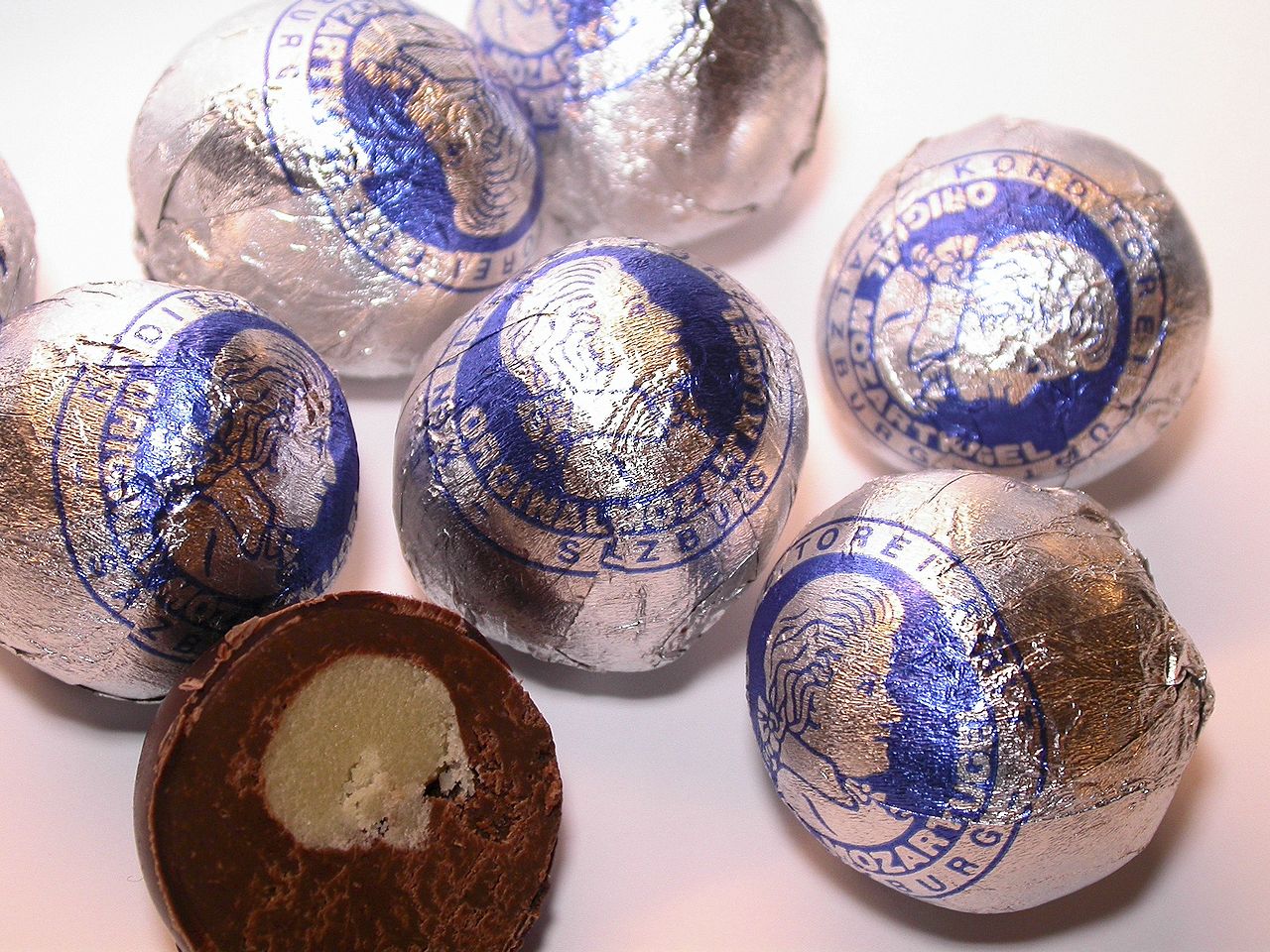
The family that invented the Mozartkugel in 1890 still makes them by hand. The original is distinguished from the industrial version by its foil wrapping and pistachio marzipan.
The 24-, 48-, or 72-hour Salzburg Card covers all public transport plus free entry to over 30 museums and attractions including the fortress — it pays off in one morning.
The Salzburg Festival (late July–August) is one of the world's great music events but hotel rates treble and restaurants fill weeks ahead — book everything or go in June or September.
Most Salzburg churches close between 12:00 and 14:00 — plan morning or late-afternoon visits and use midday for cafés and market browsing.
Wolfgangsee, Hallstatt, and Berchtesgaden are all within 90 minutes but extremely popular — leave before 08:30 and return after 16:00 to avoid the worst of the crowds.
Smart-casual is the minimum for Mozarteum and Landestheater events; the outdoor Felsenreitschule performances during the Festival are formal. Pack one decent outfit.