Adventure
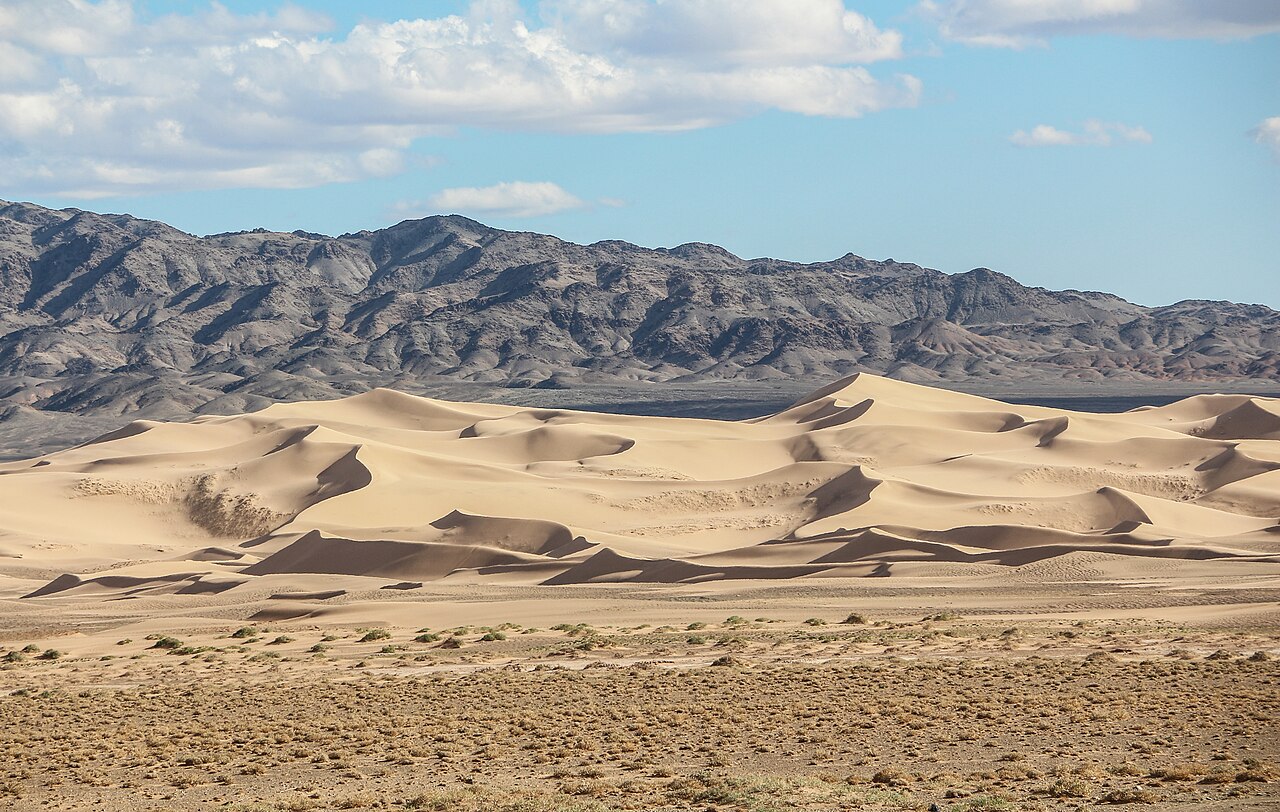
Camel trek to the crest of Khongoryn Els
Sway atop a two-humped Bactrian camel led by a herder up the flank of dunes that tower nearly 300 metres above the surrounding gravel plain.
Where the Dunes Still Sing
Mongolia's Gobi is not one desert but many — from the roaring, 300-metre Khongoryn Els dunes to the ochre cliffs of Bayanzag where dinosaur eggs still surface, and the ice that lingers year-round in Yolyn Am's shadowed gorge, all crossed by Bactrian camel beneath skies dark enough to cast starlight shadows.
Sway atop a two-humped Bactrian camel led by a herder up the flank of dunes that tower nearly 300 metres above the surrounding gravel plain.
Walk a narrowing canyon in the Gurvan Saikhan range where a river of ice can survive deep into summer, wedged between sheer rock walls.
Scan the red sandstone badlands where American explorer Roy Chapman Andrews found the world's first fossilized dinosaur eggs in the 1920s.
Climb barefoot up shifting sand before the heat sets in, reaching a ridge where wind sets the dune 'singing' with a deep resonant hum.
Cross gravel plain and dry riverbed toward the three-peaked Gurvan Saikhan range, spotting wild onion and saxaul scrub clinging to the arid ground.
Scan the gorge's sheer walls with a ranger for Siberian ibex picking their way along ledges and lammergeier vultures riding the morning thermals.
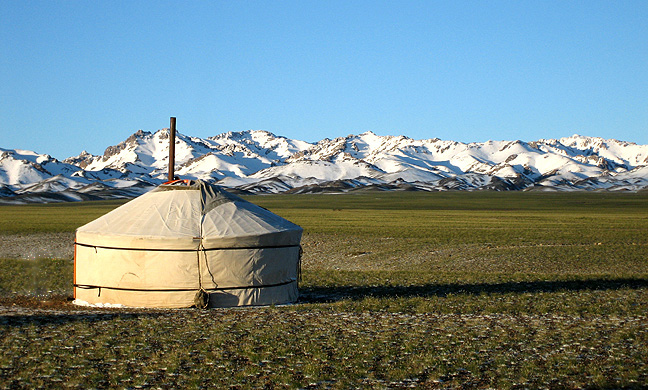
Share fried flatbread, clotted cream and salty milk tea inside a working ger before its owners saddle their camels for the day's grazing round.
Browse the small provincial capital's market stalls for camel-wool socks, dried curd, and hardware traded between herder families and town shopkeepers.
Watch a herder milk a female Bactrian camel by hand, then taste the rich, faintly sweet milk churned fresh that morning.
A geologist-guide traces the 1920s American Museum expedition route through the Flaming Cliffs, pointing out strata still yielding fossil fragments today.
Slide down the dune's steep leeward face and listen for the low, droning echo the shifting sand produces underfoot, a phenomenon still not fully explained.
Bounce across trackless gravel plain in a Russian-built van between the dunes and Bayanzag, the driver reading the landscape like a map.
Walk among gnarled saxaul trees, the Gobi's dominant woody plant, learning how their deep roots and salt-tolerant leaves anchor the shifting desert soil.
Help a herder round up a scattered camel string on foot, learning the calls and gestures used to guide the animals back toward camp.
A park ranger explains conservation efforts protecting snow leopard, Gobi bear and wild Bactrian camel across this vast, sparsely patrolled reserve.
See mounted dinosaur skeletons unearthed nearby alongside taxidermied snow leopard and argali sheep in this small but well-stocked provincial museum.
Watch the red sandstone ignite into deep orange as the sun drops, the badlands' name made vividly, briefly literal.
With almost no light pollution for hundreds of kilometres, the Gobi delivers a Milky Way so dense it casts a faint shadow on the sand.
Gather around a dung-fuelled fire as your herder-guide recounts tales of wolves, lost camels, and winters survived on this unforgiving plain.
Hot stones sealed inside a milk churn steam mutton and root vegetables into the desert's signature feast, served communally beneath the open sky.
Position along the dune ridge as camels return single-file against a darkening sky, the classic image every Gobi visitor hopes to capture.
A traveling musician plays the horsehead fiddle beside the campfire, its two strings drawing out melodies said to mimic a mother camel's grief for her calf.
Step beyond the camp lights with a headlamp to find jerboa, desert nightjar, and the eyeshine of foxes hunting the cooling sand.
Share bowls of fermented mare's milk and dried curd with a herding family, a ritual of welcome extended to every desert traveler.
The Gobi's original luxury camp, built from reclaimed timber with solar power, a spa ger, and unmatched proximity to the Flaming Cliffs and dunes.
Spacious ensuite gers arranged around a dune-facing terrace, with a dining hall serving generous Mongolian-international spreads after long trekking days.
A family-run camp of traditional gers with modern beds and heating, prized for its warm hospitality and home-style cooking.
A modest, well-located camp near the ice gorge, offering simple heated gers and easy access to early-morning ibex-spotting hikes.
Rates change — check the live price.
Photography shows the dishes and cuisine — representative, not from the restaurants themselves.
The flagship lodge's communal ger serves a farm-to-table menu of Gobi lamb and seasonal vegetables beneath a hand-painted felt ceiling.
A simple, hearty kitchen turning out khorkhog and steamed buuz dumplings for guests fresh off a day's dune trekking.
An open-sided dining terrace facing the dunes, mixing Mongolian staples with pasta and grilled dishes for international guests.
Arranged through your camp, a home-cooked meal of fresh camel dairy and flatbread inside a working herder's ger.
Skewered mutton and vegetables grilled over an open fire pit, served with the lodge's own airag and salted milk tea.
A functional stop for milk tea, instant noodles and biscuits while waiting on the twice-daily flight back to Ulaanbaatar.
Desert days can reach 30°C while nights drop below freezing even in summer, so layering is essential.
Flights to Dalanzadgad are limited and weather-dependent, so book well ahead and keep an itinerary buffer either side.
There are no ATMs beyond Dalanzadgad, so carry enough tögrög in small denominations for the full trip.
Fine Gobi sand finds its way into everything — pack cameras and electronics in sealed bags or cases.
Bactrian camels are the safest way across the dunes; let your herder guide set the pace rather than rushing the climb.